Meta Platforms Stock Tumbles 8.5% as AI Spending Surge Overshadows Blockbuster Quarter
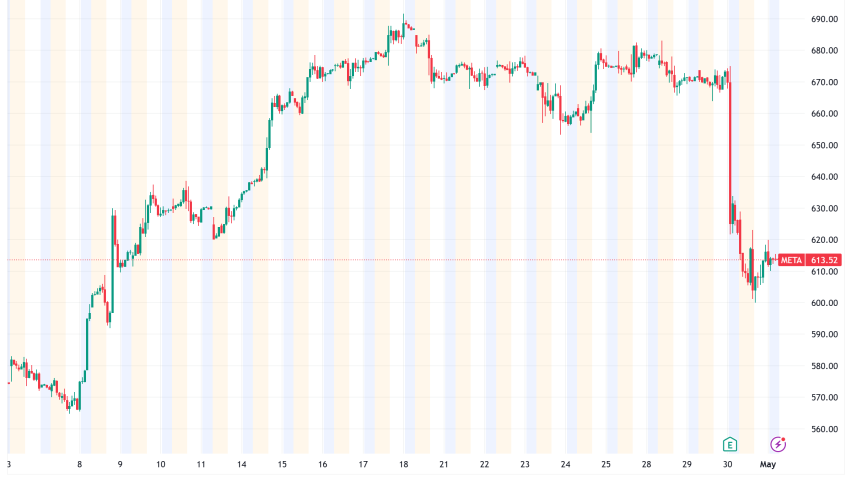
Shares of Meta Platforms (NASDAQ: META) tanked more than 8.5% on Thursday, falling more than $57 to close at $611.91, as investors freaked
Quick overview
- Meta Platforms' shares dropped over 8.5% following an announcement of a significant increase in AI spending plans, despite strong quarterly earnings.
- The company reported a revenue of $56.3 billion, a 33% year-over-year increase, and earnings per share of $10.44, boosted by a one-time tax advantage.
- Investors reacted negatively to the raised capital expenditure forecast for 2026, which is now projected between $125 billion and $145 billion.
- Despite the sell-off, some analysts view the stock pullback as a potential buying opportunity, citing Meta's strong advertising performance and long-term growth narrative.
Shares of Meta Platforms (NASDAQ: META) tanked more than 8.5% on Thursday, falling more than $57 to close at $611.91, as investors freaked out about the company’s dramatically expanded artificial intelligence spending plans — despite the company delivering one of its strongest quarterly performances in years.
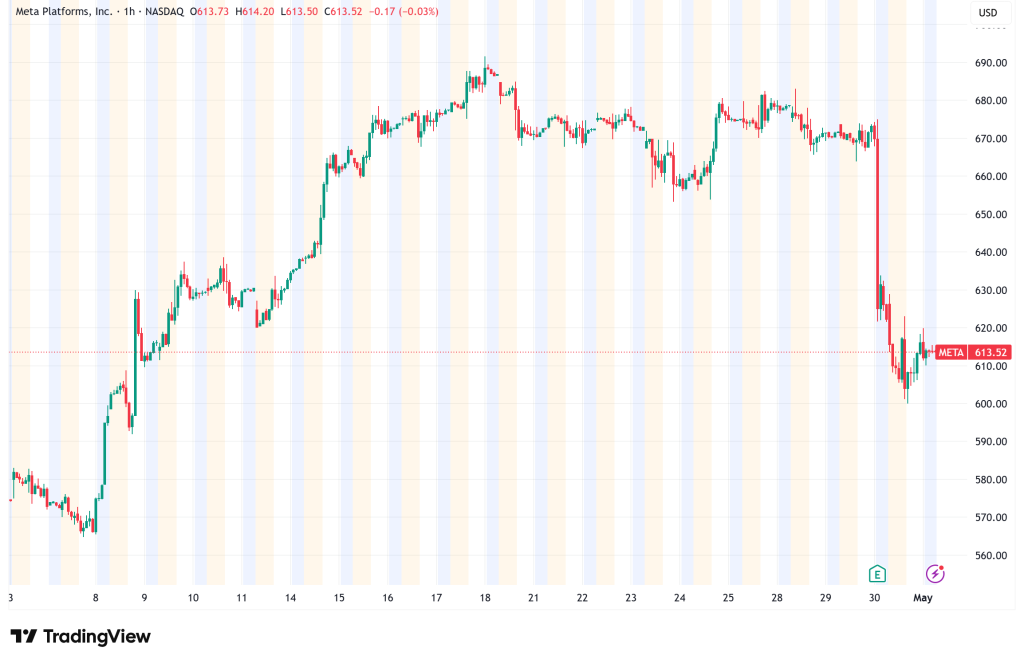
The sell-off contributed to a larger decline that has already erased more than 20% of Meta’s peak of over $796 in late 2025.
Meta’s Q1 Earnings Looked Great on Paper
There was little room for investor complaints about the figures themselves. Revenue was $56.3 billion, up 33% year-over-year, a significant increase over the 24% growth rate in the fourth quarter of 2025. The sum also beat Wall Street’s consensus expectation of $55.5 billion.
Earnings per share of $10.44 substantially beyond the $8.15 projected by experts, but that figure was helped by a $8 billion one-time tax advantage. Excluding that, adjusted EPS would have been $7.31 — up around 14% from the preceding year.
Operating income was $22.9 billion, and Meta had a healthy operating margin of 41%. Free cash flow soared to $12.4 billion from $10.3 billion a year ago.
The advertising engine driving much of this expansion has broad momentum. Ad impressions across Meta’s family of apps, including Facebook, Instagram and WhatsApp, jumped 19% year over year, while the average price per ad increased 12%. Both measures had accelerated from the fourth quarter. Average daily users across the platform were 3.56 billion in March, up 4% year-on-year, but just below 3.58 billion in the previous quarter as internet problems in Iran and WhatsApp restrictions in Russia had an impact.
The Spending Shock: Meta’s Capex Surge
What was the source of the investor angst? Meta boosted its capital expenditure forecast for 2026 to $125 billion to $145 billion, up from an earlier estimate of $115 billion to $135 billion. The middle of that new range is almost double the $72.2 billion the business spent on capex in all of 2025.
The company said the hike was due to “higher component pricing this year and, to a lesser extent, additional data center costs to support future year capacity.”
Overall 2026 expense projection was maintained intact at $162 billion to $169 billion, but the sheer enormity of the capital commitment spooked investors. Several major banks responded by cutting price estimates. Goldman Sachs decreased its objective to $830 from $955, UBS to $865 from $920 and Truist to $840 from $950, although all kept favorable stock recommendations.
Meta is in a “show me” phase in its AI cycle, said KeyBanc, with core business returns good but uncertainties remaining surrounding newer initiatives in AI models and personal agents. KeyBanc reaffirmed its Overweight rating and price target at $760.
Meta Stock Outlook: Room to Breathe?
But Meta CFO Susan Li pushed back on predictions of uncontrolled expenditure during the conference call, saying infrastructure is being created with flexibility in mind. If expected returns don’t materialize, the corporation might restrict implementation or cut future spending, she said.
That optionality may be cold comfort for investors in the near future, particularly as Reality Labs — Meta’s metaverse and AI glasses section — posted an operational loss of over $4 billion in the quarter alone. Regulatory scrutiny in both the EU and U.S., notably on problems concerning youth safety, also poses a potential obstacle.
But with shares trading at a price-to-earnings ratio in the low 20s and its main advertising business humming along, some analysts see the pullback as an opportunity. Meta’s long-term narrative remains intact for investors prepared to put up with the hoopla around capital spending, even if the market’s patience is wearing thin.
- Check out our free forex signals
- Follow the top economic events on FX Leaders economic calendar
- Trade better, discover more Forex Trading Strategies
- Open a FREE Trading Account
- Read our latest reviews on: Avatrade, Exness, HFM and XM

Related Articles



Sidebar rates

Related Posts
 Save
Save