Trump’s Tariff Battle Reaches the U.S. Supreme Court
President Donald Trump has asked the U.S. Supreme Court to urgently review a lower court ruling that limits his authority.
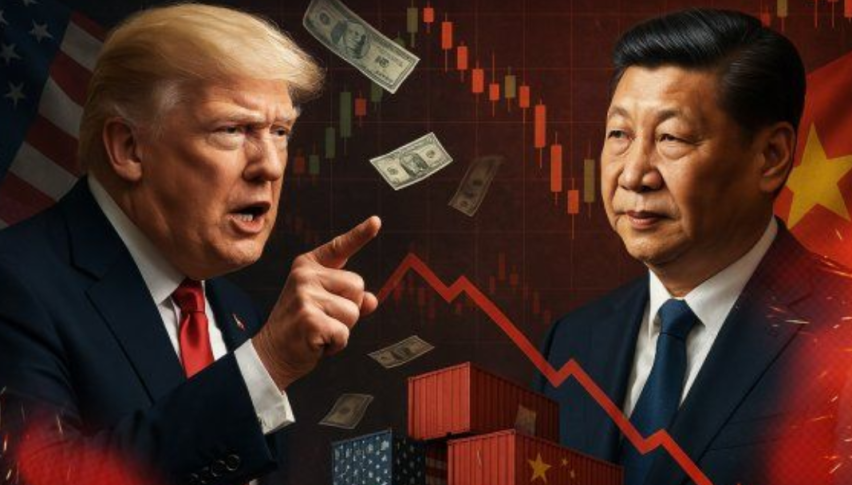
Quick overview
- President Trump has requested the U.S. Supreme Court to review a ruling that limits his authority to impose import tariffs.
- The appeal follows a federal appellate court's decision that found Trump lacked unilateral authority under the International Emergency Economic Powers Act.
- An adverse ruling could significantly reduce America's effective tariff rate and impact trade agreements with key partners.
- The case raises constitutional questions about the extent of presidential power in setting trade policy.
President Donald Trump has asked the U.S. Supreme Court to urgently review a lower court ruling that limits his authority to impose import tariffs, a decision that could carry sweeping implications for global trade and the scope of presidential economic power.
The appeal, filed after a federal appellate court struck down his tariff authority, requests that the high court fast-track the case and place it on its November docket. In April, the lower court found that Trump lacked unilateral authority to levy broad import duties under the International Emergency Economic Powers Act of 1977 (IEEPA), a statute that allows the president to act in response to national emergencies but does not explicitly authorize tariffs.
High Stakes for U.S. Trade Policy
The case could prove pivotal. According to Chris Kennedy, an adverse ruling could cut America’s effective tariff rate—currently around 16.3%, its highest in more than a century—by at least half. It could also force the U.S. to refund tens of billions of dollars in collected tariffs and jeopardize temporary trade agreements struck with key partners.
Solicitor General D. John Sauer warned the justices that without reversal, “the United States will be unilaterally disarmed and left at the mercy of retaliatory trade measures by other nations.” The Justice Department added that even the plaintiffs challenging the tariffs agree that the Supreme Court should intervene promptly.
Among the contested measures are the so-called “Liberation Day” tariffs announced by Trump on April 2, which imposed surcharges of 10% to 50% on most imports depending on their country of origin. The package represents the steepest tariff hike since the Smoot-Hawley Tariff Act of 1930.
A Constitutional Test
The dispute pits the former president not only against Democratic-led states and small businesses that filed suit, but also against the constitutional boundaries of presidential authority. The Constitution grants Congress the power to set duties and taxes, and the Supreme Court’s decision could redefine the extent of executive discretion in shaping trade and national economic security policy.
- Check out our free forex signals
- Follow the top economic events on FX Leaders economic calendar
- Trade better, discover more Forex Trading Strategies
- Open a FREE Trading Account
- Read our latest reviews on: Avatrade, Exness, HFM and XM

Related Articles
Sidebar rates

