Northeast Cold Snap Brings Natural Gas Prices up 3%
natural gas futures rose on Monday as cold weather spread to the northern United States and export sales increased.
Quick overview
- US natural gas futures have risen by 3% due to increased demand from cold weather in the northeastern United States.
- Gas reserves have dropped 1.5% in 2026 and are 5.6% below the five-year average, contributing to rising prices.
- Production levels are expected to increase as new gas plants come online, potentially stabilizing inventory by summer.
- High export demand is currently supporting prices, but this is likely to decrease as warmer weather approaches.
US natural gas futures are up today after cold weather spread through the northeastern part of the United States, driving up demand after recent weeks of warm temperatures.

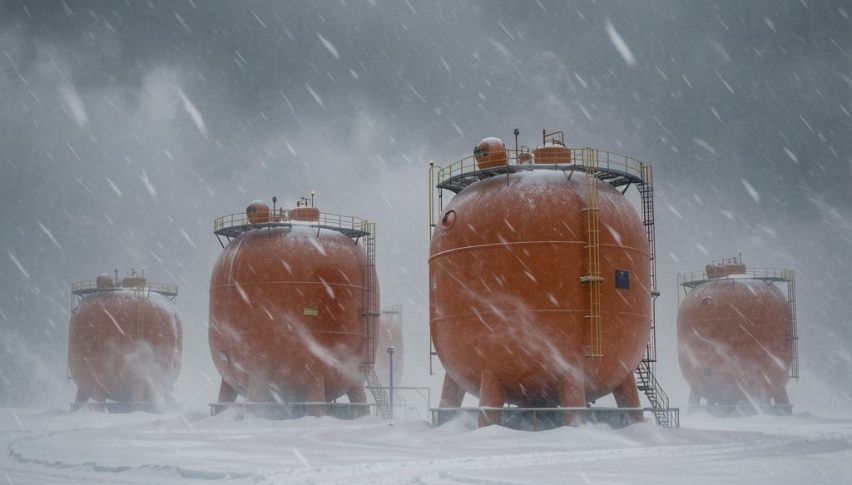
Snowy weather is causing demand to spike for natural gas throughout the northern United States, with a 3% price increase for gas futures on Monday. That may not last long, as much of the U.S. is experiencing unseasonably warm weather, but the climbing rates are helped along by diminishing gas supplies.
The last EIA report said that gas reserves have dropped 1.5% in 2026 and that they are also around 5.6% underneath the five-year average. That inventory decline could continue as the cold weather pushes through the upper United States.
Production Should Increase Soon
Even though inventories of natural gas are dropping, the production levels for the United States are expected to increase. New production lines are being added and entirely new gas plants are scheduled to be opened this year. Some estimates put the leveling off of production and inventory to occur sometime around summer.
In March, warmer weather is anticipated, and forecasts are calling for a steady end of winter in the coming weeks. As production rises and demand is certain to decrease, gas futures should drop in the weeks ahead. The slight uptick on Monday is probably nothing more than a temporary reprieve, and in the next few days, gas futures for the LNG market should settle back down close to $3.00 per MMBtu.
Production data showed that on Friday the U.S. gas plants produced 113.4 Bcf/day. That is an increase of 1.5% over the year, and it indicates that production is likely to increase in the months ahead as plans to expand through the gas industry.
What might pull the prices back up, though, is the high export demand. That market is performing well and has been helped by very high heating demand around the world. However, the high export levels are not expected to remain high. As warm weather permeates the globe in the coming spring and summer, this part of the US LNG production should slow down tremendously.
- Check out our free forex signals
- Follow the top economic events on FX Leaders economic calendar
- Trade better, discover more Forex Trading Strategies
- Open a FREE Trading Account
- Read our latest reviews on: Avatrade, Exness, HFM and XM

Related Articles



Sidebar rates

Related Posts
 Save
Save