MU Stock Extends Rebound on the New Chip, but Micron’s $200B Expansion Keeps Valuation Fears Alive
Although high expectations and memory-cycle risks call for prudence, Micron's dramatic recovery above $400 demonstrates significant...

Quick overview
- Micron's stock rebounded above $400 after a dip below $375, reflecting strong AI-driven momentum but also heightened volatility.
- The company announced a new 256GB SOCAMM2 memory module, enhancing its position in energy-efficient data center memory and AI applications.
- Micron is investing nearly $200 billion in expansion projects, signaling confidence in long-term demand despite potential cyclical risks.
- While fundamentals have improved, the stock's recent volatility highlights the need for cautious optimism amid elevated expectations and market sensitivity.
Live MU Chart
[[MU-graph]]
Although high expectations and memory-cycle risks call for prudence, Micron’s dramatic recovery above $400 demonstrates significant momentum.
Stock Pulls Back After Massive Rally
Micron Technology shares dipped below $375 on Tuesday before rebounding decisively above $400 on Wednesday, underscoring the heightened volatility surrounding AI-linked semiconductor names.
The pullback came despite continued analyst optimism and positive product developments. After a multi-hundred percent rally from prior cycle lows, the stock appears increasingly sensitive to shifts in sentiment. Even modest profit-taking can trigger swift declines, particularly when valuations reflect strong forward expectations.
Wednesday’s recovery suggests buyers remain active on dips. However, the two-day swing illustrates how tightly the stock is trading around sentiment rather than incremental news flow.
New AI Memory Product Strengthens Position
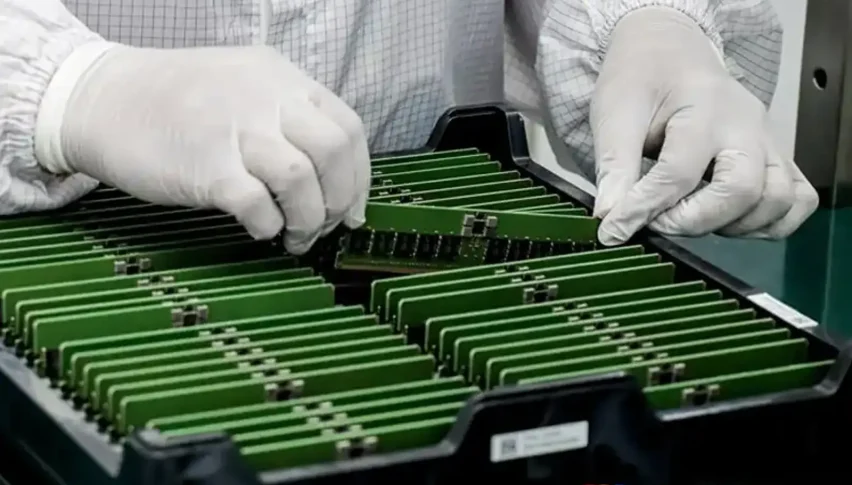
Amid the volatility, Micron announced shipment of customer samples for its new 256GB SOCAMM2 module — a major step forward in low-power server memory.
The module is powered by the industry’s first monolithic 32Gb LPDDR5X design, positioning Micron at the forefront of energy-efficient data center memory. Designed to enhance performance while lowering power consumption and total cost of ownership, the solution directly addresses growing thermal and energy constraints within AI and core compute infrastructure.
In collaboration with Nvidia Corporation, Micron co-developed the module to support advanced AI servers. The partnership reinforces Micron’s expanding footprint in high-bandwidth memory (HBM) and AI-centric architectures — structural growth areas reshaping the semiconductor landscape.
The product announcement strengthens Micron’s long-term strategic narrative. Still, technological leadership does not eliminate cyclical volatility.
Technical Strength Meets Near-Term Vulnerability
From a technical perspective, Micron’s breakout below $400 and the quick return above is symbolically important. The level had capped advances and served as a psychological ceiling for investors. Clearing it validated the long-term recovery narrative and signaled a decisive shift in trend.
MU Chart Daily – The 20 SMA Has Been Broken

However, the stock’s rapid ascent toward the mid-$460s left little room for consolidation. The swift pullback back below $400 suggested the investor demand is being tested as MU stock tis trading at $380 now.
If selling pressure escalates, attention will shift toward whether Micron can stabilize above lower support levels at $300 where the 50 daily SMA (yellow) stands, rather than quickly reclaiming prior highs.
DRAM Tightness Fuels Both Optimism and Sensitivity
Industry research firm TrendForce recently revised its forecast for conventional DRAM contract prices, projecting quarter-over-quarter increases of 90% to 95% for the January–March period — far above earlier expectations.
The sharp upward revision reflects:
- Severe global DRAM supply tightness
- Accelerating AI data center demand
- Years of restrained capacity expansion
Higher contract pricing typically translates into expanding margins for Micron, reinforcing near-term earnings strength. However, memory markets are historically cyclical. When pricing accelerates this rapidly, markets often begin debating how sustainable those gains will be.
Aggressive upward revisions can heighten sensitivity to any signs of demand moderation. Even incremental slowdowns may trigger outsized stock reactions as investors anticipate the eventual normalization of supply-demand balances.
AI demand has added structural support to memory markets, but it has not eliminated the inherent cyclicality of DRAM and NAND.
A $200 Billion Expansion Bet
Encouraged by tight supply and AI-driven bottlenecks, Micron is embarking on one of the largest capital investment programs in its history, with long-term commitments approaching $200 billion.
Key initiatives include:
- $50 billion to expand its Boise campus with two new fabs expected in 2027 and 2028
- A $100 billion semiconductor complex near Syracuse, New York
- A $9.6 billion facility in Hiroshima, Japan
These projects aim to scale advanced memory production, particularly for AI data centers. Strategically, the expansion signals confidence in durable demand. Financially, it introduces timing and execution risks.
Semiconductor fabs require years to construct, and history shows that new capacity often comes online as pricing cycles begin to cool. Micron is effectively wagering that AI growth will be robust enough to absorb substantial incremental supply later this decade.
The first new Boise fab is not expected until mid-2027, leaving several years of exposure to potential cycle shifts.
Strong Fundamentals, Elevated Expectations
Fundamentally, Micron’s position has improved significantly. DRAM and NAND supply remains tight, AI workloads are absorbing capacity, and contract visibility has lengthened compared with prior cycles.
However, markets are forward-looking. With shares recently trading above $400, a significant portion of the positive outlook may already be reflected in valuation. The debate now centers on whether today’s extraordinary pricing environment can justify tomorrow’s equally extraordinary capital spending.
A Cautious Perspective
Micron’s AI opportunity is substantial, and its technological positioning appears strong. Yet the stock’s recent volatility suggests investors are weighing near-term pricing strength against longer-term supply expansion risks.
The rebound above $400 demonstrates resilience, but sustained upside will likely depend on disciplined capacity management and durable AI-driven demand. In a sector defined by cycles, optimism must be balanced against the realities of capital intensity and historical volatility.
- Check out our free forex signals
- Follow the top economic events on FX Leaders economic calendar
- Trade better, discover more Forex Trading Strategies
- Open a FREE Trading Account
- Read our latest reviews on: Avatrade, Exness, HFM and XM

Related Articles

Sidebar rates

Related Posts
 Save
Save