Salesforce Defies AI Fears With Strong Quarter, Launches $50 Billion Buyback
Even as Wall Street debates whether artificial intelligence will empower or undermine the enterprise software giant, Salesforce Inc. (CRM)
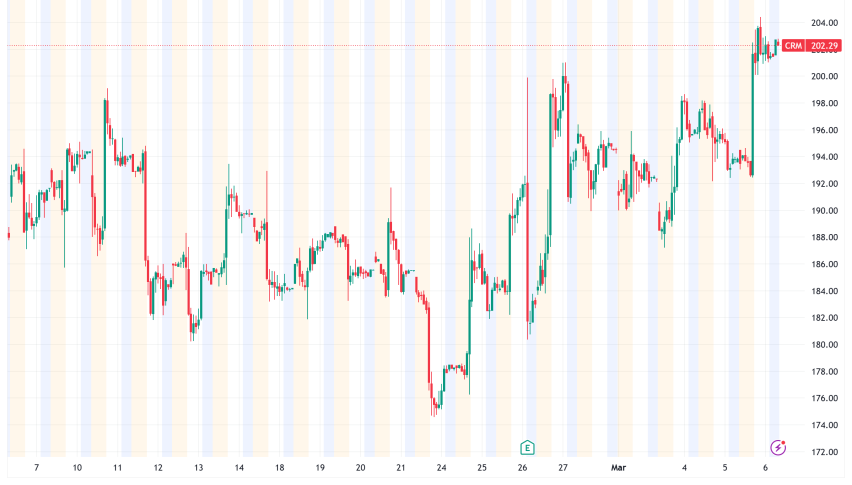
Quick overview
- Salesforce Inc. reported a record $11.2 billion in revenue for Q4, marking a 12% year-over-year increase.
- The company announced a $50 billion stock buyback program, supported by a 40% rise in free cash flow to $5.3 billion.
- Salesforce's Agentforce AI platform is driving growth, with a 50% increase in deals signed in Q4 and an annualized revenue run rate of $800 million.
- Despite strong earnings, Salesforce's stock has dropped 36% in the past year due to concerns over the impact of AI on traditional SaaS revenue streams.
Even as Wall Street debates whether artificial intelligence will empower or undermine the enterprise software giant, Salesforce Inc. (NYSE: CRM) is bucking a wave of sector pessimism by announcing a blowout fourth fiscal quarter and authorizing one of the largest stock buyback programs in the company’s history.
The San Francisco-based cloud computing company reported $11.2 billion in revenue for the fourth quarter, a 3 percentage point increase over the previous quarter and a 12% increase year over year. At $3.81, non-GAAP earnings per share surpassed the average consensus of $3.05 by $0.76. Salesforce reported $41.5 billion in revenue for the entire fiscal year 2026, a 10% increase, and adjusted earnings of $12.52 per share, a 23% increase.
Agentforce Emerges as a Real Growth Engine
Agentforce, Salesforce’s agentic AI platform for deploying autonomous AI agents for enterprise clients, is at the heart of the company’s growth. The product’s journey from concept to market traction has been swift: In Q4 alone, Salesforce signed 29,000 Agentforce deals, a 50% increase from the previous quarter. The platform currently has an annualized revenue run rate of $800 million, which is an 82% increase in just six months and a 169% increase year over year.
The “Agentic Work Unit” (AWU), a highly monitored internal indicator that counts the amount of jobs automatically completed by AI agents, increased 57% year over year to 2.4 billion lifetime units during the quarter. Instead of focusing only on contract signings, the data highlights the extent of enterprise usage.
In February, Salesforce announced a $5.6 billion contract with the U.S. Army to implement AI capabilities and assist modernization initiatives throughout the service, securing another prominent public sector victory.
Salesforce is making significant bets on the broader agentic AI business, which Precedence Research projects will reach $199.1 billion by 2034, or an approximate 44% annual growth rate.
Free Cash Flow Surge Backs Massive Buyback
With free cash flow reaching $5.3 billion in Q4, a 40% year-over-year rise, and a free cash flow margin of 47.5%, Salesforce’s financial strength was clearly visible. Notably, core subscription and support revenues—which account for 95% of consolidated revenue—grew at a rate more than three times slower than free cash flow.
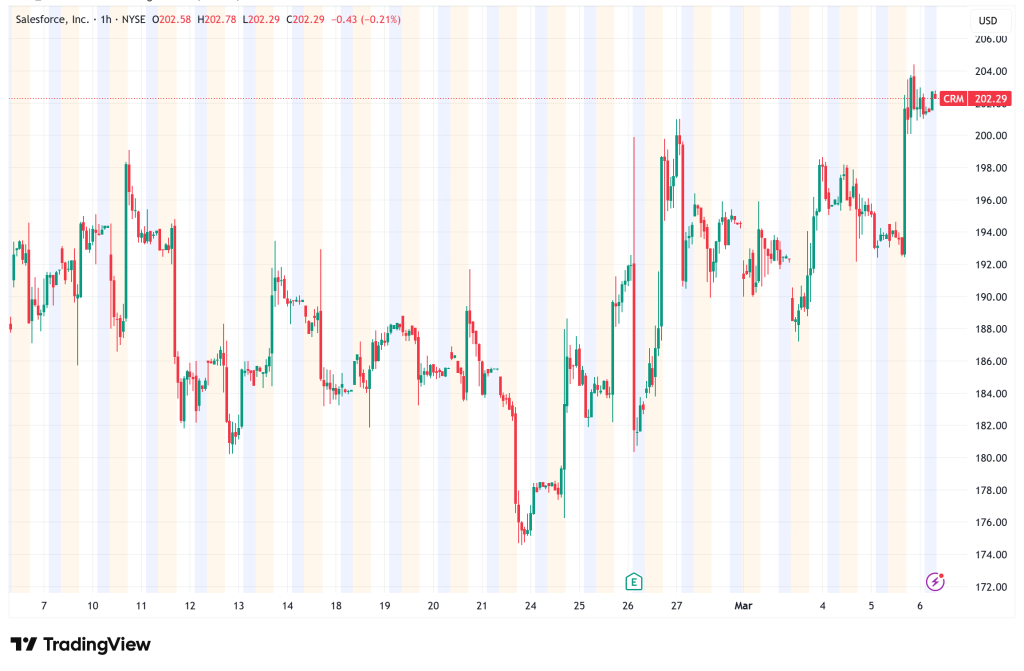
The business announced a new $50 billion stock repurchase authorization, a 67% increase from its existing $30 billion program, supported by that cash generation. At present share prices close to $200, the buyback represents around 28% of Salesforce’s total market value. Additionally, the business increased its quarterly dividend to $0.44 per share, a 6% increase.
However, critics have noted that, despite $28 billion in buybacks over the previous three years, the number of outstanding shares has only decreased by roughly 4%, indicating that significant stock-based remuneration is still diluting shareholders.
‘SaaSpocalypse’ Fears Depress Valuation
Notwithstanding the impressive outcomes, Salesforce’s stock has dropped about 36% in the last 12 months due to what some market participants are referring to as the “SaaSpocalypse”—the concern that growing AI capabilities could jeopardize the recurring income streams of conventional SaaS companies.
Salesforce’s forward price-to-earnings ratio has dropped to about 13x, or 40% less than its five-year historical average of 21.6x, as a result of this pessimism. While the sector average is approximately 18.3x, competitors Oracle and ServiceNow trade at forward P/E ratios of 19.2x and 22.7x, respectively.
Bullish analysts contend that Salesforce’s profitability, leading position in the CRM market, and growing momentum of Agentforce make the discount unjustified. Some have set price goals as high as $273 per share, which suggests an increase of over 40% above current prices.
Salesforce’s high-growth days are over, according to more conservative voices, and the company’s fiscal year 2027 outlook, which calls for revenue growth of 10–11% and free cash flow growth of 9–10%, is good but unlikely to raise the stock much. There was little opportunity for an upward surprise because the guidance’s midpoint of $46.0 billion likewise fell just short of the analyst estimate of $46.1 billion.
- Check out our free forex signals
- Follow the top economic events on FX Leaders economic calendar
- Trade better, discover more Forex Trading Strategies
- Open a FREE Trading Account
- Read our latest reviews on: Avatrade, Exness, HFM and XM

Related Articles



Sidebar rates

Related Posts
 Save
Save