Iran Conflict Drives Oil to Near $120/Barrel in Massive Supply Shock
Oil prices surged as much as 30% in Asian trade on Monday, reaching levels last seen in 2022,
Quick overview
- Oil prices surged up to 30% in Asian trade, reaching levels not seen since 2022 due to escalating tensions between the US, Israel, and Iran.
- Brent oil futures peaked at $117.16 per barrel, while West Texas Intermediate crude hit an intraday high of $118.82 per barrel.
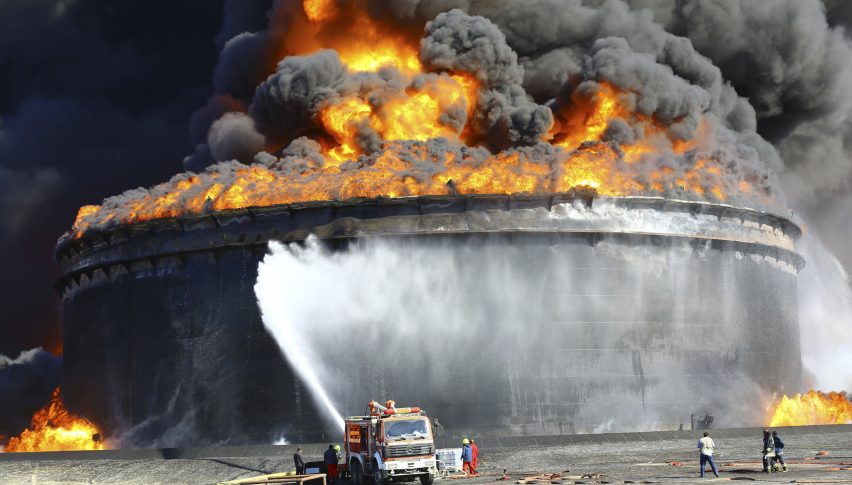
- The conflict intensified with airstrikes on Iran's oil facilities and attacks on the Strait of Hormuz, a crucial shipping route for global oil supply.
- Major oil producers are cutting output as storage fills up, leading to concerns about further disruptions in the oil markets.
Oil prices surged as much as 30% in Asian trade on Monday, reaching levels last seen in 2022, as concerns about supply disruptions in the coming months grew due to the intensifying conflict between the US, Israel, and Iran.
Brent oil futures for May surged more than 25 percent to a peak of $117.16 per barrel, while West Texas Intermediate crude futures rose as much as 30 percent to an intraday high of $118.82 per barrel.
The conflict between Israel and Iran escalated for the first time since it began in early March over the weekend when airstrikes targeted Iran’s oil facilities in Tehran and the province of Alborz. The tenth consecutive day of the conflict began on Monday.
Iran earlier attacked the Strait of Hormuz, a vital shipping route for roughly 20% of the world’s oil consumption. Lane disruptions had been a major source of concern for the oil markets.
Major producers are cutting output as storage fills up due to the unprecedented disruption caused by the war in Iran, and the most important waterway for the global energy markets is still essentially closed.
Consequently, it is anticipated that the oil markets will be even more chaotic on Monday. Along with Iraq, whose output has now dropped by about 60%, the United Arab Emirates and Kuwait have already started reducing oil production as storage runs out. Oil tankers may be forced to follow as they continue to avoid the narrow Strait of Hormuz, rapidly reducing the number of empty tankers available for loading. After all the vessels are taken, the remaining on-land storage in the area will fill even faster.
The upheaval, which is currently in its ninth day, shows no signs of resolution, making a waterway that normally handles a fifth of the world’s oil impassable. Saudi Arabia is moving record amounts of crude to its country in an attempt to ease some of the pressure.
- Check out our free forex signals
- Follow the top economic events on FX Leaders economic calendar
- Trade better, discover more Forex Trading Strategies
- Open a FREE Trading Account
- Read our latest reviews on: Avatrade, Exness, HFM and XM

Related Articles
Sidebar rates

Related Posts
 Save
Save