Bitcoin Price Prediction: BTC Hits $71,750: Will the Iran Energy Crisis Fuel a Digital Gold Breakout?
Right now, the cryptocurrency market is full of mixed signals. As of March 24, 2026, Bitcoin (BTC/USD) has bounced back to $71,782...
Quick overview
- The cryptocurrency market is experiencing mixed signals, with Bitcoin rebounding to $71,782 amid geopolitical tensions in the Middle East.
- Energy prices are rising, with Brent crude at $102.45, impacting Bitcoin's potential as a hedge against currency devaluation.
- Bitcoin is currently in a consolidation phase, with key technical levels at $70,400 and resistance at $71,380, while downside risks loom below $69,100.
- Professional traders remain cautious despite a price increase, as the Coinbase Premium Index indicates potential short-term corrections.
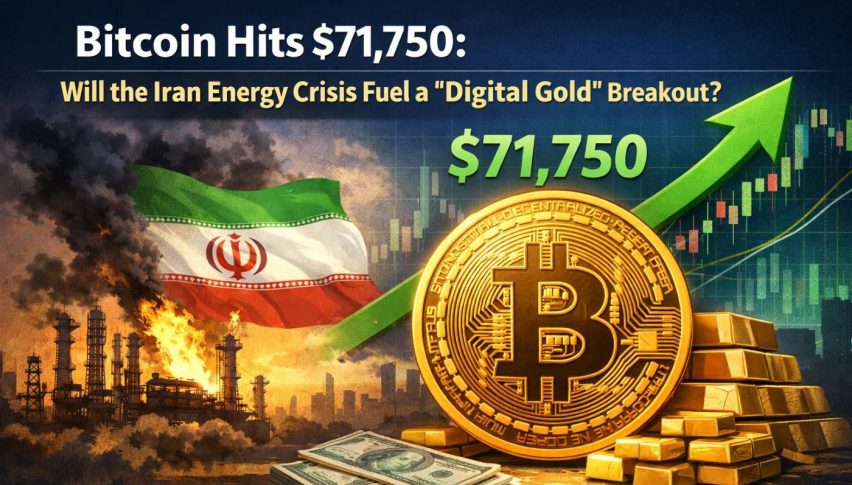
Right now, the cryptocurrency market is full of mixed signals. As of March 24, 2026, Bitcoin (BTC/USD) has bounced back to $71,782, even with rising tensions in the Middle East. US and Israeli forces have hit Iranian natural gas sites in Isfahan, so the market is torn between worries about oil-driven inflation and hopes for a so-called Trump Pump.
Brent crude has risen to $102.45 and WTI is up 3.2%, making energy costs a key factor for Bitcoin. In the past, energy market shocks have caused short-term sell-offs, but they also support the idea that Bitcoin can be a long-term hedge against currency devaluation.
Technical Analysis: The $70,400 Pivot Zone
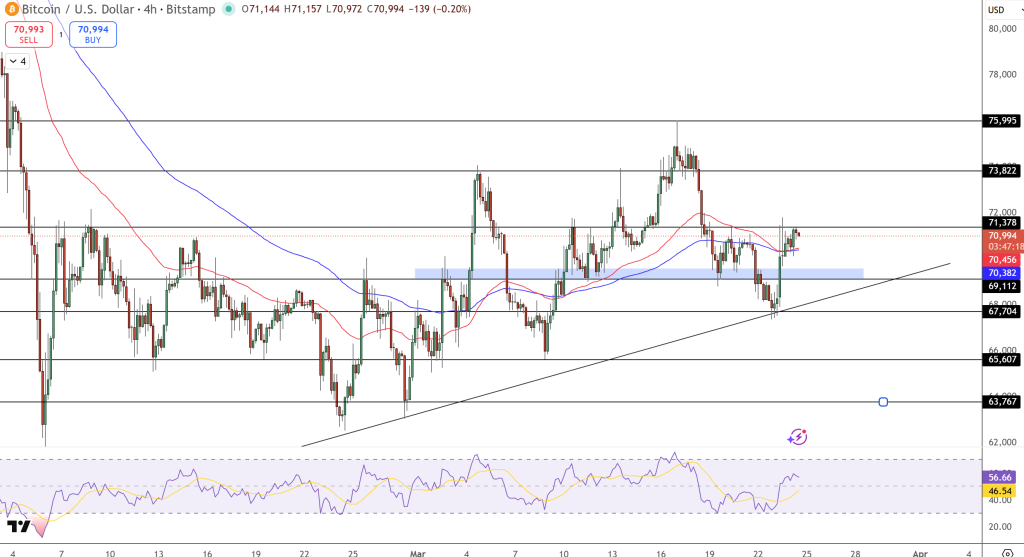
On the 4-hour chart, Bitcoin is in a key consolidation phase. After rebounding from trendline support near $67,700, it is now at an important technical point.
- The Moving Average Confluence: BTC is currently at the intersection of the 50-period and 200-period moving averages ($70,400 to $70,500). Staying above this level keeps the short-term outlook positive.
- Resistance Walls: The first resistance for buyers is at $71,380. If Bitcoin moves past the supply zone at $73,820, it could aim for the next target at $75,995.
- The Downside Risk: If Bitcoin falls below $69,100, the recent recovery may not hold, and prices could drop back to the $67,700 trendline or even $65,600 support.
Geopolitical Heat: Energy Strikes and the Hormuz Factor
The situation is becoming more focused on military actions. Damage to pipelines connected to the Khorramshahr power plant has shaken energy markets.
- Saudi Involvement: Reports say Saudi Arabia has allowed the U.S. to use the King Fahd Air Base, which could mean a broader coalition. If the Crown Prince fully joins the conflict, a full blockade of the Strait of Hormuz is likely.
- Inflationary Pressure: Analysts warn that if crude oil stays above $100, the Federal Reserve may have to keep interest rates high for longer. This often reduces investment in risk assets like Bitcoin, although recently Bitcoin has acted more like a safe haven during the first reports of strikes.
Derivative Market: Cautious Optimism vs. Coinbase Discount
Even with a 4% price increase, professional traders remain very cautious. Open Interest in BTC futures has climbed to $47.88 billion, but other signs show traders are not fully confident.
The Coinbase Premium Index is now negative. Among professional traders, this usually means U.S. institutional demand is behind global retail buying, which is often a warning sign before a short-term correction.
Anthony Scaramucci of SkyBridge Capital suggests the real breakout for Bitcoin may not happen until the fourth quarter of 2026. For now, Bitcoin is still heavily influenced by news headlines. Traders should watch both the $68,000 support level and updates on Isfahan’s energy infrastructure, since more disruptions to global oil could quickly make Bitcoin prices more volatile.
- Check out our free forex signals
- Follow the top economic events on FX Leaders economic calendar
- Trade better, discover more Forex Trading Strategies
- Open a FREE Trading Account
- Read our latest reviews on: Avatrade, Exness, HFM and XM

Related Articles


Sidebar rates

Related Posts
 Save
Save