Crypto Hackers Grabbed $169M In Q1 But DeFi Exploits Are Officially In Their Flop Era (Down 89% YoY)
Crypto hackers made off with around 168 million bucks from Decentralised Finance (DeFi) protocols in the first quarter of 2026,..
Quick overview
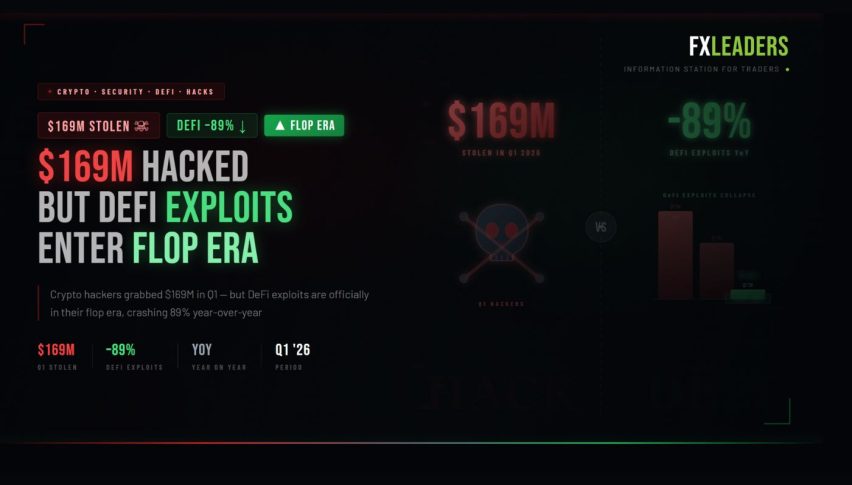
- Crypto hackers stole approximately $168 million from DeFi protocols in Q1 2026, a significant decrease from $1.58 billion the previous year.
- The decline in thefts indicates improved security measures among some DeFi protocols, but risks remain as market activity increases.
- Major incidents included a $40 million private key compromise at Step Finance and a $26.4 million exploit at Truebit, highlighting ongoing vulnerabilities.
- Experts warn that as the DeFi market grows, hacker activity is likely to rise, with evolving tactics and a focus on human behavior.
Crypto hackers made off with around 168 million bucks from Decentralised Finance (DeFi) protocols in the first quarter of 2026, a significant drop from the 1.58 billion dollars that were swiped a year earlier . This fall in the dollar amount stolen is a sharp contrast to the previous year and it hints at a quieter start to the year for the large scale crypto hacks – although security experts are warning that the underlying risks are still there, especially as more money starts flowing back into crypto markets.
DeFi hacks plummet but still leave us with a nagging sense of unease
Data from DefiLlama shows that the losses were spread out across 34 different DeFi protocols – so rather than seeing a single massive breach, we’re seeing a much more fragmented threat landscape. And while it’s true that the year on year decline was a whopping 89% – that’s largely because one single massive hack on Bybit in early 2025 netted the hackers 1.4 billion dollars.
The lower aggregate figure suggests that some DeFi protocols have gotten their security act together, with better audits and tighter access controls in place, but analysts caution that we shouldn’t read too much into this.
Cybersecurity pros will tell you that the frequency and severity of attacks often tend to lag behind the broader market trends. So as more liquidity builds up and user activity starts to pick up, the bad guys will naturally start to target these more popular protocols even more aggressively.
The largest exploits show us that some old vulnerabilities just won’t go away
January had some of the biggest losses of the quarter, with a 40 million dollar private key compromise at Step Finance. This is a classic example of a recurring security weakness in crypto – namely, when someone manages to get their hands on someone’s private key, they can bypass even the best-designed smart contracts.
Other major incidents we saw include:
- A 26.4 million dollar exploit at Truebit in late January, when someone managed to manipulate the smart contract
- A private key breach at stablecoin issuer Resolv Labs in March
- And a whole bunch of smaller scale attacks across some of the newer DeFi apps
What this tells us is that a lot of the losses were still down to fundamental security flaws and operational errors – and that private key compromises remain a real danger, especially if people aren’t careful with their keys (or get social engineered into handing them over).
Market momentum drives hacker activity, not calendar dates
Security pros will tell you that crypto hacking activity is closely tied to what’s going on in the market, rather than to specific time of year or other factors. When the market is growing, new products are being launched and tokens are getting more attention, we can expect to see a surge in exploit attempts.
The drivers of this activity include:
- Even more money flowing into a few select protocols or ecosystems.
- New and untested smart contracts getting deployed – and often not being properly audited.
- Even more people joining the party, often with not a lot of security know-how.
- And as more cross-chain infrastructure gets built, it gets more complicated.
As Ethereum starts to trade in the 2000 dollar range, we’re starting to see a renewed interest in DeFi – and that will likely attract even more bad guys to the scene. We all know that higher TVL (Total Value Locked) across protocols tends to correlate with a heightened threat level.
The threat landscape is evolving – including state linked actors
The types of crypto attackers are evolving, from highly-coordinated groups to opportunistic individuals, and state linked actors remain a concern, especially the ones associated with North Korea, due to their scale and coordination.
Recent incidents, like the 285 million dollar loss tied to a private key leak at Drift Protocol, show us that the bad guys are now getting more sophisticated in how they target infrastructure and access points rather than just code vulnerabilities.
Experts expect 2026 to see even more advanced techniques being used, like credential theft, social engineering and AI assisted exploits – and these methods are getting more and more targeted at human behaviour, not just the tech itself.
Even though there’s been a drop in quarterly losses, the DeFi sector is still structurally exposed – so for investors and developers the key message is this: security needs to be a continuous process as all the other factors in the market keep moving upwards.
- Check out our free forex signals
- Follow the top economic events on FX Leaders economic calendar
- Trade better, discover more Forex Trading Strategies
- Open a FREE Trading Account
- Read our latest reviews on: Avatrade, Exness, HFM and XM

Related Articles



Sidebar rates

Related Posts
 Save
Save