Bitcoin Reclaims $77K as Iran Deal Hopes, ETF Outflows, and Bond Fears Collide
Bitcoin (BTC) rebounds above $77K as Iran deal hopes, ETF outflows, whale shorts, and bond fears shake crypto markets. How to trade Bitcoin
Written by:
Arslan Butt•Monday, May 25, 2026•4 min read
•Last updated: Monday, May 25, 2026
Quick overview
Bitcoin rebounded above $77,000 after a volatile weekend, driven by easing geopolitical tensions and aggressive derivatives positioning.
The recovery was catalyzed by optimism surrounding U.S.-Iran negotiations, which reduced geopolitical risk premiums and improved market risk appetite.
Despite the rebound, institutional demand remains a challenge, with significant outflows from Bitcoin ETFs and cautious positioning among large traders.
Long-term, Bitcoin's structural bull case is supported by its fixed supply and growing recognition as a macro asset, but risks from regulatory uncertainty and market volatility persist.
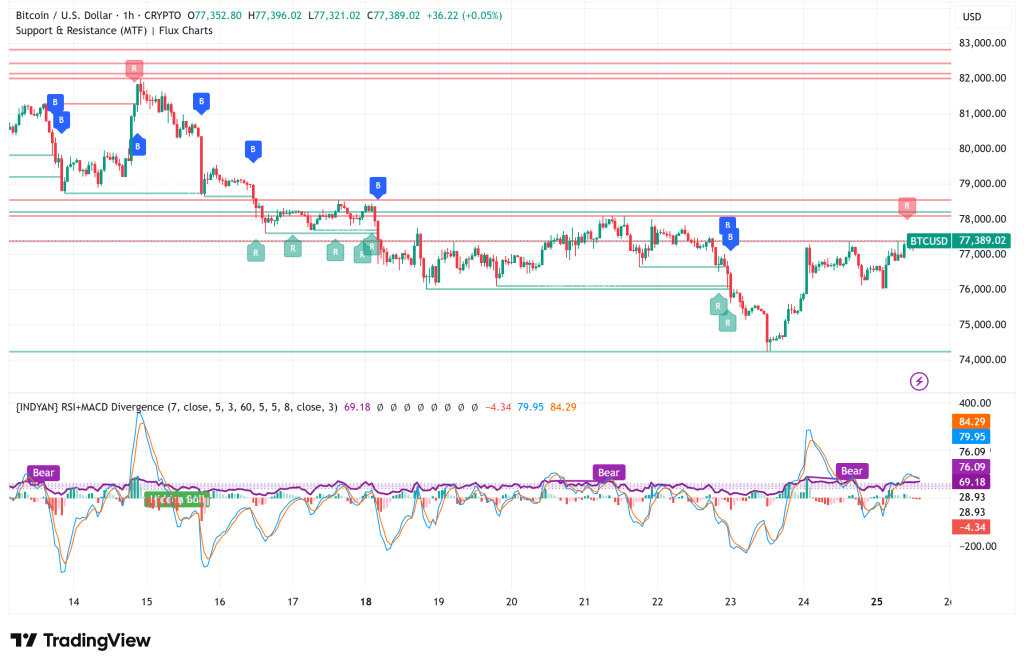
Bitcoin climbed back above $77,000 on May 25 after a volatile weekend selloff pushed prices briefly toward $74,000, as traders reacted to easing geopolitical tensions, aggressive derivatives positioning, and renewed debate over Bitcoin’s long-term role in a debt-heavy global financial system.
The world’s largest cryptocurrency traded near $77,400 at the time of writing, up roughly 0.8% over the past 24 hours. Bitcoin slightly outperformed the broader crypto market, while most major altcoins remained subdued.
The rebound comes as markets digest three powerful themes simultaneously:
Geopolitical de-escalation linked to U.S.-Iran negotiations
Weakening institutional ETF flows
Growing macro fears surrounding sovereign debt and fiat currency debasement
Together, they are creating one of the most complex trading environments Bitcoin has faced in months.
Bitcoin’s Rally Was Triggered by Iran Deal Optimism
The immediate catalyst for Bitcoin’s recovery came after U.S. President Donald Trump stated that a deal with Iran to reopen the Strait of Hormuz was “largely negotiated.”
That announcement sharply reduced geopolitical risk premiums across global markets.
The move reinforced Bitcoin’s increasingly macro-sensitive trading behavior, where geopolitical headlines now drive short-term price action almost as much as crypto-native developments.
Markets remain cautious, however.
Trump later stated there was “no rush” to finalize the agreement, while uncertainty surrounding Iran’s uranium stockpile and shipping access through Hormuz continues to cloud the outlook.
That means Bitcoin’s latest rebound still resembles a fragile relief rally rather than a confirmed breakout.
BTC Short Liquidations Accelerated the Move Higher
The speed of Bitcoin’s rebound was amplified by derivatives activity rather than strong spot demand.
More than $369 million in crypto derivatives positions were liquidated following the Iran deal headlines, with most of the losses concentrated in short positions.
At the same time:
Open interest increased
Bitcoin dominance ticked higher
Capital rotated away from altcoins
Defensive positioning intensified across crypto markets
This suggests traders increasingly view Bitcoin as the safest asset inside crypto during periods of uncertainty.
But it also raises risks.
When rallies are driven primarily by short covering instead of sustained spot buying, they can reverse quickly if momentum fades.
6 Days of Bitcoin ETF Outflows Continue to Pressure Sentiment
Institutional demand remains one of Bitcoin’s biggest near-term challenges.
U.S. spot Bitcoin ETFs have now recorded six consecutive trading days of net outflows, with more than $1.55 billion leaving the sector since May 14.
Net inflows for all of 2026 have now fallen to just $536 million.
Even BlackRock’s IBIT — the dominant player in the ETF market — has slowed considerably compared to 2025 inflow levels.
Other developments also point to cooling institutional appetite:
Jane Street reportedly reduced Bitcoin ETF exposure by roughly 70% in Q1
Goldman Sachs cut its Bitcoin ETF holdings by around 10%
Several planned crypto ETF launches have been withdrawn amid intense competition
Still, there are pockets of strength.
Morgan Stanley’s newer Bitcoin ETF product reportedly attracted $264 million in inflows since launching in April, helped by aggressively low fees.
The ETF picture now reflects a divided institutional landscape rather than broad capitulation.
Several structural drivers continue supporting the asset:
Fixed 21 million supply cap
Growing institutional infrastructure
Increasing sovereign debt concerns
Mainstream derivatives adoption
Expanding global recognition as a macro asset
At the same time, risks remain substantial.
Bitcoin still faces:
Regulatory uncertainty
ETF flow dependence
Macro-driven volatility
Liquidity sensitivity
Aggressive leveraged speculation
The next major catalyst may arrive on May 28 with the U.S. Core PCE inflation report, which could reshape expectations around Federal Reserve policy and broader risk appetite.
For now, Bitcoin appears caught between short-term fragility and a powerful long-term structural narrative.
That tension may define crypto markets for the rest of 2026.
Lead Markets Analyst – Multi-Asset (FX, Commodities, Crypto)
Arslan Butt serves as the Lead Commodities and Indices Analyst, bringing a wealth of expertise to the field. With an MBA in Behavioral Finance and active progress towards a Ph.D., Arslan possesses a deep understanding of market dynamics.
His professional journey includes a significant role as a senior analyst at a leading brokerage firm, complementing his extensive experience as a market analyst and day trader. Adept in educating others, Arslan has a commendable track record as an instructor and public speaker.
His incisive analyses, particularly within the realms of cryptocurrency and forex markets, are showcased across esteemed financial publications such as ForexCrunch, InsideBitcoins, and EconomyWatch, solidifying his reputation in the financial community.






 Save
Save