South Africa’s Mining Outlook Bright as Global Demand Grows 15%
South Africa's mining industry is poised for a robust year, driven by increased global demand for commodities and strategic local policies.What HappenedAt the recent Mining Indaba conference, Menar, a prominent...
Quick overview
- South Africa's mining industry is set for growth due to rising global demand for commodities, particularly from China and India.
- Eskom's new ferrochrome tariff deal is expected to protect mining jobs and enhance industry sustainability.
- While optimism prevails, risks such as Glencore's potential withdrawal from talks and logistical challenges could introduce market volatility.
- Traders should closely monitor the USD/ZAR exchange rate and JSE indexes, as these will be influenced by commodity demand and trade balances.
Live USD/ZAR Chart


South Africa’s mining industry is poised for a robust year, driven by increased global demand for commodities and strategic local policies.
What Happened
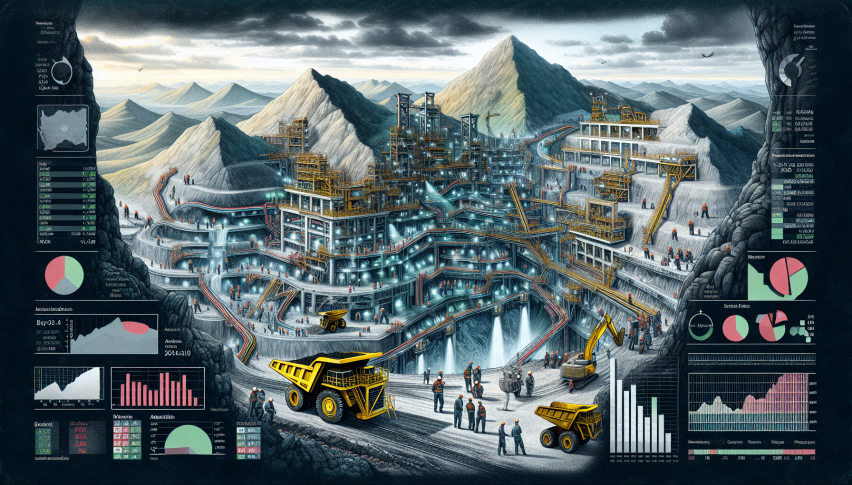
At the recent Mining Indaba conference, Menar, a prominent mining company, projected a promising outlook for the South African mining sector. Buoyed by international market dynamics, particularly the growth in China and India, the demand for essential commodities such as coal and iron is expected to surge significantly, as highlighted by businessreport.co.za.
Additionally, Eskom’s new ferrochrome tariff deal is set to safeguard numerous mining jobs in South Africa, according to Discovery Alert. This move not only stabilizes the industry but also ensures its sustainability amidst global economic shifts.
South African Market Angle
The South African Reserve Bank (SARB) has maintained a vigilant monetary stance, which, combined with stable mining operations, could bolster the rand’s position. The Johannesburg Stock Exchange (JSE) is likely to see positive ripples from this mining resurgence, potentially driving up stock values in related sectors.
As demand for South African commodities rises, the nation’s trade balance may improve, providing a cushion for the rand against global economic volatilities. Traders should watch how this increased demand affects currency exchange rates, particularly USD/ZAR.
Contrary Angle
Despite the optimism, there are underlying risks that could dampen growth. Reuters reports that Glencore might withdraw from rescue talks for a South African smelter due to stringent conditions. This uncertainty could introduce volatility in the local market, affecting investor sentiment and potentially leading to fluctuations in the JSE.
Furthermore, logistical challenges and supply chain bottlenecks, as reported by businessreport.co.za, could hinder the efficient export of commodities, impacting revenue generation.
Why Traders Should Care
For traders, the current scenario presents both opportunities and risks. The potential for increased commodity demand offers lucrative prospects for those invested in mining stocks or commodities futures. However, the looming uncertainty regarding Glencore’s decisions and logistical challenges necessitates a cautious approach.
Monitoring the USD/ZAR pair will be crucial, as shifts in commodity prices and trade balances are likely to influence the rand’s trajectory. Traders should also keep an eye on JSE indexes that are heavily weighted towards mining stocks.
Conclusion
In conclusion, South Africa’s mining sector is positioned for a year of growth, with global demand acting as a significant tailwind. However, traders must remain vigilant of potential disruptions that could impact market stability. Strategic positioning and attentive market monitoring will be key to capitalizing on these developments.
- Check out our free forex signals
- Follow the top economic events on FX Leaders economic calendar
- Trade better, discover more Forex Trading Strategies
- Open a FREE Trading Account
- Read our latest reviews on: Avatrade, Exness, HFM and XM

Related Articles

Sidebar rates

Related Posts
 Save
Save