South African Rand: USD/ZAR Edges Higher on Geopolitics Ahead of FED Policy Meeting
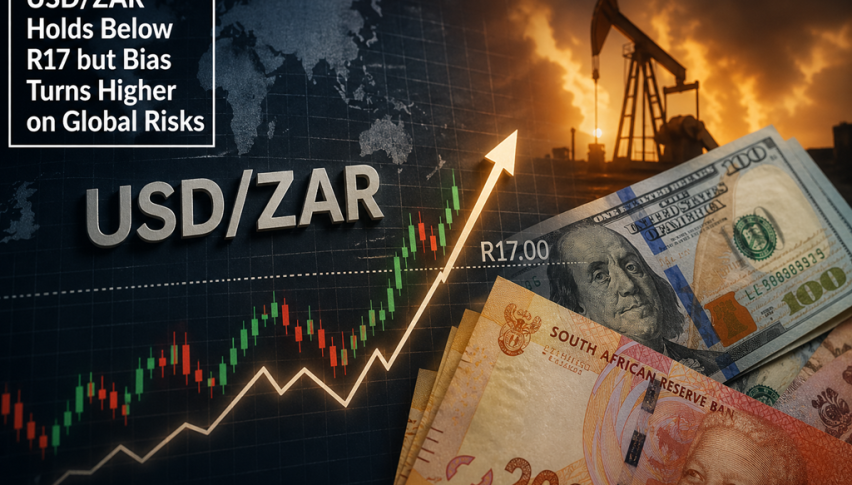
USD/ZAR moved higher as rising oil prices, geopolitical tensions, and a stronger dollar weighed on the rand.
Quick overview
- USD/ZAR has risen due to rising oil prices, geopolitical tensions, and a stronger dollar impacting the rand.
- The South African rand showed initial strength in early 2026 but reversed course in March as investors shifted to safer assets.
- Inflation is expected to rise in April due to fuel price hikes, while retail sales growth has slowed significantly amid economic pressures.
- Geopolitical risks and a strong U.S. dollar continue to create volatility for the rand, keeping USD/ZAR below the R17 level.
USD/ZAR moved higher as rising oil prices, geopolitical tensions, and a stronger dollar weighed on the rand.
USD/ZAR Rises as External Pressures Build on the Rand
The South African rand entered 2026 with strong momentum, supported by improved global risk appetite and capital inflows into emerging markets. During this period, USD/ZAR dropped into the mid-R15 range, reflecting broad investor confidence.
That trend reversed sharply in March as sentiment shifted toward safer assets. The pair moved back above R17, although it currently remains just below that level. A temporary pullback followed ceasefire optimism between the U.S. and Iran, but the rand’s recovery proved short-lived.
- Headline Rate: 3.1% YoY, up from 3.0% in February, and slightly up from 0.6% monthly.
- Drivers: The cost of living is rising, with six of the 13 categories in the CPI basket reporting higher annual rates, including restaurants.
- Food Price Trend: Food inflation remains a factor, but some products like rice, eggs, and bread are experiencing price declines.
- Future Pressures: Analysts expect higher inflation in April due to fuel price hikes linked to geopolitical tension.
- Growth: Retail sales increased by 1.6% year-on-year in February.
- Deceleration: The growth rate slowed significantly from the revised 4.4% in January.
- Context: Retail activity was hampered by economic pressures and a weaker rand.
- Interest Rates: The South African Reserve Bank (SARB) faces pressure to hike interest rates in May or July if inflation persists, though they left them at 6.75% in March.
- Rand Impact: The rand was trading at 16.44 against the dollar (0.53% stronger) despite global uncertainty.
Technical Analysis
Technically, we saw a bullish attempt in USD/ZAR which briefly broke above R17 in late March, moving above its 20-day simple moving average (gray), which had been defining the pair’s downtrend in recent months. However, the 50-day moving average (yellow) acted as firm resistance. The rejection at this level triggered a reversal, pushing USD/ZAR back below to the 20-day average.
USD/ZAR Chart Daily – MAs Keeping the Pressure to the Downside

On the monthly chart, USD/ZAR seems to have bottomed at the 100 SMA (green) where it found support in the last two months. Last month we saw a rebound as the Rand weakened while the Dollar gained, but buyers are facing the 50 SMA (yellow) and in April the forex pair has reversed lower again. For the larger trend to resume, USD/ZAR would need to push above this moving average.
USD/ZAR Chart Monthly – Rebounding Off the 100 SMA

Geopolitical Risks Drive Market Caution
Global tensions have returned as a dominant market driver. Iran’s move to restrict access to the Strait of Hormuz has raised concerns over oil supply disruptions and broader instability.
Ongoing conflict involving Israel and Lebanon, along with strained U.S.-Iran relations, continues to fuel uncertainty. Comments from Donald Trump hinted at potential negotiations, but the absence of concrete progress has kept markets cautious.
- Iran proposed a phased negotiation framework
- Initial stage focuses on ceasefire stability
- Later stages include Hormuz management and nuclear talks
This environment has pushed investors toward defensive assets, weakening emerging market currencies like the rand.
Dollar Strength and Fed Policy Divergence
A stronger U.S. dollar is another key driver behind USD/ZAR’s upward move. Expectations that interest rates will remain elevated have supported the dollar and attracted global capital.
Upcoming events will be critical:
- Federal Reserve meeting and remarks from Jerome Powell
- U.S. GDP, inflation (PCE), and income data
- Early May CPI and PPI releases
Higher U.S. yields continue to draw investment away from emerging markets, putting additional pressure on the rand.
Commodity Dynamics Add to Weakness
Rising oil prices are increasing import costs for South Africa, further weighing on the currency. At the same time, Gold—typically supportive for the rand—has struggled after a recent selloff.
This combination leaves the rand more exposed to external shocks, particularly those tied to energy markets and global risk sentiment.
Outlook: Fragile Balance Below R17
USD/ZAR remains below the R17 level, but the overall bias is turning upward. A mix of geopolitical uncertainty, dollar strength, and domestic economic pressures continues to weigh on the rand.
Unless global risks ease or commodity support strengthens, the pair is likely to remain volatile, with a potential move back above R17 in the near term.
- Check out our free forex signals
- Follow the top economic events on FX Leaders economic calendar
- Trade better, discover more Forex Trading Strategies
- Open a FREE Trading Account
- Read our latest reviews on: Avatrade, Exness, HFM and XM

Related Articles

Sidebar rates

Related Posts
 Save
Save