JSE Slides as Rand Wavers Amid Fed Tension, Market Cap Soars to R8.17trn
South Africa's JSE dips as the rand wobbles ahead of Fed decision, yet market cap exceeds R8.17 trillion.

Quick overview
- The Johannesburg Stock Exchange (JSE) experienced a dip due to concerns over the rand and anticipation of the U.S. Federal Reserve's interest rate decision.
- Despite the decline, the JSE's market capitalization surpassed R8.17 trillion, indicating the strength of South Africa's stock market.
- The recent listing of Cell C on the JSE adds new dynamics to the telecom sector, potentially boosting market liquidity.
- Traders should watch the rand's fluctuations and the South African Reserve Bank's decisions, as these factors will influence market strategies.
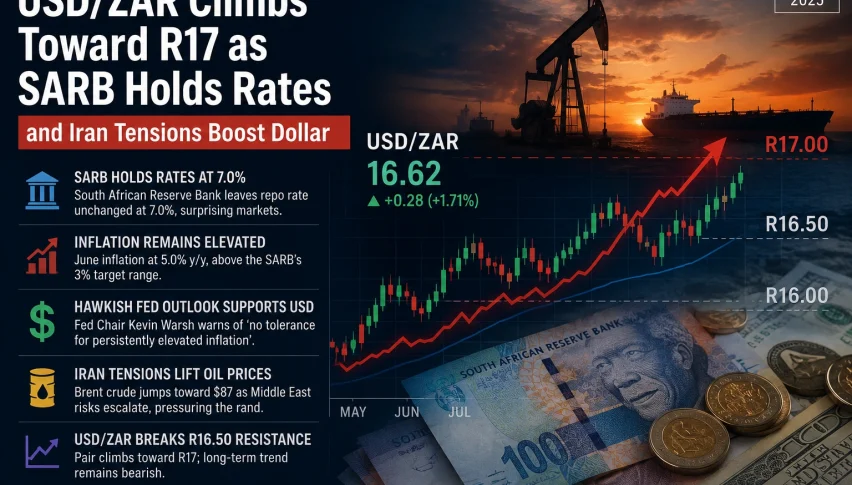
Live USD/ZAR Chart


The Johannesburg Stock Exchange (JSE) experienced a notable dip today, reflecting the jittery sentiment surrounding the rand as markets anticipate the U.S. Federal Reserve’s upcoming decision.
Behind the Headline
As reported by TechStock², the JSE slipped amid a cautious trading environment, influenced by the rand’s fluctuations. The local currency’s instability is attributed to speculative movements as investors brace for signals from the Federal Reserve regarding potential interest rate adjustments. Despite this, Moneyweb highlighted a significant milestone for the JSE, as its market capitalization surged beyond R8.17 trillion, underscoring the robustness of South Africa’s stock market amid global volatility.
South Africa Market Angle
The South African Reserve Bank (SARB) remains a pivotal player in this scenario, with its monetary policy decisions closely watched by traders. The rand’s volatility against major currencies, particularly the U.S. dollar, is a critical factor for the JSE’s performance. Furthermore, the recent listing of Cell C on the JSE, as covered by Dabafinance and Connecting Africa, marks a noteworthy development. This debut, following a $156 million share sale, adds new dynamics to the telecom sector, potentially enhancing market liquidity and investor interest.
Contrary Angle
While the prevailing sentiment might lean towards caution, especially with the Fed’s decision looming, some analysts argue that the JSE’s dip could be a temporary blip. The underlying strength of the South African economy, reflected in the JSE’s robust market cap, suggests resilience. Furthermore, the SARB’s proactive stance could cushion the economy from external shocks, offering a stabilizing effect on the rand in the longer term.
Why Traders Should Care
For traders, the current landscape presents both challenges and opportunities. The JSE’s dip could offer entry points into undervalued stocks, especially in sectors poised for growth amid economic recovery. Monitoring the rand’s movement is crucial, as it influences import and export dynamics, impacting corporate earnings. Additionally, the SARB’s future rate decisions will be key in shaping market expectations and trader strategies.
Conclusion
In summary, as the JSE navigates through a phase of uncertainty, underscored by global monetary policy shifts, the resilience of South Africa’s financial markets remains evident. Traders should remain vigilant, balancing caution with an eye for potential opportunities that arise from market fluctuations and new listings like Cell C.
- Check out our free forex signals
- Follow the top economic events on FX Leaders economic calendar
- Trade better, discover more Forex Trading Strategies
- Open a FREE Trading Account
- Read our latest reviews on: Avatrade, Exness, HFM and XM

Related Articles


Sidebar rates

Related Posts
 Save
Save