Rand Slips 1% as SARB Rate Hike Looms, Traders Eye Volatility
South Africa's rand falls 1% amid looming SARB rate hike, raising volatility concerns for traders.

Quick overview
- The South African rand has declined by 1%, raising concerns among traders ahead of a potential rate hike by the South African Reserve Bank (SARB).
- Market volatility is influenced by both local monetary policy expectations and global economic conditions, including the US Federal Reserve's decisions.
- While a rate hike could help curb inflation, it may also hinder economic growth by reducing consumer spending and business investment.
- Traders should closely monitor SARB announcements and global indicators to navigate the current volatile forex environment effectively.
Live USD/ZAR Chart

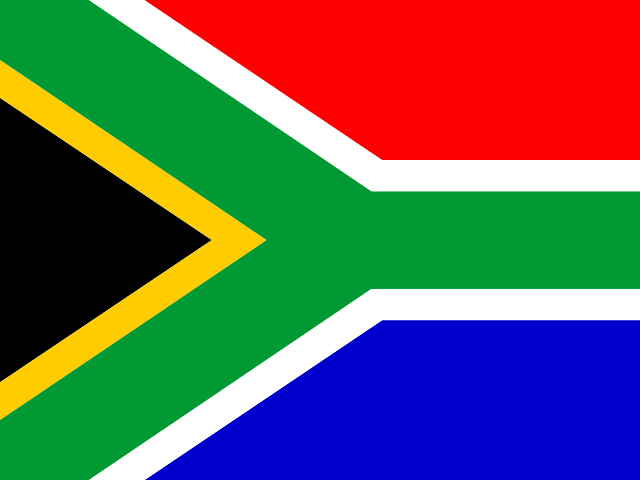
South Africa’s rand has slipped by 1%, stirring concerns among traders as the South African Reserve Bank (SARB) rate hike looms large amid volatile market conditions.
Behind the Headline
In recent trading sessions, the South African rand has experienced significant fluctuations, primarily driven by anticipation of the upcoming SARB monetary policy decision. As reported by FXLeaders, the rand’s 1% decline is attributed to market jitters that have intensified as traders brace for potential interest rate adjustments. The SARB is expected to maintain its hawkish stance, a move that could further tighten financial conditions in a bid to combat inflationary pressures.
Alongside the domestic factors, the global economic climate remains uncertain, adding to the rand’s volatility. The US Federal Reserve’s policy decisions and global market trends are also contributing to the rand’s current trajectory. According to TradingView, the USD/ZAR pair has shown varied movements, with the rand rallying at times, reflecting a complex interplay of local and international economic forces.
South Africa Market Angle
The South African economy is navigating a challenging landscape, with the SARB’s potential rate hike seen as a crucial step to curb inflation. However, this decision comes with its own set of risks, particularly for South Africa’s growth prospects. Higher interest rates could dampen consumer spending and business investment, which are vital for the country’s economic recovery. The Johannesburg Stock Exchange (JSE) may also experience heightened volatility as investors recalibrate their portfolios in response to changing interest rate expectations.
Moreover, the rand’s performance is closely tied to South Africa’s trade dynamics. A weaker currency could boost exports by making them more competitively priced on the global market, but it also raises the cost of imports, which could further strain inflation levels. As Invezz highlights, the rebound of the rand ahead of major central bank decisions indicates a reactive market environment sensitive to policy shifts.
Contrary Angle
While the consensus points to a rate hike by the SARB, some analysts suggest that the central bank might opt for a more cautious approach, potentially holding rates steady in the face of economic uncertainties. The argument against immediate tightening includes the potential to stifle economic growth at a critical juncture. As reported by various sources, the SARB may consider global economic conditions and local economic health to avoid exacerbating the economic strain.
Furthermore, the rand’s weakness might not solely be a consequence of domestic policy expectations. Global risk aversion, driven by geopolitical tensions and fluctuating commodity prices, could also be influencing investor sentiment towards emerging market currencies like the rand.
Why Traders Should Care
For traders, the current environment presents both challenges and opportunities. The rand’s volatility offers potential for profit through strategic forex trading, particularly in the USD/ZAR currency pair. Traders should monitor SARB announcements and global economic indicators closely to anticipate market swings. Additionally, understanding the impact of interest rate changes on the JSE and broader South African economy can provide valuable insights for making informed trading decisions.
The rand’s movements can also serve as a barometer for broader market sentiment, helping traders gauge risk appetite in emerging markets. By staying abreast of both domestic and international developments, traders can better navigate the complex landscape of forex and CFD markets.
Conclusion
As the SARB’s rate decision approaches, South African traders face a dynamic market landscape characterized by heightened volatility and uncertainty. The rand’s recent slide underscores the importance of staying informed and strategically positioned. Whether the SARB opts for a rate hike or a more cautious approach, traders must remain vigilant in adapting to shifting market conditions and leveraging opportunities as they arise.
- Check out our free forex signals
- Follow the top economic events on FX Leaders economic calendar
- Trade better, discover more Forex Trading Strategies
- Open a FREE Trading Account
- Read our latest reviews on: Avatrade, Exness, HFM and XM

Related Articles

Sidebar rates

Related Posts
 Save
Save