Delta Air Lines (DAL) Stock Forecast: Delta Anchors $92.73 Support as Fuel Relitigation Pivots Ahead of Q2 Earnings
Global aviation stocks are showing strong micro-structure support into the start of July 2026, as a major structural operational upgrade...
Quick overview
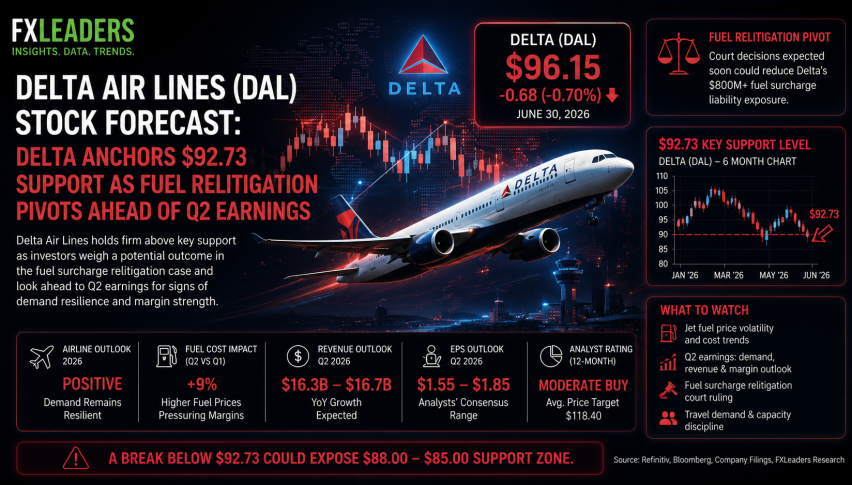
- Global aviation stocks, particularly Delta Air Lines, are experiencing strong support as they prepare for Q2 2026 earnings amid a challenging macro environment.
- The recent U.S.-Iran interim peace treaty has significantly reduced oil prices, benefiting Delta with a projected $300 million windfall from its refining operations.
- Delta's high-margin revenue model, driven by premium products and a growing credit card program, provides insulation against potential declines in consumer demand.
- Technical analysis indicates a bullish setup for Delta, with a potential breakout strategy targeting price levels above $95.14.
Global aviation stocks are showing strong micro-structure support into the start of July 2026, as a major structural operational upgrade faces an increasingly difficult macro backdrop. On Sunday, July 5, 2026, Delta Air Lines (NYSE: DAL) finished out of market at $92.73, essentially a level of consolidation reached in weeks.
Large hedge funds and proprietary desks are piling into long exposure within this support zone, as corporate travel picks up for July 10 when Delta releases Q2 2026 earnings, where it is expected to report a massive contraction in the fuel bill against very expensive premium demand.
Islamabad Accord Relieves Upstream Refining Volatility
The single biggest fundamental driver of Delta’s margin expansion is the rapid operational implementation of the U.S.-Iran interim peace treaty, the Islamabad Memorandum of Understanding (US-Iran MoU).
Last week, the interim accord between the United States and Iran was signed in Switzerland on June 19, 2026, effectively unwinding the high geopolitical risk premium that has been built into oil prices over the spring.
With Strait of Hormuz transit rates now approaching 85% of average levels, front-month Brent crude benchmarks have broken under $73 a barrel. This has already had a positive impact on Delta.
In early Q2, the airline industry endured a fuel crisis of epic proportions, with CEO Ed Bastian stating that the jet fuel crack spread had effectively doubled due to regional blockade anxieties. The Street was already bracing for a near-term $4.3 billion annualized fuel bill increase in its 2026 cash flow models.
However, the drop in oil prices since then, combined with Delta’s large long exposure to a fuel refining asset it owns, the Trainer Refinery in Pennsylvania, has given it a ~$300 million windfall from a “refinery gain” in its Q2 earnings for the June quarter. This is a major structural advantage for the company in the July-August peak travel period.
High-Margin Amex Remuneration insulates Against Cautious Warsh Doctrine
Delta’s high-margin, high-revenue model protects it from weak consumer demand due to a high-interest rate environment. Chairman Kevin Warsh keeps the Fed funds rate at its peak in response to an inflation reading of 4.1%, a rate level that has put a dampener on travel from lower-income consumer segments because of the increase in borrowing rates for credit cards.
According to the company’s earnings release, 62% of its revenue mix comes from premium products (Delta One, First, Comfort+) and other high-margin areas like maintenance, repair and overhaul services as well as the world’s largest frequent-flyer loyalty program.
The Delta-SkyMiles credit card is growing at a very rapid pace, bringing more than $2 billion in credit card revenues to Delta in the last quarter. This means that even if consumer demand does soften across the globe, it will provide Delta with a lot of free cash flow.
DAL Technical Analysis: DAL Defends Primary Ascending Trendline Ahead of Q2 Print
Zooming in off macro policy themes on the 2-hour time frame, Delta Air Lines has built a perfect Ascending Continuation pattern sitting straight on top of institutional buy zones.
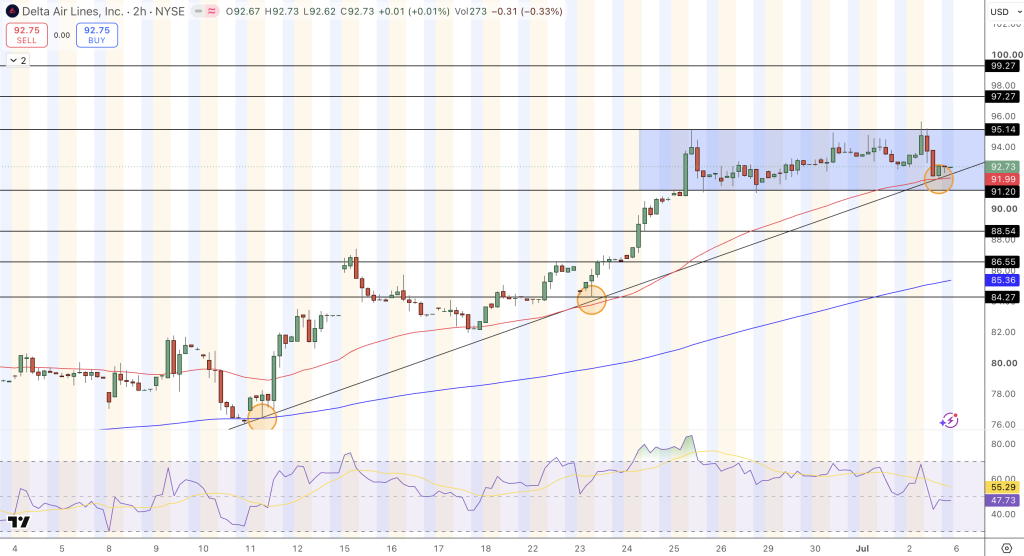
DAL holds a very clean technical setup. Lows are coming higher along the primary Ascending Black Trendline and its 50 EMA ($91.20). The pattern is now squeezing in close around the apex at $92.73. We are cleaning up selling overhead pressure from a red descending trendline off prior local swing highs.
The 14 RSI has stopped in a neutral reading at 55. Near-term directional bias has reset completely, and the RSI has plenty of mathematical room left to explode up. The MACD histogram shows early positive green bars, which means institutional accumulation is picking up float in the price range above $91.20.
Conclusion and Trade Idea
Delta Air Lines has a superior structural set-up within the G10 transport sector. The company also benefits from a top tier premium revenue mix, growing Amex loyalty revenue, and an immediate gas price break thanks to the recent MoU with Pakistan.
Wall Street has consensus revenue estimates of $17.47B and $1.54 EPS at the Q2 July 10 earnings print. Delta has beaten or met quarterly guidance every quarter and a technical pattern forming ahead of a strong historical earnings beat pattern looks very bullish.
Tactical Breakout Plan
Look to get long on a daily close bounce off the Ascending trendline at $92.73 and a daily close break above the descending trendline at $95.14. Place a tight stop loss order right below horizontal support at $91.20 targeting $97.27 after initial short squeeze post earnings. Secondary targets are at the macro double top resistance level at $99.27.
- Check out our free forex signals
- Follow the top economic events on FX Leaders economic calendar
- Trade better, discover more Forex Trading Strategies
- Open a FREE Trading Account
- Read our latest reviews on: Avatrade, Exness, HFM and XM

Related Articles
Sidebar rates

Related Posts
 Save
SaveAva

