Sasol Share Price JSE Faces Support After Dive as JPMorgan Downgrades and Iran Premium Fades
After a strong multi-month recovery, Sasol’s share price has come under renewed pressure as softer oil prices, currency headwinds, and...
Quick overview
- Sasol's share price has dropped approximately 12% following a downgrade by JPMorgan, erasing much of its year-to-date gains.
- The decline was influenced by falling oil prices and a strengthening South African rand, which pose risks to Sasol's earnings.
- Despite recent volatility, Sasol's operational performance and balance sheet improvements indicate a potential for long-term recovery.
- Key technical levels are being tested, with the stock's ability to maintain support around R100 critical for future stability.
After a strong multi-month recovery, Sasol’s share price has come under renewed pressure as softer oil prices, currency headwinds, and a high-profile downgrade test investor confidence.
Sharp Reversal Ends a Strong Start to the Week
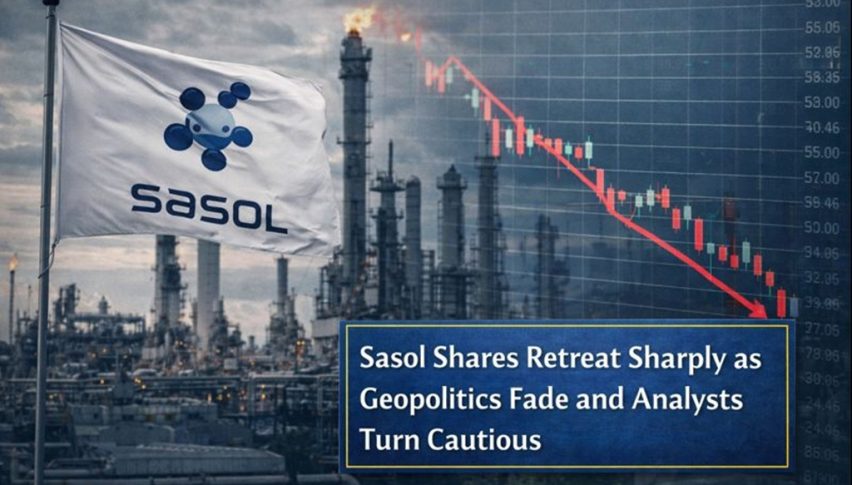
Sasol Limited (JSE: SOL) ended the week under heavy selling pressure, with the stock tumbling roughly 12% on Friday and wiping out a significant portion of its year-to-date gains. The decline followed an abrupt shift in market sentiment after JPMorgan downgraded the South African energy and chemicals group, citing mounting macroeconomic and market risks.
Earlier in the week, Sasol had benefited from a surge in oil prices, driven by rising geopolitical tensions and speculation over possible U.S. military involvement in Iran. That rally proved short-lived. As oil prices reversed lower and the geopolitical premium faded, investors quickly reassessed exposure to energy-linked equities, triggering a sharp pullback in Sasol shares.
JPMorgan Downgrade Alters the Narrative
The immediate catalyst for Friday’s selloff was JPMorgan’s decision to cut Sasol to Underweight from Neutral. Analyst Alex Comer reduced the bank’s price target to ZAR 94 from ZAR 107, arguing that downside risks now outweigh the potential upside after the stock’s powerful rebound earlier this year.
JPMorgan highlighted two major concerns. First, the firm sees oil prices facing structural pressure once geopolitical tensions ease, limiting the sustainability of recent gains. Second, it flagged the strengthening South African rand as a growing headwind for Sasol’s earnings profile, given the company’s substantial exposure to foreign-currency revenues.
Together, weaker oil fundamentals and an appreciating currency create a less supportive backdrop for earnings momentum, particularly after the stock’s sharp re-rating since April.
Oil Prices Retreat as Geopolitical Risk Cools
Adding to the pressure was a shift in U.S. rhetoric around Iran. Comments from President Trump on Friday suggested a more restrained stance toward military involvement, noting recent developments such as the cancellation of executions in Iran and emphasizing uncertainty around direct U.S. engagement.
Markets interpreted the comments as de-escalatory, prompting oil prices to give back recent gains. WTI crude fell back below the $50 level, undercutting energy stocks globally. For Sasol, which had rallied partly on geopolitical-driven oil strength, the reversal removed a key pillar of near-term support.
A Powerful Recovery Enters a Cooling Phase
Despite the latest selloff, Sasol’s broader performance in 2025 still reflects a meaningful turnaround. From April onwards, the stock staged an impressive recovery after several difficult years, supported by firmer energy prices, operational improvements, and progress on restructuring initiatives.
Shares surged from roughly R55 in April to nearly R127 by early September, delivering gains of more than 120% and placing Sasol among the top performers on the JSE. That rally marked a decisive shift in investor perception, from balance-sheet stress to recovery potential.
More recently, however, momentum has faded. The stock has struggled to sustain moves above the R130 level, an area that has emerged as both technical and psychological resistance. The past two weeks have seen profit-taking and more cautious positioning, suggesting the market is digesting earlier gains rather than abandoning the recovery outright.
Softer Energy Markets Reinforce Caution
The broader energy market backdrop has also become less supportive. With global oil prices under pressure, energy-linked equities have faced renewed selling interest. Sasol’s earlier pullbacks this week reflected this macro sensitivity rather than any deterioration in company-specific fundamentals.
Importantly, the retreat toward the R100 area still leaves the stock well above its early-year lows. From this perspective, the current move looks more like consolidation following an outsized rally than a complete reversal of the recovery trend.
Technical Levels Come Back Into Focus
From a technical standpoint, Sasol’s chart suggests a critical testing phase. In August, the stock successfully reclaimed its 50-week simple moving average, reigniting buying interest and confirming a medium-term trend shift. That level, currently around R100, has since acted as a key support zone.
Technical Structure Suggests Stabilization

However, rallies have repeatedly stalled near the 100-week moving average, which has once again rejected higher prices. This dynamic points to a market caught between improving long-term fundamentals and near-term valuation resistance. Whether the 50-week moving average can hold will likely determine if the pullback stabilizes or extends further.
Operational Momentum Remains Encouraging
Away from share price volatility, Sasol’s operational performance continues to show improvement. The company’s Q1 FY26 update highlighted gains across several core segments:
- Mining: Saleable production rose 18% quarter-on-quarter, supported by better destoning plant performance.
- Secunda Operations: Volumes increased 4% QoQ and 9% year-on-year, reflecting improved plant reliability.
- International Chemicals: Revenue growth was achieved despite weaker U.S. chemical pricing.
- Fuel Sales: Volumes exceeded last year’s levels, benefiting from stronger mobility demand.
These developments translated into higher revenue and adjusted EBITDA compared with the same period last year, reinforcing confidence in operational execution.
Balance Sheet Progress Provides a Buffer
Sasol’s FY2025 results also underscored continued balance-sheet repair. Headline earnings nearly doubled year-on-year, free cash flow rose sharply, and net debt declined by 13%. Liquidity was further boosted by a R4.3 billion settlement from Transnet.
Although turnover and EBITDA declined, these moves reflected normalization rather than structural weakness. Crucially, Sasol has demonstrated improved financial discipline, which should help cushion the business during periods of oil price volatility.
Outlook: Volatility Likely, Recovery Still Intact
In summary, Sasol’s sharp decline reflects a collision of macro headwinds, fading geopolitical support, and valuation reassessment after a powerful rally. While near-term volatility may persist, operational progress and balance-sheet improvements suggest the longer-term recovery narrative remains alive—provided key technical and macro supports hold.
- Check out our free forex signals
- Follow the top economic events on FX Leaders economic calendar
- Trade better, discover more Forex Trading Strategies
- Open a FREE Trading Account
- Read our latest reviews on: Avatrade, Exness, HFM and XM

Related Articles


Sidebar rates

Related Posts
 Save
Save