Sappi Share Price JSE Slips Below R15 after $413 Million Net Loss in Q2 Amid Pulp Weakness, Currency Pressure, Global Uncertainty
As impairments, declining pulp prices, weak global demand, and currency pressures drove the business into a deep loss, Sappi reported much lower quarterly results. Management cautioned that conditions could worsen further in the coming quarter.
Quick overview
- Sappi reported a significant net loss of $413 million for the quarter ended March 2026, driven by impairments and weak global demand.
- Adjusted EBITDA fell to $52 million, down from $107 million a year earlier, highlighting the impact of declining pulp prices and currency pressures.
- The company anticipates further deterioration in operating conditions, citing geopolitical instability and oversupplied markets as ongoing challenges.
- Sappi's stock has continued to decline, falling over 70% since 2018, as management focuses on restructuring and transitioning to higher-growth sectors.
As impairments, declining pulp prices, weak global demand, and currency pressures drove the business into a deep loss, Sappi reported much lower quarterly results. Management cautioned that conditions could worsen further in the coming quarter.
Sappi Earnings Hit by Weak Markets and Large Impairments
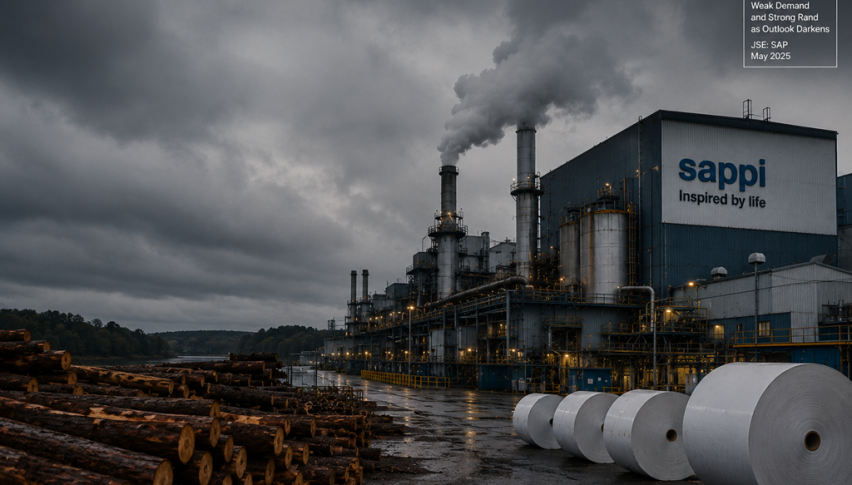
Sappi delivered a difficult set of results for the quarter ended March 2026, with profitability collapsing as weaker global demand, lower pulp prices, and adverse currency movements weighed heavily across the business.
The woodfibre and paper group warned that operating conditions remain highly challenging, citing geopolitical instability, oversupplied markets, and ongoing pricing pressure across key regions.
Key Earnings Figures
- Adjusted EBITDA fell to $52 million, down from $107 million a year earlier
- Net loss widened to $413 million for the quarter
- Adjusted EPS swung to a loss of 8 US cents from a profit of 1 US cent last year
- Net debt increased to nearly $2 billion
The quarter was significantly impacted by a $276 million impairment charge, mainly linked to European graphic paper assets and a North American high-yield pulp asset.
In addition, Sappi recorded a negative $101 million forestry fair value adjustment, as the stronger South African rand reduced the value of timber export earnings.
Stock Struggles to Hold Gains
Sappi Limited (JSE: SAP) briefly surged following its Q4 FY25 results, but the rally was short-lived as shares retreated the next day, continuing the multi-year decline. Since 2018, Sappi’s share price has fallen more than 70%, dropping from roughly R50 to around R14.70.
SAPJ Chart Daily – The Bounce Failed

Following the latest results, the stock continued lower to fall below R15, while moving averages are acting as resistance. For a sustained turnaround, analysts note that Sappi will need to break decisively above key moving averages, signaling that selling pressure has finally eased.
Weak Pricing and Currency Pressure Hurt Profitability
The company faced pressure across nearly all major business segments.
Dissolving wood pulp prices declined materially compared with last year, while paperboard pricing in North America softened further. European markets also remained oversupplied, limiting pricing power and squeezing margins.
CEO Steve Binnie said the challenging operating environment has been amplified by elevated global uncertainty and currency volatility.
Although sales volumes and underlying demand remained relatively stable in some divisions, profitability deteriorated sharply because of lower US dollar-denominated pulp prices and the strengthening rand.
Management noted that every 10-cent movement in the rand-dollar exchange rate impacts annual group earnings by approximately $4 million, highlighting the company’s sensitivity to currency fluctuations.
Joint Venture Plans Contribute to Asset Write-Downs
Addressing concerns around the large net losses, Binnie explained that several impaired assets are expected to be transferred into the planned joint venture with Finnish forestry giant UPM-Kymmene Corporation.
As part of that process, Sappi had already anticipated certain write-downs tied to the transaction structure and asset valuations.
The company continues to reposition its portfolio toward higher-growth and more sustainable businesses within the broader bioeconomy sector, though the transition remains costly in the near term.
Outlook Remains Cautious
Sappi warned that the current quarter could be even weaker as global demand conditions remain fragile and pricing pressures persist.
While management continues focusing on operational efficiency, debt management, and strategic restructuring, investors are likely to remain cautious given the combination of rising leverage, volatile currencies, and uncertain global economic conditions.
The group’s longer-term strategy around bio-based products and restructuring initiatives may eventually improve stability, but near-term earnings visibility remains under pressure as global paper and pulp markets continue to weaken.
- Check out our free forex signals
- Follow the top economic events on FX Leaders economic calendar
- Trade better, discover more Forex Trading Strategies
- Open a FREE Trading Account
- Read our latest reviews on: Avatrade, Exness, HFM and XM

Related Articles


Sidebar rates

Related Posts
 Save
Save