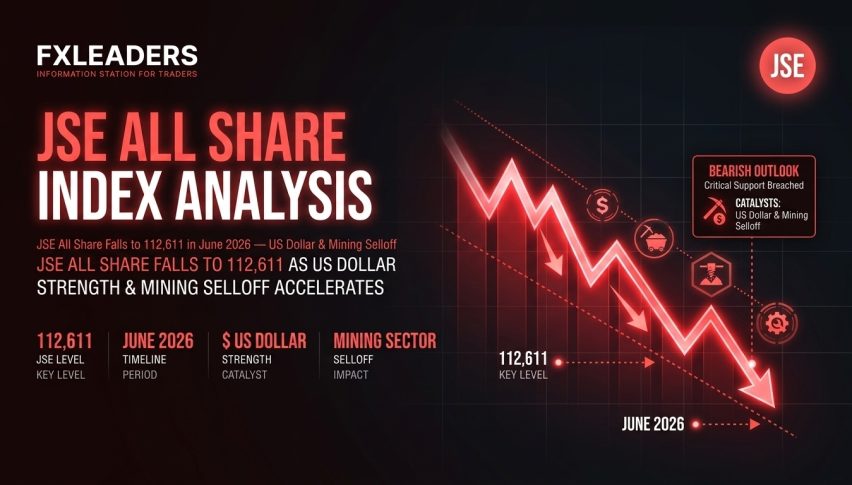
JSE All Share Falls to 112,611 in June 2026 — US Dollar & Mining Selloff
JSE FTSE All Share Index (JALSH) started the week on a bearish trend and remains under pressure as the strength of the US dollar and high...
Quick overview
- The JSE FTSE All Share Index is experiencing a bearish trend due to the strength of the US dollar and high interest rates in the US.
- Heavy selling in mining and resource company shares, particularly following sharp declines in gold and platinum prices, has contributed to the index's decline.
- While a weaker South African Rand can boost mining profits by increasing Rand earnings from dollar sales, it also reflects broader economic challenges.
- The new South African Government of National Unity is working to improve infrastructure and stimulate economic growth, but progress is slow, impacting investor confidence.
JSE FTSE All Share Index (JALSH) started the week on a bearish trend and remains under pressure as the strength of the US dollar and high interest rates in America both have a negative impact on the JSE.
US Federal Reserve kept interest rates high at 3.5 to 3.75% and said that rates will not come down for some time. When the US dollar becomes stronger and US interest rates remain high, a large amount of money moves from risky markets like South Africa towards the US market, which is known as a safe market.
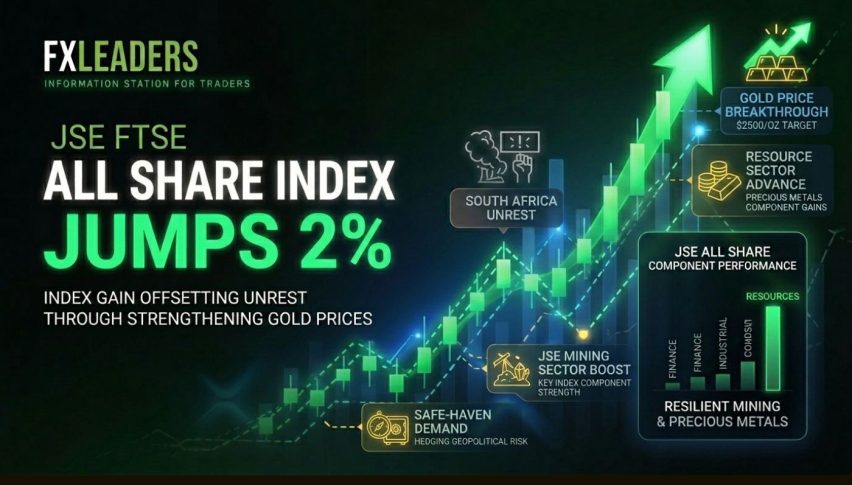
At the time we are writing this article, this index is trading at 112,610.79 and showing more than 2 percent losses on the day.
Mining Shares and Interest Rates Impact
However, the other reason behind the decline is heavy selling in mining and resource company shares. On 19 June, the prices of gold, platinum, and PGM dropped sharply, which added a negative impact on the Resources index, which fell by more than 10 percent.
PGM means Platinum Group Metals, which is a group that includes platinum, palladium, rhodium, ruthenium, iridium and osmium. These metals are very rare and are mainly used in the car industry for making catalytic converters.
South Africa is the worlds largest PGM producer, which is why when their prices fall, it has a big impact on the mining companies. As a result, the JSE main index dropped by more than 2 percent.
Weaker Rand Supports Mining Profits
Another important factor that is impacting the JSE index is the up and down in the South African Rand prices. At the time we are writing this, the Rand is weak and trading at 16.42 against the US dollar.
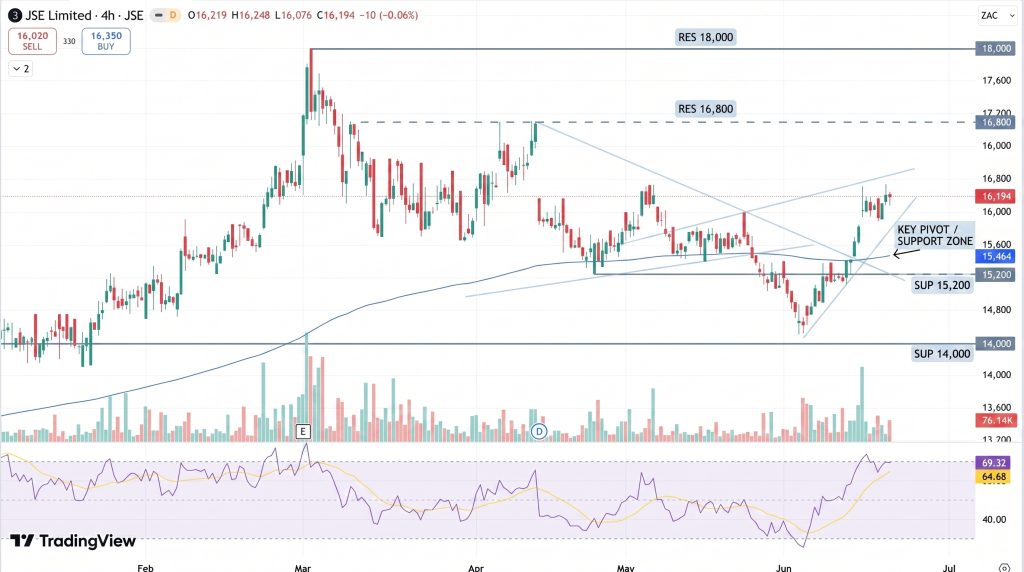
Interestingly, the weaker Rand is considered good for mining companies as the dollar earnings they receive are converted into more Rand, which ultimately increases their profits.
South Africa Government and Market Impact
On the other hand, the local South African news and the Government of National Unity also play a big role in the JSE index performance. The GNU is the new government formed after the 2024 elections, which consists of different parties working together.
At the moment, the GNU is trying to improve Eskom to fix the power supply, roads and ports, as well as trying to control government spending. However, the aim of all this is to speed up South Africa slow economy, which is currently growing at only around 1 percent.
This positive news creates hope in the market and brings foreign investors money into the JSE. However, progress is still very slow and work is not happening quickly, whch can put some pressure on the JSE index.
- Check out our free forex signals
- Follow the top economic events on FX Leaders economic calendar
- Trade better, discover more Forex Trading Strategies
- Open a FREE Trading Account
- Read our latest reviews on: Avatrade, Exness, HFM and XM

Related Articles
Sidebar rates

Related Posts
 Save
Save