Nvidia NVDA Stock Reclaims $200 but $210 Resistance Holds the Key as Cloud Spending Supports Blackwell Demand
Nvidia shares have recovered above $200 as strong Microsoft and Palantir results revive confidence in cloud infrastructure spending, although competition, massive financing requirements and a key $210 resistance level continue to limit the bullish case.
Quick overview
- Nvidia shares have rebounded above $200, supported by strong earnings from Microsoft and Palantir, which have revived confidence in AI infrastructure spending.
- The stock faces resistance at $210, which is a critical level for determining whether the recent recovery can lead to a sustained uptrend.
- Nvidia's long-term growth is challenged by competition from custom AI chips developed by major cloud providers and the emergence of more efficient AI models.
- Concerns about the sustainability of the AI investment cycle and the enormous financing required for infrastructure projects add uncertainty to Nvidia's outlook.
Nvidia shares have recovered above $200 as strong Microsoft and Palantir results revive confidence in cloud infrastructure spending, although competition, massive financing requirements and a key $210 resistance level continue to limit the bullish case.
Nvidia Stock Rebounds Above $200
Nvidia stock has recovered above the psychologically important $200 level after falling below it last week as a broad semiconductor selloff intensified concerns about AI valuations and the sustainability of the industry’s extraordinary investment cycle.
The latest rebound has been supported by stronger earnings from Microsoft and Palantir, helping restore confidence across technology stocks. Microsoft’s results, in particular, provided fresh evidence that major cloud providers continue increasing infrastructure spending to support expanding AI workloads.
That is important for Nvidia because demand for its advanced accelerators remains closely tied to the enormous data-center buildout underway across the world’s largest technology companies.
However, the recovery has not yet completely reversed the technical damage. Nvidia now faces resistance around $210, making that level an important test for whether the recent rebound can develop into a renewed uptrend.
Microsoft and Palantir Revive AI Spending Optimism
Microsoft’s latest results offered investors a significant reason to become more optimistic about AI infrastructure demand.
Cloud providers continue investing heavily in data centers, networking systems, power infrastructure and advanced computing hardware. Microsoft’s growing use of Nvidia’s liquid-cooled Blackwell systems provides further evidence that hyperscalers are still willing to commit substantial resources to AI infrastructure.
Palantir’s strong results added another positive signal.
The company’s accelerating commercial revenue growth suggests businesses are increasingly deploying AI applications rather than simply experimenting with the technology.
For Nvidia, wider enterprise adoption could eventually create another layer of demand beyond the largest hyperscalers.
Still, investors should remain careful about assuming that strong spending automatically means the current investment boom can continue indefinitely. The scale of capital expenditure has become enormous, and questions surrounding returns are becoming increasingly difficult to ignore.
$210 Becomes the Next Technical Test
The latest move above $200 has improved Nvidia’s short-term technical picture, but the stock now needs to overcome resistance near $210.
A sustained break above that level could signal that buyers are regaining control and potentially open the door to a broader recovery.
Failure to clear resistance, however, could encourage another round of profit-taking, particularly given the stock’s recent volatility.
The $200 level could also become important support if Nvidia pulls back again.
For now, the market appears to be waiting for confirmation that the rebound represents more than a temporary improvement in sentiment.
Kimi K3 Raises New Competition Concerns
Nvidia’s longer-term growth story faces another challenge from the rapid development of cheaper and potentially more efficient AI models.
China’s Moonshot AI has intensified competition with the development of increasingly capable open-source models such as Kimi K3.
The importance of these developments extends beyond any single model.
Investors have largely assumed that increasingly advanced AI systems would require enormous amounts of computing power, supporting continued demand for Nvidia’s accelerators.
But if AI developers can achieve comparable performance using more efficient models and less computing infrastructure, the amount of hardware required for future workloads could eventually decline.
That would not necessarily represent an immediate threat to Nvidia’s revenue.
The bigger concern is that improving AI efficiency could cause investors to reduce the extremely aggressive long-term growth assumptions currently embedded in the stock.
Technical Picture Reflects Volatility
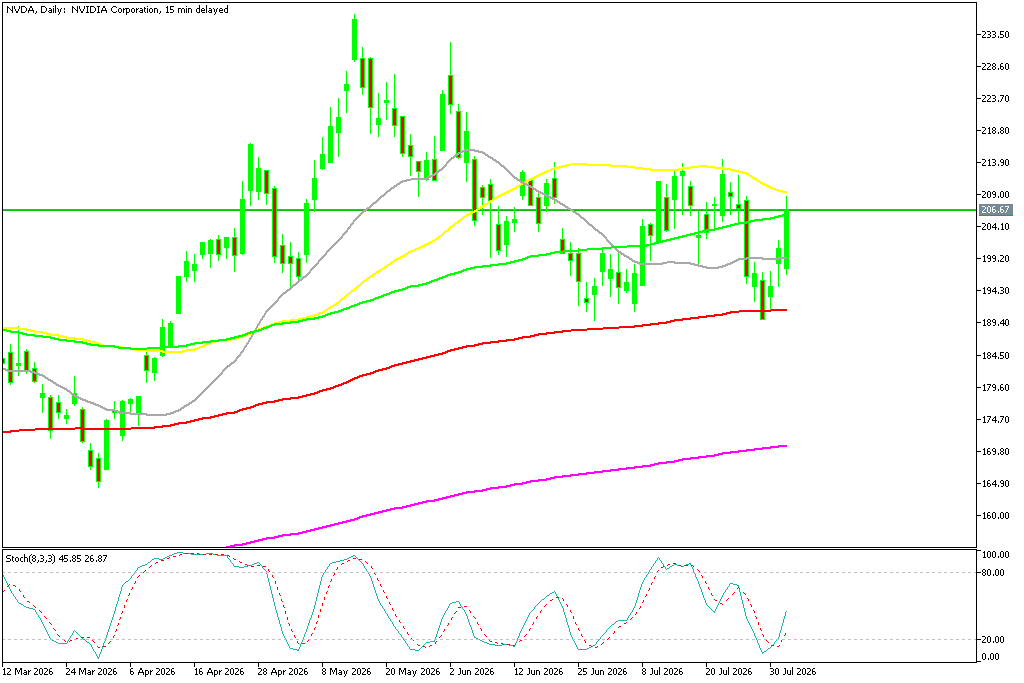
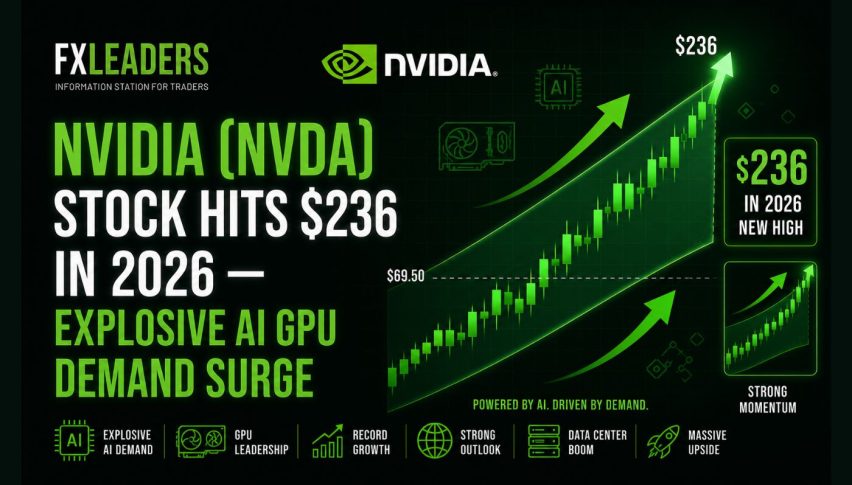
Nvidia’s technical setup mirrors the shifting sentiment. The stock slipped to its 20-day simple moving average (gray) in early May, but reversed back up, so it provided reliable support and NVDA reached a high of $236 before earnings. But then the stock reversed down and sellers headed to the 100 SMA again after breaking below $200 but reversed back above today after rebounding off the 100 SMA last week
NVDA Chart Daily – Failing at the 50 SMA
Massive AI Financing Raises Questions
Another source of uncertainty is the enormous financing required to build the next generation of AI infrastructure.
Reports surrounding Nvidia’s potential financing support for massive OpenAI data-center projects have highlighted the extraordinary scale of the current investment cycle.
Projects involving hundreds of billions of dollars demonstrate the strength of demand for computing infrastructure, but they also raise questions about how sustainable that spending really is.
Investors may increasingly question whether AI infrastructure growth is being supported primarily by genuine customer demand and internally generated cash flow or by increasingly complex financing structures.
If the market begins viewing the AI ecosystem as overly dependent on financing arrangements between technology companies, confidence in the sustainability of the boom could weaken.
Custom Chips Threaten Nvidia’s Dominance
Nvidia also faces an important structural challenge from its largest customers.
Major cloud providers are developing proprietary AI chips designed to reduce their dependence on Nvidia GPUs.
Nvidia remains the dominant supplier of AI accelerators, and its Blackwell architecture continues to attract enormous demand. However, successful custom silicon could gradually take market share in specific workloads.
The situation creates an unusual competitive dynamic.
Some of Nvidia’s biggest customers are simultaneously becoming potential competitors.
If proprietary chips become increasingly capable and cost-effective, Nvidia could eventually face pressure on market share, pricing power and margins.
That risk may remain relatively limited in the near term, but it is becoming increasingly relevant to the longer-term investment case.
China and Export Restrictions Remain Risks
Nvidia’s exposure to China creates another layer of uncertainty.
U.S. restrictions on advanced semiconductor exports have already complicated the company’s access to the Chinese market, while allegations involving potential circumvention through third countries could result in additional scrutiny.
Tighter restrictions could limit Nvidia’s ability to sell certain advanced products into one of the world’s largest technology markets.
At the same time, increasingly strict controls could encourage Chinese companies to accelerate development of domestic alternatives.
That creates a difficult long-term situation for Nvidia: tighter restrictions may reduce near-term access to China while simultaneously encouraging the development of stronger local competitors.
AI Bubble Concerns Are Growing
The biggest question surrounding Nvidia remains the sustainability of the AI investment cycle itself.
The company has benefited enormously from hyperscaler spending, but expectations have also risen dramatically.
Investors increasingly want evidence that AI infrastructure spending will generate sufficient economic returns to justify the enormous capital commitments being made by technology companies.
If those returns disappoint, spending could eventually slow.
That does not mean an AI bubble will necessarily burst, but it highlights why Nvidia’s valuation is becoming increasingly sensitive to any indication that the investment cycle is losing momentum.
Conclusion: $210 Holds the Key
Nvidia’s recovery above $200 is encouraging, particularly after stronger Microsoft and Palantir results helped revive confidence in technology and AI infrastructure spending.
Demand for Nvidia’s Blackwell systems remains strong, while continued cloud investment provides an important fundamental backdrop.
Nevertheless, the stock faces several important risks, including cheaper Chinese AI models, custom chips from major customers, export restrictions and questions surrounding the enormous financing requirements of the AI infrastructure boom.
Technically, $210 is now the critical level to watch.
A decisive break above it could strengthen the case for a renewed uptrend and signal that buyers are regaining control. Failure to overcome the resistance could leave Nvidia vulnerable to another pullback toward $200 and potentially lower.
For now, the rebound is constructive, but Nvidia still needs to prove that AI infrastructure spending can remain economically sustainable rather than simply continue growing at an extraordinary pace.
- Check out our free forex signals
- Follow the top economic events on FX Leaders economic calendar
- Trade better, discover more Forex Trading Strategies
- Open a FREE Trading Account
- Read our latest reviews on: Avatrade, Exness, HFM and XM

Related Articles
Sidebar rates

Related Posts
 Save
SaveAva