Nasdaq Closed at a Loss for Fifth Session in a Row
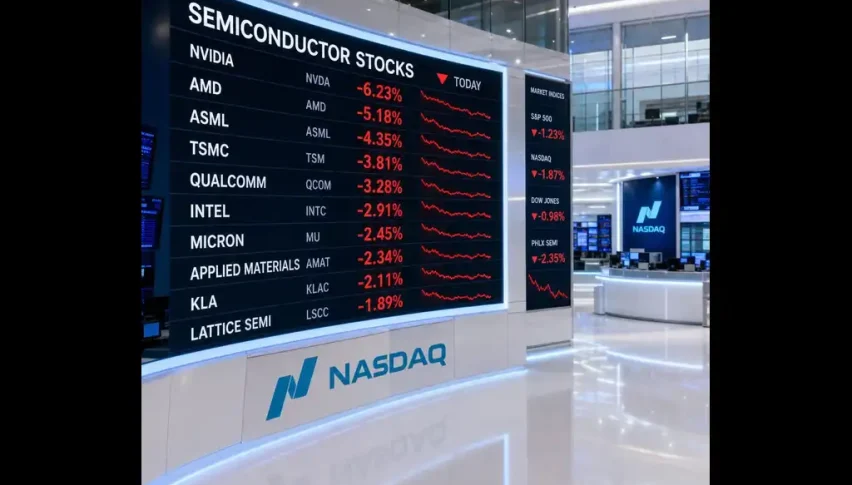
For the last five days of trading, the Nasdaq has lost ground, slipping from 25,828 to 24,876 as chip stocks continue to sell off at an incredible rate.

On Wednesday morning, the Nasdaq and S&P 500 both rose slightly by 0.2%, but the Nasdaq is coming off of a five-day loss streak. The Fed rate decision later in the day could push the market higher, but the odds have been calculated to around 70% that the Fed will keep rates as they are.
The Dow fell by 0.2%, hurt by sharp losses from Caterpillar (CAT) and Procter & Gamble (PG). The construction supply company had its stock downgraded over AI fees while the consumer goods company fell on disappointing quarterly earnings.
Semiconductor Stocks Pull Nasdaq Lower
The major culprit for a low-performing Nasdaq index is chip futures. These assets are experiencing severe selling pressure across all semiconductor businesses. Losses of more than $1 trillion have been recorded since the start of the week. These losses are compounded when last week’s selloff is considered. The Nasdaq fell by 4.7% that week mainly because of declining chip stocks and had its worst single-day drop in 15 months on Friday.
SK Hynix (SKHY) stock fell 9.6% on Tuesday and then continued to fall on Wednesday morning. The South Korean stock reacted strongly to panic in the industry over spending and profitability. The company recently fell short of Wall Street revenue projections, which were exceptionally high but in line with the company’s 2026 growth.
One of the most prominent indicators of losses among chip stocks this week is the VanEck Semiconductor ETF (SMH). The index fell 9% for the week so far and completed four straight days of losses on Tuesday. SMH tracks the 25 largest chip stocks, and the strong downward trend on that index shows bearish momentum and significant selling pressure.
Pressing Factors Hold Chip Stocks Back
IBM recently stepped out in front of its quarterly earnings results, with CEO Arvind Krishna notifying investors that customer spending habits changed abruptly. They are now shifting to spend their capex funds on data storage, memory, and servers, which left IBM with less income. That shift in spending is directly impacting profitability by focusing on growth and AI development rather than directly bringing in revenue for the short term.
The stock market is feeling pressure from oil prices, which moved up 6% on the West Texas Intermediate benchmark on Wednesday. That brings the price per barrel up to $84.09. The jump came after the Iranian military launched missiles at U.S. targets in the Middle East. The attack came as a surprise since the United States and countries in the Middle East have worked on peace negotiations over the last few days.
- Check out our free forex signals
- Follow the top economic events on FX Leaders economic calendar
- Trade better, discover more Forex Trading Strategies
- Open a FREE Trading Account
- Read our latest reviews on: Avatrade, Exness, HFM and XM

Related Articles


Sidebar rates

Related Posts
 Save
SaveAva