Wall Street Erased Early Gains and Closed Lower
In this context, the Dow Jones Industrial Average, the S&P 500, and the Nasdaq Composite each fell by 0.6%.
Quick overview
- Financial markets faced uncertainty due to mixed signals regarding the U.S.-Iran ceasefire and upcoming corporate earnings.
- Wall Street indices, including the Dow, S&P 500, and Nasdaq, closed down by 0.6% amid concerns over peace talks in the Middle East.
- President Trump indicated a lack of desire to extend the ceasefire with Iran, while also emphasizing the success of U.S. sanctions.
- Kevin Warsh's confirmation hearing for the Federal Reserve highlighted the need for central bank independence and reforms in monetary policy.
Contradictory signals surrounding the ceasefire between the United States and Iran weighed on financial markets, as investors also looked ahead to a key week of corporate earnings releases.
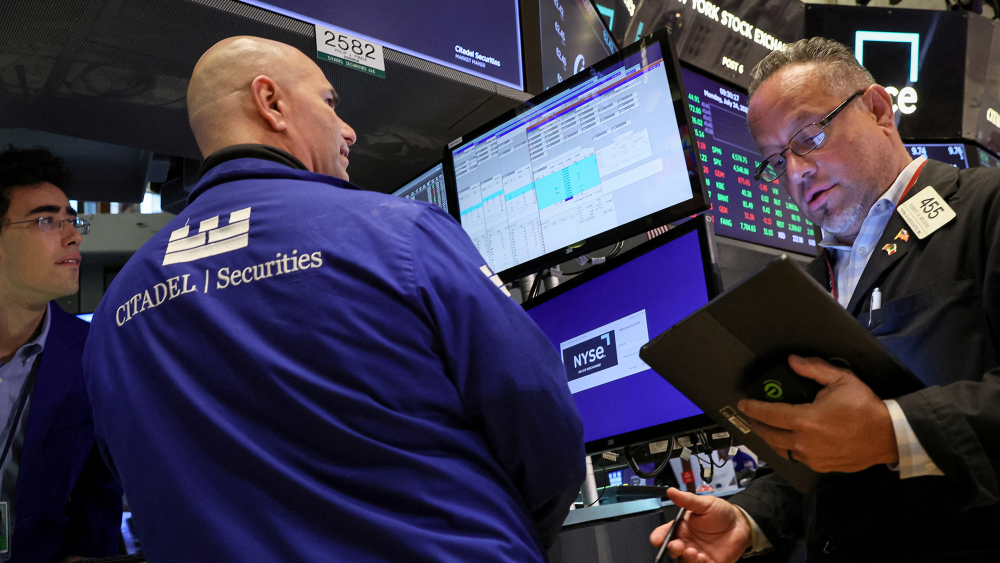
Stocks on Wall Street erased early gains and closed lower on Tuesday, April 21, as a crucial confirmation hearing took place in the U.S. Congress for Kevin Warsh, the nominee to lead the Federal Reserve. Investors also continued to grapple with uncertainty surrounding potential peace talks in the Middle East.
In this context, the Dow Jones Industrial Average, the S&P 500, and the Nasdaq Composite each fell by 0.6%.
Uncertain U.S.–Iran talks
The ceasefire is set to expire at an unspecified date later this week, though it remains unclear whether both sides will agree to extend it. At the same time, mixed signals from Washington and Tehran have fueled doubts about the status of negotiations.
On Tuesday, Donald Trump told CNBC that Iran “had no choice but to send representatives to the talks” and that he believed a “great deal” would be reached. He added that he did not want to extend the two-week ceasefire once it expires and warned that the U.S. was “ready to bomb Iran” if no agreement is achieved.
The president also said the U.S. blockade of Iranian ports had been a “complete success” and claimed Washington had “fully cooperated” with Iran. Oil prices fluctuated during the session, remaining above pre-war levels, while the head of the International Energy Agency warned that the conflict is driving what could become the worst energy crisis in history.
Warsh in focus
Trump’s nominee to chair the Federal Reserve, Kevin Warsh, appeared before the U.S. Senate for his confirmation hearing. His remarks offered insight into his views on central bank independence—a topic that has gained prominence following public tensions between Trump and current Fed Chair Jerome Powell.
Warsh stated that, if confirmed, he would ensure the Fed’s actions remain “strictly independent.” He later added that the central bank is still dealing with the consequences of policy mistakes made in 2021 and 2022, and argued that fundamental reforms and a significant shift in monetary management are needed.
Markets remain cautious
As traders scrambled to keep pace with rapidly evolving developments around the Iran conflict, they also prepared for a wave of key corporate earnings this week.
Among notable movers, UnitedHealth Group rose 7%, leading gains in both the S&P 500 and the Dow. The managed care company delivered what Mizuho described as “possibly” its best quarterly report in years.
3M fell 2% despite beating quarterly earnings estimates and improving its adjusted operating performance. Meanwhile, Apple declined 2.5% after drawing attention with news that Tim Cook would transition to executive chairman, with John Ternus set to become the next CEO.
- Check out our free forex signals
- Follow the top economic events on FX Leaders economic calendar
- Trade better, discover more Forex Trading Strategies
- Open a FREE Trading Account
- Read our latest reviews on: Avatrade, Exness, HFM and XM

Related Articles
Sidebar rates

Related Posts
 Save
Save