ServiceNow Stock Suffers Worst Single-Day Drop of 17.75% Despite Strong Q1 Results
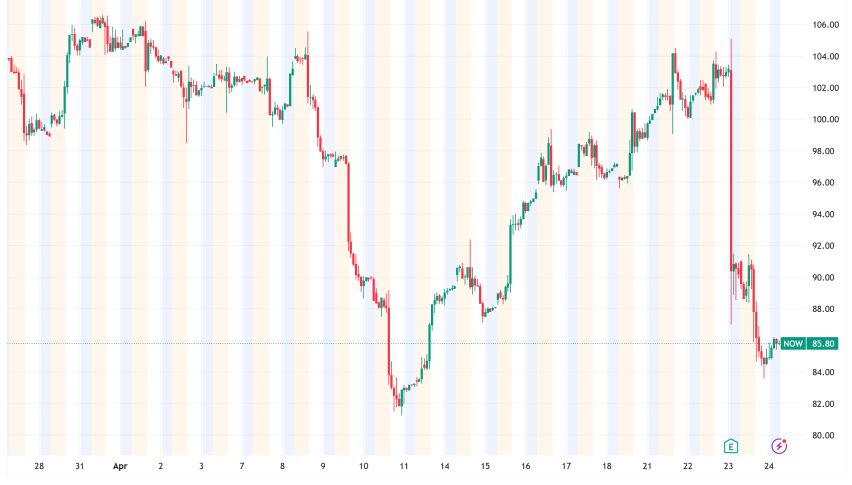
ServiceNow's (NYSE: NOW) stock fell almost 18% on Thursday, the company's largest one-day drop ever, even though the enterprise software
Quick overview
- ServiceNow's stock experienced an unprecedented 18% drop despite exceeding earnings expectations for Q1 2026.
- Concerns over high valuations, geopolitical issues, and margin pressures in the software sector contributed to investor anxiety.
- The company's acquisition of Armis is expected to negatively impact operating margins, raising questions about future profitability.
- Analysts have mixed reactions, with some lowering price targets while maintaining buy ratings, indicating uncertainty about ServiceNow's growth trajectory.
ServiceNow’s (NYSE: NOW) stock fell almost 18% on Thursday, the company’s largest one-day drop ever, even though the enterprise software giant’s first-quarter 2026 earnings topped its own guidance on every important indicator. The selloff shows that investors are getting more worried about high valuations, geopolitical uncertainties, and margin headwinds in the software sector.
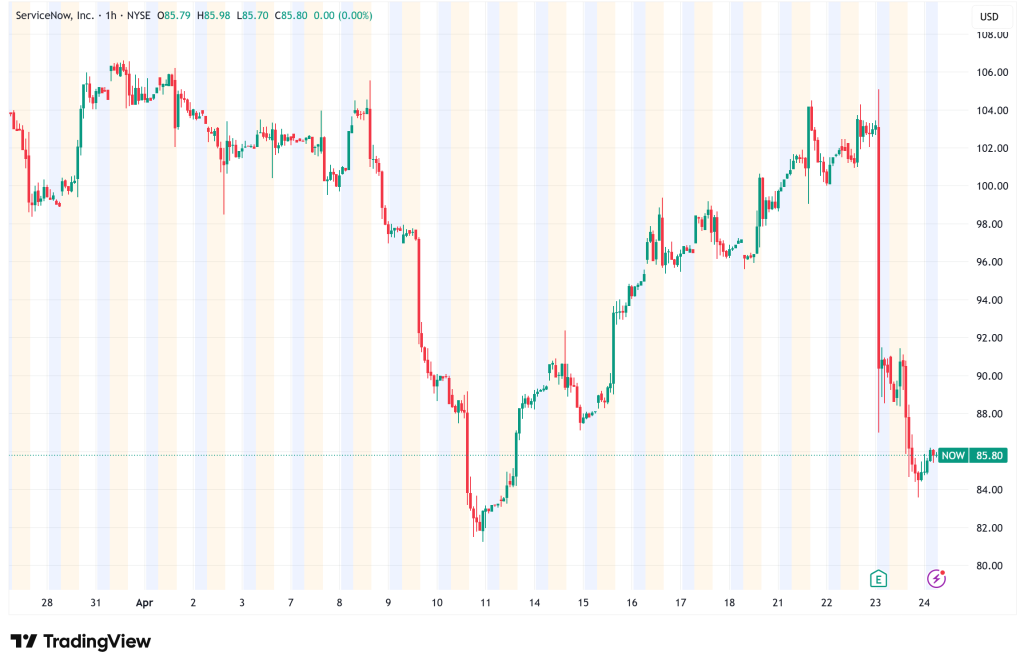
The stock closed at $84.78, which was billions of dollars less than its market worth and close to its 52-week low of $81.24.
ServiceNow’s Q1 Earnings Weren’t Enough
Most of the time, ServiceNow had a good quarter. From the end of the period on March 31, subscription sales jumped 22% year over year to $3.67 billion, and overall revenues rose the same amount to $3.77 billion. Current remaining performance commitments, which are a carefully monitored sign of contracted revenue in the near future, rose 22.5% to $12.64 billion. The business also made 16 deals that brought in more than $5 million in net new yearly contract value.
Bill McDermott, the CEO, said that the company’s AI platform was a major factor in the high demand. He also added that half of the new business comes from non-seat-based pricing. This is a big change since people are worried that AI will mess up the way traditional per-seat software works. “Our hybrid pricing model gives customers the best of both worlds,” McDermott said.
What Rattled NOW Investors
Even while the top line was strong, two things seemed to have Wall Street nervous.
First, the business said that continued unrest in the Middle East caused many significant on-premise projects to settle later than planned. This made it harder for subscription revenue to rise in Q1 by 75 basis points. CFO Gina Mastantuono said that some of those acquisitions had already closed in Q2, but the news made people worry about how clear things would be in the near future.
Second, the April 20 conclusion of ServiceNow’s purchase of cybersecurity company Armis hurt profits more than some investors had expected. The purchase is likely to lower the operating margin for the whole year by 75 basis points, the subscription gross margin by 25 basis points, and the free cash flow margin by an even bigger 200 basis points. The Armis integration is expected to lower operating margin by 125 basis points in the second quarter alone.
ServiceNow also finished buying Veza, an identity security company, on March 2. This added to its security offering and its integration costs.
ServiceNow (NOW) Guidance Raises Questions
For the whole year, ServiceNow boosted its forecast for subscription revenue to between $15.74 billion and $15.78 billion, which is around 22% more than last year. But analysts said that about 125 basis points of the increase comes from the Armis acquisition, which means that organic growth, when adjusted, doesn’t look as good. Management also said that the increase of existing remaining performance commitments in Q2 would only be 19.5% in constant currency, which is a big drop from Q1’s 21% pace.
Analysts Divided on ServiceNow Stock Outlook for 2026
There were a lot of different reactions from analysts, but most were calm. Gil Luria of DA Davidson lowered his price goal from $220 to $190 while keeping his Buy rating. Rob Owens of Piper Sandler similarly lowered his aim from $200 to $140, also holding his Buy rating. Macquarie cut its target from $140 to $109 and gave it a Neutral rating because cRPO growth is slowing down and the government procurement climate is tough. KeyBanc’s Jackson Ader had the most negative view, giving the stock a Sell rating and lowering the target price to $85. He pointed out delays in deals, cRPO beats that were smaller than usual, and lower margins from acquisitions.
Some experts say that the company isn’t obviously cheap, even after the selloff. It still trades at over 50 times earnings, which means it needs to keep growing at a high rate.
- Check out our free forex signals
- Follow the top economic events on FX Leaders economic calendar
- Trade better, discover more Forex Trading Strategies
- Open a FREE Trading Account
- Read our latest reviews on: Avatrade, Exness, HFM and XM

Related Articles



Sidebar rates

Related Posts
 Save
Save