Microsoft Shares Climb 2.1%: AI Pivot Accelerates with Workforce Restructuring and $120B Capex Plan
On Friday, Microsoft shares surged more than two percent as investors took in a big restructuring plan that includes cutting a lot of jobs
Quick overview
- Microsoft shares rose over two percent following a major restructuring plan focused on job cuts and significant AI investments.
- The company has initiated a voluntary buyout program that could affect up to 7% of its US workforce, reallocating resources towards AI infrastructure.
- Investor Michael Burry has taken a long position in Microsoft, arguing that fears about AI disrupting the industry are exaggerated.
- Despite recent gains, analysts suggest that the stock's future performance will depend on overcoming short-term technical challenges.
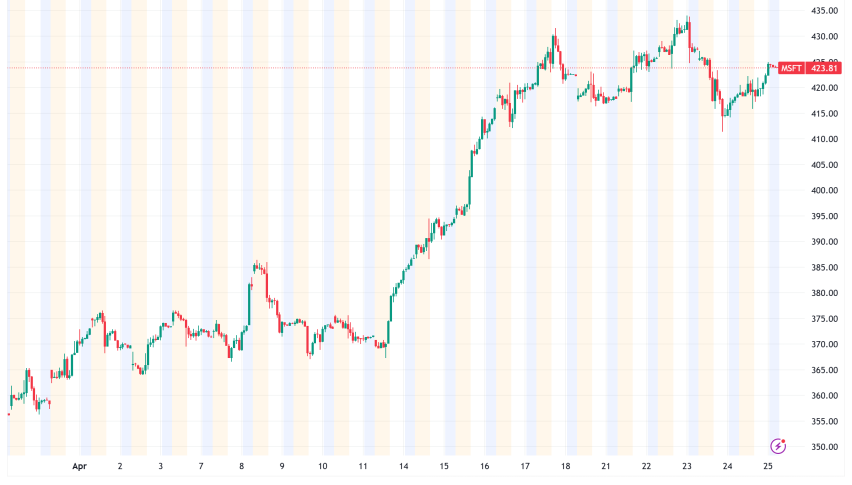
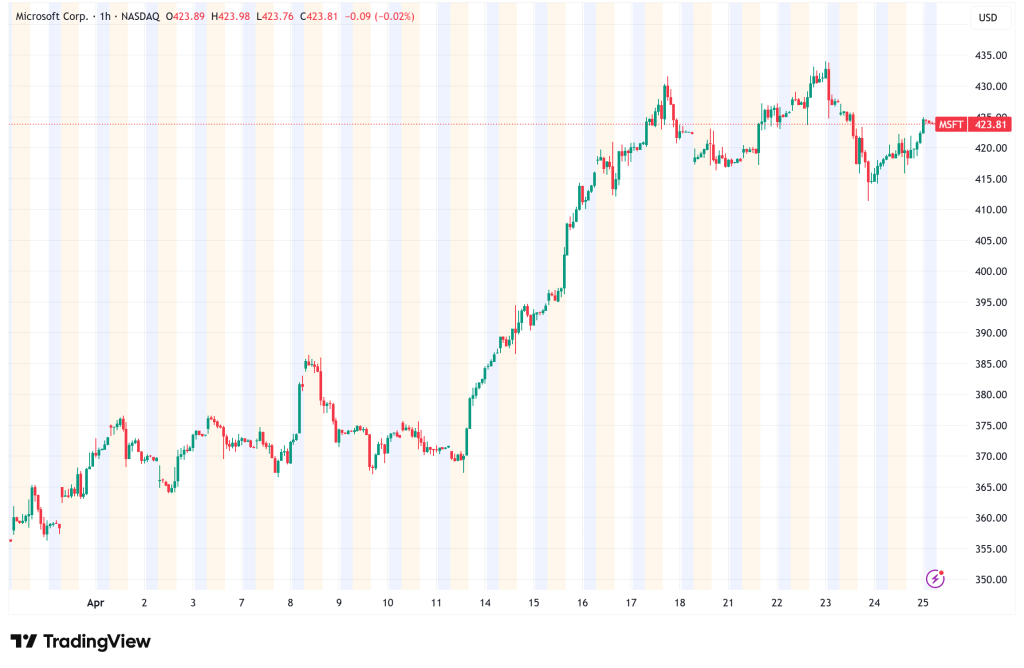
On Friday, Microsoft shares surged more than two percent as investors took in a big restructuring plan that includes cutting a lot of jobs and making the biggest investment in artificial intelligence in the company’s history. The stock closed at $424.60, above both its 20-day and 50-day moving averages. This is part of a rally that has gotten the attention of some of Wall Street’s most contrarian voices.
Workforce Cuts Fund an AI Spending Surge
The corporation has started a voluntary buyout program that could effect as many as 7% of its US employees. This is a lot of people, as the company has over 228,000 employees. Microsoft presented the program as a planned shift of resources toward AI infrastructure, promising to spend between $110 billion and $120 billion on capital projects in fiscal year 2026. If the corporation spends that much, it will be one of the biggest private investors in computing infrastructure in the world.
The move comes at a bad time for the IT job market as a whole. Since the start of the year, firms have been laying off more and more people as they try to move their expenditure into machine-learning skills. Microsoft’s news adds to this trend. Critics are worried about the human cost of the change, while executives say that AI-related growth will create new types of jobs over time.
Microsoft (MSFT) Stock Holds Firm, but Near-term Range Stays Tight
From a technical point of view, the stock’s structure is still good. The 20-day simple moving average is around $392 and the 50-day moving average is at $394, both of which are significantly below the current price. This confirms the uptrend. The relative strength index is at 63.5, which is high but not quite in overbought territory. The MACD and average directional indicator both show bullish readings. Analysts said that the expected trading range for the next week would be between $411 and $430, and that a break over $430 would be needed to start the next leg up. Viktoras Karapetjanc of Traders Union put it simply: “As long as MSFT stays above $411, I see any pullbacks as new chances for long-term investors to buy.”
Burry Goes Long on MSFT as Wall Street Stays Bullish
Michael Burry, the investor whose smart bet against subprime mortgages was made famous in The Big Short, revealed a new long position in Microsoft through his Substack weekly, Cassandra Unchained. This added an unexpected twist to the week’s headlines. Burry has been buying more software stocks in the past several weeks. He now owns Microsoft, Adobe, Autodesk, and Veeva Systems, and he says that fears about AI disrupting the industry have been overblown, which has made the stocks more appealing. His opinion goes against what most institutions think, which is that many big funds have cut back on their software investments.
The larger group of analysts still thinks the name is a good one. There are 37 Wall Street analysts who cover the stock. 34 of them say to buy it, and three say to hold it. The average price target is $581.61, which means that the stock might go up about 56% from where it is now. This disparity implies that the market hasn’t completely priced in Microsoft’s AI goals yet, even if the stock has done well compared to others over the past year. For now, the stock’s path through the summer seems to be dictated by the conflict between short-term technical weariness and long-term fundamental conviction.
- Check out our free forex signals
- Follow the top economic events on FX Leaders economic calendar
- Trade better, discover more Forex Trading Strategies
- Open a FREE Trading Account
- Read our latest reviews on: Avatrade, Exness, HFM and XM

Related Articles
Sidebar rates

Related Posts
 Save
Save