ORCL Stock Feels Heavy Again as OpenAI Misses Growth, Shaking Cloud Narrative
Oracle Corporation shares are under pressure as concerns around OpenAI growth and spending cast doubt on the sustainability of the AI-driven

Quick overview
- Oracle Corporation shares fell around 4% due to concerns about OpenAI's growth and spending, raising doubts about the sustainability of the AI-driven cloud boom.
- OpenAI's failure to meet revenue and user growth targets has led to uncertainty regarding demand for AI infrastructure, impacting Oracle and other companies in the sector.
- Despite these challenges, Oracle is aggressively expanding its cloud and AI infrastructure offerings, although rising costs and execution risks are causing investor wariness.
- The company's significant capital expenditure plans, projected at $50 billion for fiscal 2026, highlight the complexities and risks associated with its transformation into an AI infrastructure leader.
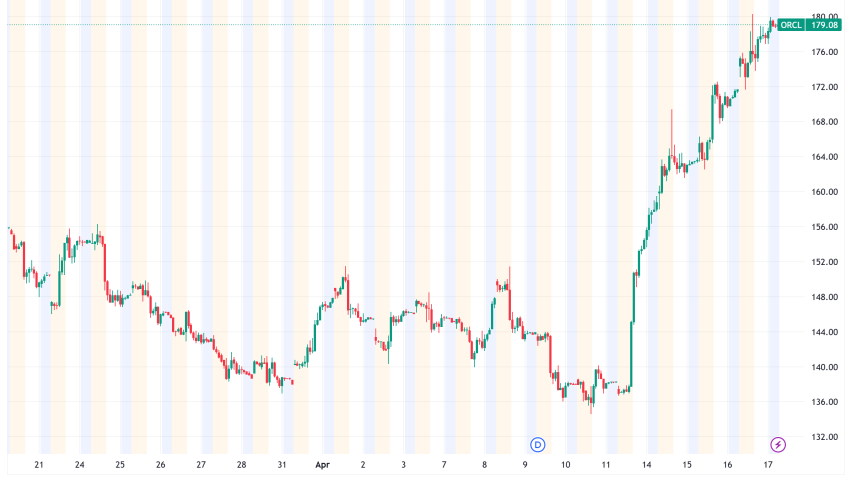
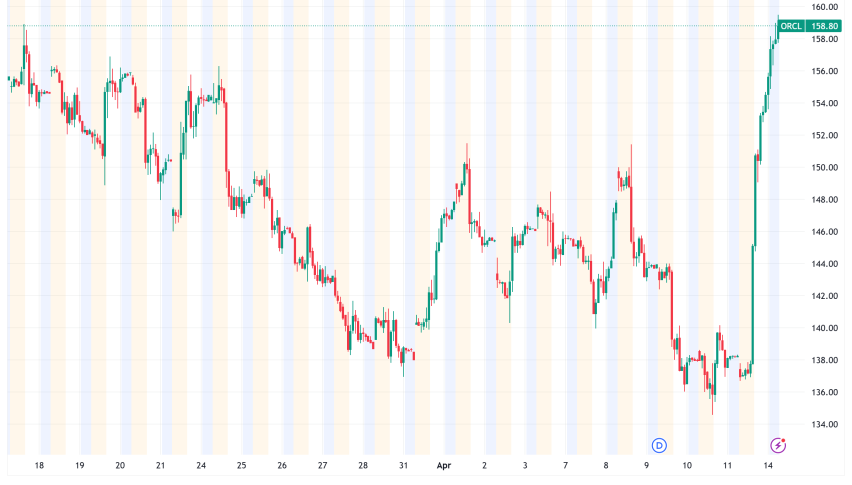
Live ORCL Chart
[[ORCL-graph]]
Oracle Corporation shares are under pressure as concerns around OpenAI growth and spending cast doubt on the sustainability of the AI-driven cloud boom.
Stock Weakness Deepens on AI Concerns
Shares of Oracle Corporation fell sharply, dropping around 4% as investors reacted to fresh concerns surrounding the artificial intelligence ecosystem. The decline was triggered by reports that OpenAI missed internal revenue and user growth targets, raising broader questions about demand for AI infrastructure.
The development has rippled across the sector, weighing not only on cloud providers but also on semiconductor companies tied to AI expansion. For Oracle, which has increasingly positioned itself as a key infrastructure provider for AI workloads, the implications are particularly significant.
OpenAI Miss Raises Demand Uncertainty
According to reports, OpenAI failed to meet ambitious internal goals, including a target of reaching one billion weekly active users for ChatGPT by the end of 2025. Revenue projections also came in below expectations, amid intensifying competition from rivals such as Anthropic.
More concerning for investors, OpenAI’s leadership has reportedly warned about potential difficulties in funding future large-scale computing commitments if growth does not accelerate. This raises a critical question: whether the pace of AI infrastructure spending—one of the biggest drivers of Oracle’s growth narrative—can be sustained.
Cloud Expansion Continues Despite Headwinds
Despite these concerns, Oracle continues to push aggressively into cloud and AI infrastructure. The company recently expanded its Oracle AI Database@Google Cloud offering, strengthening its partnership with Google Cloud.
The platform now spans 15 global regions and includes new AI-driven capabilities, signaling Oracle’s ambition to compete at scale in enterprise AI services. These initiatives reflect strong underlying demand trends, but they also require substantial investment.
Infrastructure Pivot Comes With Rising Costs
Oracle’s strategic shift toward cloud infrastructure and GPU-as-a-service offerings has fundamentally changed its business model. Growth is increasingly tied to capital-intensive data center expansion rather than traditional high-margin software.
While demand for AI computing remains robust, investors are becoming wary of rising costs, including higher debt levels and pressure on margins. This shift has introduced a more complex risk profile, where execution and capital discipline are just as important as revenue growth.
Technical Signals Reflect Stabilizing Price After the Fall
From a technical perspective, Oracle’s price action reinforces the fundamental unease. On longer-term charts, the stock has slipped below the 20 monthly moving average (gray) at $185 that previously acted as support and might turn into resistance. The 50 SMA (yellow) has been holding and we saw a rebound earlier this month, but buyers are facing the 20 SMA (gray) as resistance now.
ORCL Chart Monthly – The 20 SMA Turns Into Resistance

On shorter timeframes, rebounds have consistently failed near resistance levels, forming a clear pattern of lower highs, so we’ll see where this week’s rebound will end. On the daily chart, moving averages have been acting as resistance, rejecting the price and pushing the stock lower, sending ORCL back down below $135 last month. But the $135 support zone held once again and the rebound pushed ORCL to the 100 SMA (red), which turned into resistance and rejected the price below $190 and ORCL has been declining for nearly a week.
ORCL Chart Daily – Failing at the 100 SMA

Super Micro Fallout Highlights Fragility
Adding to the negative sentiment, reports that Oracle canceled a major hardware order with Super Micro Computer have raised concerns about consistency in infrastructure spending.
The canceled deal, involving high-end AI systems powered by NVIDIA chips, underscores how sensitive the supply chain is to changes in demand expectations. Any slowdown or adjustment in spending plans can quickly ripple through the ecosystem.
Innovation Push Faces Market Skepticism
Oracle continues to roll out advanced AI capabilities, including agentic AI applications embedded within its Fusion Cloud platform. These tools aim to automate enterprise workflows by enabling systems to make decisions and execute tasks independently.
The company is also expanding globally, launching new cloud regions and enhancing industry-specific solutions. However, while these initiatives support long-term growth, they have done little to alleviate near-term investor concerns.
Heavy Spending Raises Execution Risks
A central issue for investors is Oracle’s aggressive capital expenditure plan, with projections reaching as high as $50 billion for fiscal 2026. These investments are essential to compete in the AI infrastructure race but come with significant execution risk.
If demand growth slows or fails to meet expectations—particularly in light of OpenAI’s recent struggles—Oracle could face prolonged margin pressure and weaker returns on investment.
Conclusion
Oracle’s transformation into an AI and cloud infrastructure powerhouse is well underway, but it is proving to be both costly and complex. The latest concerns surrounding OpenAI have exposed just how dependent the broader ecosystem is on sustained, high levels of spending.
With rising costs, uncertain demand, and increasing scrutiny on valuations, Oracle now finds itself in a position where strong long-term potential is being overshadowed by near-term risks.
- Check out our free forex signals
- Follow the top economic events on FX Leaders economic calendar
- Trade better, discover more Forex Trading Strategies
- Open a FREE Trading Account
- Read our latest reviews on: Avatrade, Exness, HFM and XM

Related Articles
Sidebar rates

Related Posts
 Save
Save