South Africa GDP Growth Surges 4.1% Amid Long-Term Risks, COSATU Unimpressed
South Africa's GDP grows 4.1%, the fastest in three years, yet long-term challenges loom with sub-2% forecasts.

Quick overview
- South Africa's economy has experienced a 4.1% GDP growth, the fastest in three years, driven by strong mining and manufacturing sectors.
- Despite the positive growth figures, COSATU expresses concerns over persistent unemployment and inequality, indicating that the growth may not translate into improved living conditions.
- The South African Reserve Bank is monitoring these developments closely, as the strong GDP could influence future monetary policy and interest rates.
- Afreximbank warns of a potential decade of sub-2% growth, highlighting structural issues that could undermine the sustainability of recent economic gains.
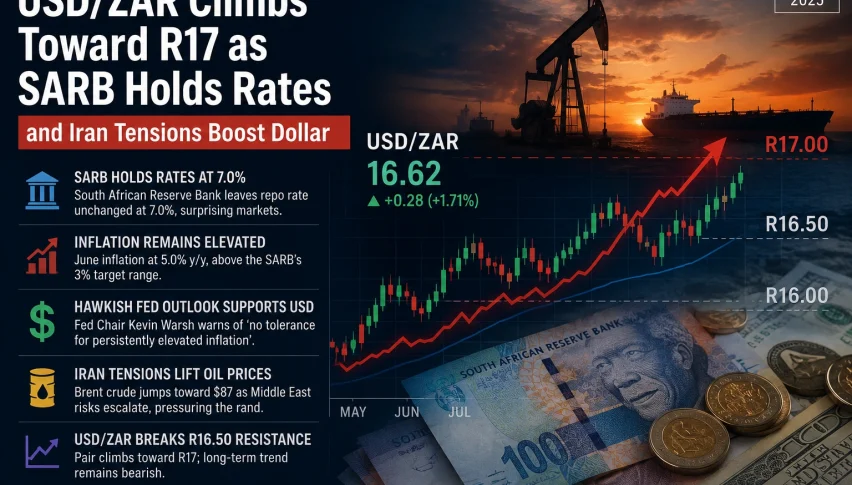
Live USD/ZAR Chart


South Africa’s economy has posted its fastest growth in three years, with a 4.1% increase in GDP for the latest quarter, sparking a mix of optimism and caution among traders and economic stakeholders.
Behind the Headline
According to Moneyweb, the 4.1% GDP growth marks a significant turnaround for South Africa, driven largely by robust performances in the mining and manufacturing sectors. This growth rate, the highest since the pandemic disruptions, signals a potential rebound for the country’s economy. However, the Congress of South African Trade Unions (COSATU) remains unimpressed, expressing concerns that the figures do not reflect tangible improvements in employment or wage conditions, particularly in light of persistent inequality and unemployment issues.
Statistics South Africa’s latest economic wrap-up highlights the sectors contributing to this growth, notably mining, which saw increased demand for precious metals, and manufacturing, fueled by both domestic and export markets. Despite these gains, many stakeholders are cautious about the sustainability of this growth, given the broader economic challenges.
South Africa Market Angle
The South African Reserve Bank (SARB) is closely monitoring these developments, as the strong GDP figures may influence future monetary policy decisions. The rand has shown resilience, buoyed by positive economic data, yet remains sensitive to global market fluctuations and domestic challenges. The Johannesburg Stock Exchange (JSE) responded positively to the growth report, with key indices seeing upward movement. Traders in South Africa should also note the potential for interest rate adjustments by the SARB, which could impact borrowing costs and investment flows.
Contrary Angle
Despite the positive GDP growth, Afreximbank has warned of a looming decade of sub-2% growth, forecasting an average of 1.9% annually. This stark prediction underscores the structural issues facing South Africa, such as energy supply constraints, policy uncertainty, and socio-economic disparities. These factors could significantly dampen long-term economic prospects, challenging the sustainability of recent gains.
Why Traders Should Care
For traders, the current environment presents both opportunities and risks. The stronger-than-expected GDP growth could boost investor confidence in the short term, potentially strengthening the rand and lifting local equities. However, traders should remain vigilant to potential headwinds, including global economic shifts and domestic policy changes. Tracking SARB’s policy signals will be crucial, as interest rate decisions could impact currency and bond markets significantly.
Conclusion
While South Africa’s recent GDP growth is a welcome development, it is tempered by warnings of long-term challenges. Traders need to balance short-term opportunities with an awareness of the broader economic landscape that could influence market conditions in the coming years.
- Check out our free forex signals
- Follow the top economic events on FX Leaders economic calendar
- Trade better, discover more Forex Trading Strategies
- Open a FREE Trading Account
- Read our latest reviews on: Avatrade, Exness, HFM and XM

Related Articles


Sidebar rates

Related Posts
 Save
Save