Nissan South Africa Ends 60-Year Manufacturing Legacy as Chery Acquires Rosslyn Plant
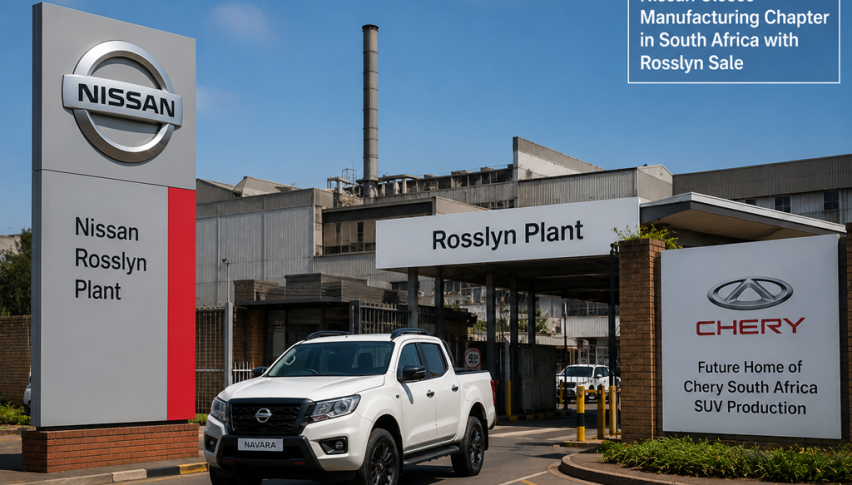
Nissan's decision to sell its historic Rosslyn manufacturing plant to Chery marks the end of six decades of local vehicle production while opening a new chapter for South Africa's automotive industry.
Quick overview
- Nissan has sold its historic Rosslyn manufacturing plant to Chery, ending nearly 60 years of local vehicle production in South Africa.
- Chery plans to use the facility to produce selected SUV models for the local market while committing to job protection and support for domestic suppliers.
- Despite ceasing local manufacturing, Nissan will continue to operate in South Africa as an importer and distributor of key models.
- The acquisition marks a significant milestone for Chery, allowing it to establish a local manufacturing base and expand its presence in the South African automotive market.
Nissan’s decision to sell its historic Rosslyn manufacturing plant to Chery marks the end of six decades of local vehicle production while opening a new chapter for South Africa’s automotive industry.
Historic Rosslyn Factory Changes Hands
Nissan’s long history as a vehicle manufacturer in South Africa is drawing to a close after the Competition Commission recommended approval of the sale of its Rosslyn manufacturing plant to Chery South Africa.
Announced on 19 June, the proposed transaction remains subject to conditions relating to employment protection and local supplier commitments. According to the Competition Commission, Chery intends to acquire the manufacturing assets at the Gauteng facility and use the plant to produce selected SUV models for the local market.
The Commission concluded that the transaction is unlikely to substantially reduce competition while acknowledging commitments made by both parties to safeguard jobs and support domestic suppliers.
End of Six Decades of Local Production
The sale marks the end of Nissan’s manufacturing presence in South Africa after nearly 60 years.
The company first began assembling vehicles from complete knock-down kits in 1966 before establishing its Rosslyn manufacturing facility in 1973. Over the decades, Nissan invested billions of rand to expand production capacity and modernize the factory, making it one of South Africa’s most important automotive manufacturing sites.
Rosslyn produced several of Nissan’s most recognizable vehicles, including the NP300 Hardbody, the popular NP200 half-ton bakkie, and most recently the Navara pickup.
The latest-generation Navara entered production in 2021 following a R3 billion investment in the facility, highlighting Nissan’s commitment to local manufacturing even as global market conditions became increasingly challenging.
Changing Market Conditions Drive Strategic Shift
In January 2026, Nissan announced it would end vehicle manufacturing in South Africa, citing declining plant utilization and broader external challenges affecting the long-term viability of the operation.
The decision reflected both local competitive pressures and the restructuring efforts taking place across Nissan’s global operations.
Over recent years, the company steadily lost market share as competition intensified, particularly from rapidly expanding Chinese and Indian automotive brands offering newer product lineups at competitive prices.
These local challenges coincided with broader restructuring initiatives by Nissan’s global parent company, which has been streamlining operations and closing manufacturing facilities in several international markets.
Nissan Will Continue Serving South African Customers
Despite ending local manufacturing, Nissan has emphasized that it is not exiting South Africa.
The company will continue operating as an importer and distributor, maintaining sales of key models including the Magnite crossover, X-Trail SUV, and imported Navara pickup.
Looking ahead, Nissan also plans to strengthen its local product lineup with the arrival of the seventh-generation Patrol SUV, which will compete in the premium off-road segment alongside established rivals. The company is also preparing to introduce the Tekton crossover, an India-built model developed through the Renault-Nissan-Mitsubishi Alliance.
According to Nissan Africa President Jordi Vila, the agreement aims to achieve the best possible outcome for employees, customers, dealers, and business partners while helping preserve jobs at the Rosslyn facility.
Chery Expands Its South African Presence
For Chery, the acquisition represents an important milestone in its rapid expansion across South Africa.
While the company has experienced strong growth through imported vehicles, the Rosslyn acquisition would provide its first local manufacturing base, allowing it to assemble SUVs domestically and deepen its long-term investment in the country’s automotive sector.
If completed, the transaction would not only preserve one of South Africa’s most established automotive plants but also signal the growing influence of Chinese manufacturers within the local industry. As Nissan closes one chapter in its South African history, Chery is preparing to begin another, ensuring that vehicle production continues at the historic Rosslyn facility under new ownership.
- Check out our free forex signals
- Follow the top economic events on FX Leaders economic calendar
- Trade better, discover more Forex Trading Strategies
- Open a FREE Trading Account
- Read our latest reviews on: Avatrade, Exness, HFM and XM

Related Articles
Sidebar rates

Related Posts
 Save
Save