Nikkei 225 Extends the Crash as AI Sector Shock Hits Tokyo Stocks but Support Holds for Now
The Nikkei 225 plunged sharply as AI-related stocks and SoftBank-led losses triggered broad selling pressure, though technical support on the H4 chart briefly slowed the decline.
Quick overview
- The Nikkei 225 experienced a significant decline of 4.15%, erasing over 2,900 points in a single session due to selling pressure from AI-related stocks and SoftBank losses.
- The selloff was primarily concentrated in technology and AI-linked equities, leading to heightened volatility and a reassessment of valuations in the sector.
- SoftBank Group's nearly 13% drop was a major contributor to the downturn, driven by concerns over delayed monetization timelines for its AI investments.
- Despite the sharp decline, technical support on the H4 chart provided temporary stabilization, while future market direction will depend on upcoming macroeconomic data.
Live NIKKEI225 Chart

The Nikkei 225 plunged sharply as AI-related stocks and SoftBank-led losses triggered broad selling pressure, though technical support on the H4 chart briefly slowed the decline.
Sharp Selloff Hits Tokyo Equities
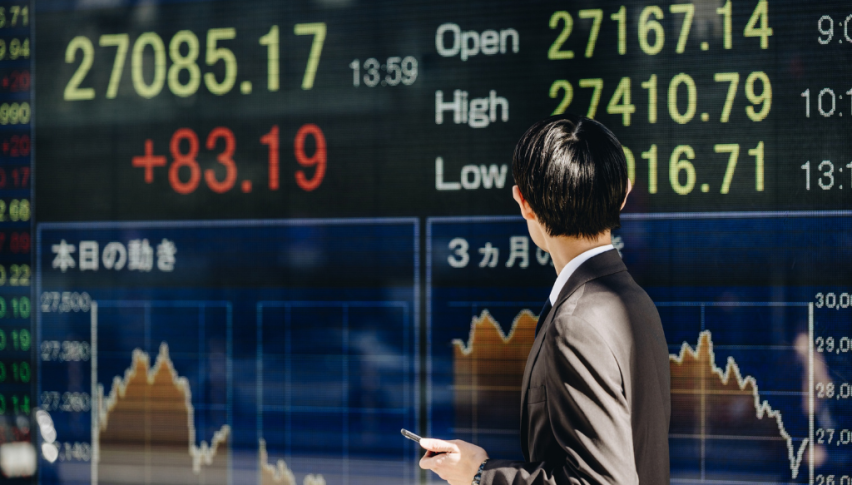
The Nikkei 225 ended Friday at 69,361 points, marking a steep daily decline of 4.15% and erasing more than 2,900 points in a single session. The weakness extended into Monday trading, where the index briefly plunged further to around 48,086 before stabilising, as buyers stepped in near a key technical zone.
The move represented one of the sharpest pullbacks in recent months, ending a prolonged period of strength driven by technology and artificial intelligence exposure within Japanese equities. Despite the severity of the drop, the 100-period simple moving average on the H4 timeframe acted as temporary support, helping to slow downside momentum and prevent an immediate breakdown.
AI Sector Repricing Drives Losses
The selloff was heavily concentrated in technology and AI-linked equities, which have been central to the index’s strong performance throughout 2026. As global sentiment shifted, investors began reassessing stretched valuations across AI-related names, triggering a rapid de-risking across the sector.
The pressure was not uniform across the market but instead clustered around high-weighted growth components, amplifying the impact on the overall index. This sector-specific concentration intensified volatility and contributed to the scale of the decline.
SoftBank Leads the Downside
A key driver of the downturn was SoftBank Group, which fell nearly 13% in a single session. The company’s deep exposure to artificial intelligence investments, including its stake in OpenAI and its broader Vision Fund portfolio, made it particularly sensitive to shifting sentiment around AI monetisation timelines.
The catalyst for the move was market reaction to reports suggesting that OpenAI may delay its initial public offering until 2027. This raised concerns about delayed liquidity events for SoftBank and reduced near-term valuation support for its AI-related holdings.
Given SoftBank’s significant weighting within the Nikkei 225, the stock’s sharp decline had an outsized effect on overall index performance, effectively acting as the primary drag during the selloff.
Structural Concerns Around AI Bubble Bust
Beyond short-term volatility, the move highlighted broader structural risks tied to concentrated exposure in AI-driven investment themes. SoftBank’s strategy of capital recycling through expected IPO exits has become increasingly dependent on sustained market appetite for large-scale AI listings.
A delay in OpenAI’s public offering therefore introduces not only valuation uncertainty but also questions about the timing of future Vision Fund monetisation cycles. This has led investors to reassess the pace at which returns can be realised from AI-linked assets.
Technical Support and Near-Term Focus

Despite the aggressive selloff, the H4 100 SMA provided a temporary floor, suggesting that some algorithmic and institutional buyers remain active at lower levels. However, sustained recovery will require stronger confirmation above recent breakdown zones.
Looking ahead, attention turns to domestic macro data, with the Bank of Japan Tankan survey scheduled for 1 July. This will be a key indicator for assessing underlying business sentiment and potential monetary policy implications.
For now, the Nikkei 225 remains in a corrective phase, with AI-sector repricing and SoftBank volatility continuing to dominate short-term direction.
- Check out our free forex signals
- Follow the top economic events on FX Leaders economic calendar
- Trade better, discover more Forex Trading Strategies
- Open a FREE Trading Account
- Read our latest reviews on: Avatrade, Exness, HFM and XM

Related Articles


Sidebar rates

Related Posts
 Save
Save