Central Banks Increase Gold Focus Despite the XAU Retreat, Over US Debt and Dollar Dominance Concerns
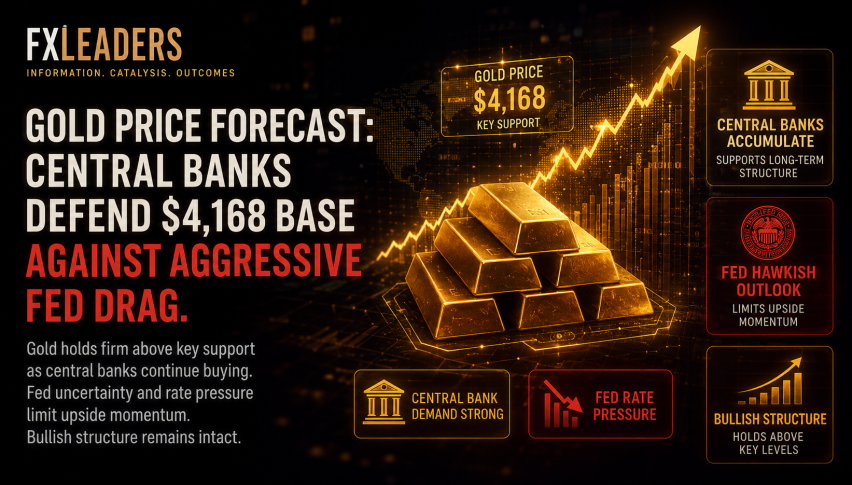
Gold is attracting renewed interest from central banks and sovereign wealth funds as concerns over rising US debt, geopolitical fragmentation, and the long-term role of the US dollar reshape global reserve allocation strategies.

Quick overview
- Central banks and sovereign wealth funds are increasing gold allocations due to concerns over rising US debt and the weakening dominance of the US dollar.
- A recent survey indicates that 61% of central banks believe US debt is undermining the dollar's long-term reserve currency status.
- Gold is being viewed as a strategic reserve asset that offers diversification and protection against geopolitical risks.
- Long-term demand from official institutions is expected to support bullion prices, reinforcing gold's role in a fragmented global financial system.
Gold is attracting renewed interest from central banks and sovereign wealth funds as concerns over rising US debt, geopolitical fragmentation, and the long-term role of the US dollar reshape global reserve allocation strategies.
Sovereign Investors Increase Strategic Gold Allocations
A growing number of the world’s largest sovereign investors are preparing to increase their gold holdings as confidence in the long-term dominance of the US dollar continues to weaken. According to a recent Invesco survey, roughly one-third of sovereign wealth funds and central banks intend to expand their gold allocations, reflecting a broader reassessment of global reserve management.
The survey covered 90 sovereign wealth funds and 54 central banks overseeing a combined $29 trillion in assets. Its findings suggest that official institutions are becoming increasingly concerned about rising US government debt levels and the potential implications for the dollar’s status as the world’s primary reserve currency.
Notably, 61% of central bank respondents said growing US debt is weakening the dollar’s long-term reserve currency position, a sharp increase from just 20% recorded in the 2024 survey.
Gold Strengthens Its Role as a Defensive Reserve Asset
The shift toward gold extends beyond traditional inflation protection. Many sovereign investors now view bullion as a strategic reserve asset that offers diversification without relying on any single country’s financial system.
Recent inflationary cycles exposed weaknesses in the traditional portfolio structure, as government bonds and equities frequently moved in the same direction rather than offsetting one another. That breakdown reduced the effectiveness of fixed income as a defensive allocation, encouraging institutions to seek alternative stores of value.
Gold has benefited from this transition because it offers deep liquidity, carries no counterparty risk, and remains largely insulated from political or financial system disruptions.
Institutions Reassess Financial Infrastructure
The survey also revealed a broader reassessment of global financial infrastructure. Several central banks indicated they are reviewing their dependence on US-based custodians, counterparties, and clearing systems amid heightened geopolitical uncertainty.
Some institutions have already diversified custodial arrangements outside the United States, while others are establishing alternative relationships as a precaution against potential geopolitical disruptions. Gold complements this strategy because physical bullion can be held independently of traditional financial networks, reducing exposure to political or sanctions-related risks.
Long-Term Demand Supports Bullion Outlook
Although the US dollar has remained relatively resilient this year and continues to benefit from its dominant global position, many reserve managers believe any transition away from dollar dependence will occur gradually over many years rather than abruptly.
The survey found that 29% of respondents expect the dollar’s reserve currency role to weaken over the next five years, more than double the proportion recorded just a few years ago.
For the gold market, this trend represents more than a short-term investment theme. Central banks and sovereign wealth funds typically invest with multi-decade time horizons, making their purchases relatively insensitive to price fluctuations. As a result, sustained official-sector demand could provide a durable source of support for bullion prices while reinforcing gold’s role as a core reserve asset in an increasingly fragmented global financial system.
- Check out our free forex signals
- Follow the top economic events on FX Leaders economic calendar
- Trade better, discover more Forex Trading Strategies
- Open a FREE Trading Account
- Read our latest reviews on: Avatrade, Exness, HFM and XM

Related Articles

Sidebar rates

Related Posts
 Save
SaveAva

