Trading Binance With Crypto Signals

Cryptocurrency trading has become increasingly popular as digital assets continue to gain global attention. Many traders use crypto signals to help guide their trading decisions, especially on major exchanges like Binance. Crypto signals provide suggested trade setups based on market analysis, allowing traders to identify potential opportunities without constantly monitoring charts.
This article explains what crypto signals are, how they work on Binance, and how traders can use them effectively while managing risk.
 | Minimum Deposit: $0 Regulated by: AMF, OAM, FIU, Bank of Spain, Polish Tax Administration Chamber of Poland, Swedish Financial Supervisory Authority, AFSA, Financial Service Regulatory Authority of Dubai, Central Bank of Bahrain, Dubai VARA, AUSTRAC, Bappebti, JFSA, New Zealand regulator, SEC Thailand, SAT Mexico, CNAD, South Africa FSP Crypto: Yes |
What Is Binance?
Binance is one of the world’s largest cryptocurrency exchanges, offering traders access to hundreds of digital assets and trading pairs. The platform supports a wide range of trading features, making it suitable for both beginners and experienced traders.
Users can trade cryptocurrencies through several market types, including spot trading, margin trading, and futures trading. Binance also provides advanced charting tools, automated trading options, and relatively low trading fees, which make it a preferred platform for many traders who follow crypto signals.
Because of its high liquidity and broad selection of coins, Binance provides many opportunities for traders to act on signal-based strategies.

| Minimum Deposit: $0 Regulated by: AMF, OAM, FIU, Bank of Spain, Polish Tax Administration Chamber of Poland, Swedish Financial Supervisory Authority, AFSA, Financial Service Regulatory Authority of Dubai, Central Bank of Bahrain, Dubai VARA, AUSTRAC, Bappebti, JFSA, New Zealand regulator, SEC Thailand, SAT Mexico, CNAD, South Africa FSP Crypto: Yes |
What Are Crypto Trading Signals?
Crypto trading signals are trade ideas generated through market analysis. These signals typically suggest when to buy or sell a specific cryptocurrency based on technical indicators, market trends, or algorithmic models.
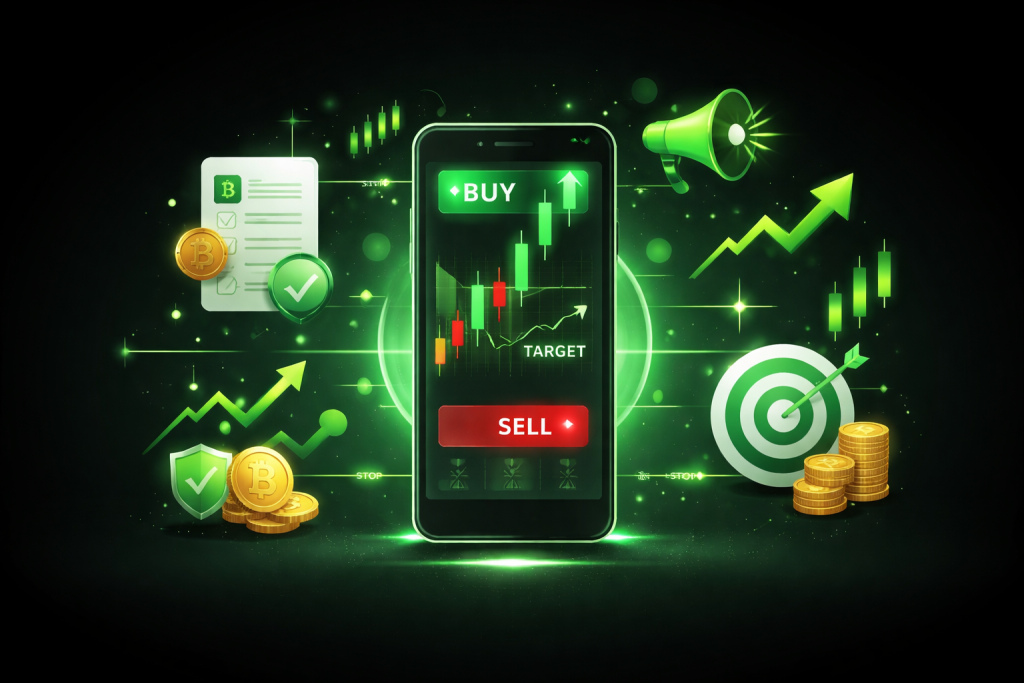
A standard crypto signal usually includes several key elements. First, it identifies the trading pair, such as BTC/USDT or ETH/USDT. It then specifies whether the trader should open a long position (buy) or a short position (sell). Signals also provide the recommended entry price, one or more take-profit targets, and a stop-loss level to limit potential losses.
These signals are often produced by experienced traders, trading teams, or automated systems that analyze market data and price patterns.
| Minimum Deposit: $0 Regulated by: AMF, OAM, FIU, Bank of Spain, Polish Tax Administration Chamber of Poland, Swedish Financial Supervisory Authority, AFSA, Financial Service Regulatory Authority of Dubai, Central Bank of Bahrain, Dubai VARA, AUSTRAC, Bappebti, JFSA, New Zealand regulator, SEC Thailand, SAT Mexico, CNAD, South Africa FSP Crypto: Yes |
How Crypto Signals Are Used on Binance
Most traders receive crypto signals through external platforms. Common delivery channels include messaging apps, trading communities, websites, or dedicated signal applications.
After receiving a signal, the trader manually places the trade on Binance using the information provided. The trader enters the market at the suggested price, sets the take-profit targets, and applies the recommended stop-loss level.
For example, a signal might instruct traders to buy a certain cryptocurrency at a specific price and sell once the price reaches a defined target. The stop-loss ensures that if the market moves against the trade, the loss remains limited.
Some advanced traders also use trading bots that automatically execute signals on their Binance accounts.
| Minimum Deposit: $0 Regulated by: AMF, OAM, FIU, Bank of Spain, Polish Tax Administration Chamber of Poland, Swedish Financial Supervisory Authority, AFSA, Financial Service Regulatory Authority of Dubai, Central Bank of Bahrain, Dubai VARA, AUSTRAC, Bappebti, JFSA, New Zealand regulator, SEC Thailand, SAT Mexico, CNAD, South Africa FSP Crypto: Yes |
Types of Crypto Signals
Crypto signals can vary depending on the trading strategy and timeframe used by the signal provider.
Scalping Signals
Scalping signals focus on extremely short-term market movements. These trades are typically opened and closed within minutes or hours, aiming to capture small price changes.
Day Trading Signals
Day trading signals are designed for positions that usually remain open for a single trading day. These trades attempt to profit from short-term market momentum.
Swing Trading Signals
Swing trading signals are longer-term setups that may remain active for several days or even weeks. They are based on broader market trends rather than short-term fluctuations.
Futures Signals
Futures signals involve leveraged trading through the futures market. Leverage allows traders to control larger positions than their initial investment, but it also increases the potential risk.

| Minimum Deposit: $0 Regulated by: AMF, OAM, FIU, Bank of Spain, Polish Tax Administration Chamber of Poland, Swedish Financial Supervisory Authority, AFSA, Financial Service Regulatory Authority of Dubai, Central Bank of Bahrain, Dubai VARA, AUSTRAC, Bappebti, JFSA, New Zealand regulator, SEC Thailand, SAT Mexico, CNAD, South Africa FSP Crypto: Yes |
Why Traders Use Signals on Binance
Many traders choose Binance when following crypto signals because the platform offers several advantages. One of the main benefits is the large number of available cryptocurrencies. With hundreds of trading pairs, signal providers have more opportunities to identify potential trades.
Another advantage is Binance’s competitive fee structure, which helps traders keep costs low even when placing frequent trades. The platform also offers strong liquidity. High liquidity means that traders can usually enter and exit positions quickly without major price slippage.
In addition, Binance provides advanced trading tools, including detailed charts and order types that help traders execute signals accurately.
| Minimum Deposit: $0 Regulated by: AMF, OAM, FIU, Bank of Spain, Polish Tax Administration Chamber of Poland, Swedish Financial Supervisory Authority, AFSA, Financial Service Regulatory Authority of Dubai, Central Bank of Bahrain, Dubai VARA, AUSTRAC, Bappebti, JFSA, New Zealand regulator, SEC Thailand, SAT Mexico, CNAD, South Africa FSP Crypto: Yes |
Advantages of Trading With Crypto Signals
Crypto signals can be particularly useful for traders who are new to the market or those who do not have time to perform extensive technical analysis. Signals save time by providing ready-made trade setups that traders can follow. Instead of analyzing multiple charts and indicators, traders receive clear instructions on how to approach a trade.
They also give traders access to professional market analysis. Many signal providers rely on experienced analysts or advanced algorithms to identify potential opportunities. For beginners, signals can also serve as a learning tool. By observing how signals are structured, traders can begin to understand the reasoning behind different trading strategies.
Another advantage is that signals can help reduce emotional decision-making. Clear entry and exit levels can prevent traders from making impulsive choices based on fear or excitement.

| Minimum Deposit: $0 Regulated by: AMF, OAM, FIU, Bank of Spain, Polish Tax Administration Chamber of Poland, Swedish Financial Supervisory Authority, AFSA, Financial Service Regulatory Authority of Dubai, Central Bank of Bahrain, Dubai VARA, AUSTRAC, Bappebti, JFSA, New Zealand regulator, SEC Thailand, SAT Mexico, CNAD, South Africa FSP Crypto: Yes |
Risks of Using Crypto Signals
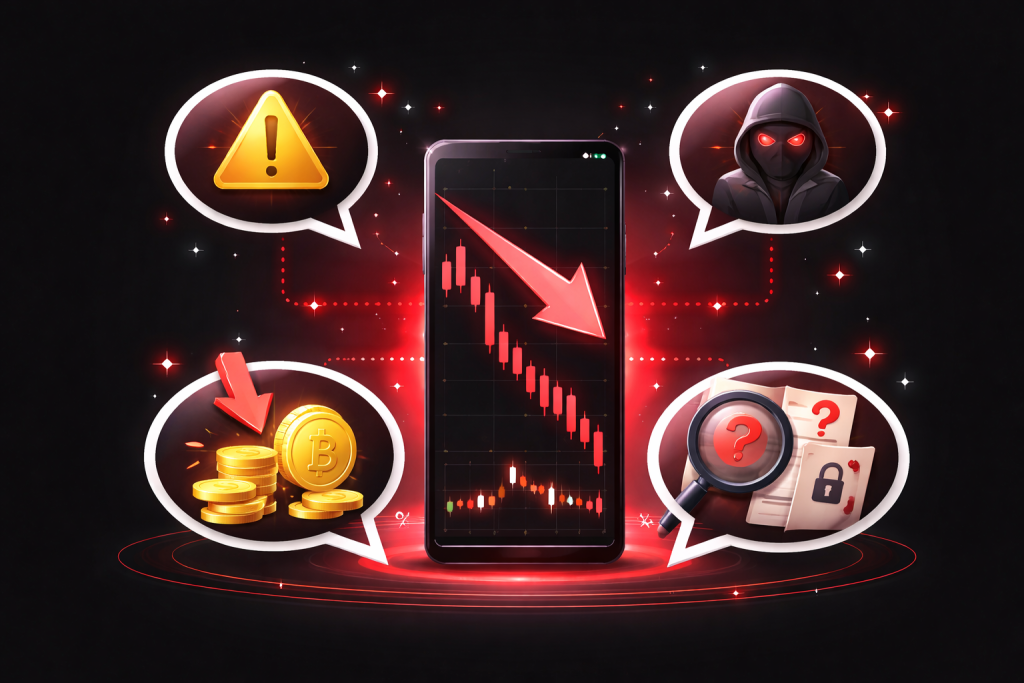
Despite their potential benefits, crypto signals are not guaranteed to produce profits. The cryptocurrency market is highly volatile, and even well-researched signals can fail. One of the main risks is the presence of unreliable signal providers. Some groups promote unrealistic profit expectations or provide inaccurate signals to attract subscribers.
Another concern is over-reliance on signals. Traders who blindly follow signals without understanding the market may struggle when conditions change. Market volatility also remains a major factor. Sudden price movements can cause trades to hit stop-loss levels before reaching their profit targets.
Signals that involve leveraged futures trading can be particularly risky because leverage amplifies both gains and losses.
| Minimum Deposit: $0 Regulated by: AMF, OAM, FIU, Bank of Spain, Polish Tax Administration Chamber of Poland, Swedish Financial Supervisory Authority, AFSA, Financial Service Regulatory Authority of Dubai, Central Bank of Bahrain, Dubai VARA, AUSTRAC, Bappebti, JFSA, New Zealand regulator, SEC Thailand, SAT Mexico, CNAD, South Africa FSP Crypto: Yes |
Tips for Trading on Binance With Crypto Signals
Traders who want to use crypto signals effectively should follow several best practices. Starting with smaller trade sizes can help reduce risk while testing the reliability of a signal provider. This approach allows traders to evaluate performance before committing more capital.
Using stop-loss orders is essential for protecting trading accounts. A stop-loss limits potential losses if the market moves against the position. It is also important to research signal providers carefully. Reliable providers often maintain transparent performance records and realistic expectations.
Combining signals with personal analysis can further improve decision-making. Even basic chart analysis can help traders confirm whether a signal aligns with current market conditions.
Finally, proper risk management should always remain a priority. Many experienced traders avoid risking more than a small percentage of their total capital on a single trade.
| Minimum Deposit: $0 Regulated by: AMF, OAM, FIU, Bank of Spain, Polish Tax Administration Chamber of Poland, Swedish Financial Supervisory Authority, AFSA, Financial Service Regulatory Authority of Dubai, Central Bank of Bahrain, Dubai VARA, AUSTRAC, Bappebti, JFSA, New Zealand regulator, SEC Thailand, SAT Mexico, CNAD, South Africa FSP Crypto: Yes |
Pros and Cons
| ✓ Pros | ✕ Cons |
| Saves time by providing ready-made trade setups | Signals are not always accurate |
| Helps beginners identify trading opportunities | Some signal providers may be unreliable |
| Provides structured entry, stop-loss, and take-profit levels | Over-reliance on signals can limit learning |
| Gives access to expert or algorithm-based analysis | Market volatility can cause signals to fail |
| Can be used across multiple Binance markets (spot, margin, futures) | Futures signals with leverage increase risk |
| Helps reduce emotional trading decisions | Some high-quality signal services require paid subscriptions |
You might also like:
- AvaTrade Review
- MultiBank Group Review
- Elev8 Review
- Pepperstone Review
- FISG Review
- XM Review
- HFM Review
- PU Prime Review
- IUX Review
- FBS Review
In Conclusion
Trading on Binance with crypto signals can provide traders with valuable guidance in a fast-moving market. Signals offer structured trade setups and can help traders identify opportunities that they might otherwise miss.
However, successful trading requires more than simply copying signals. Traders should approach signals as one tool within a broader strategy that includes risk management, market awareness, and continuous learning.
When used responsibly, crypto signals can play a useful role in helping traders navigate the dynamic world of cryptocurrency markets.
Crypto trading signals are trade suggestions that indicate when to buy or sell a cryptocurrency based on market analysis.
Yes. Traders can follow crypto signals and manually execute the trades on Binance using the recommended entry, take-profit, and stop-loss levels.
Crypto signals can be helpful, but they are not always accurate because cryptocurrency markets are highly volatile.
Crypto signals are commonly shared through Telegram groups, trading communities, websites, and specialized trading platforms.
Yes. Many beginners use signals to learn trading strategies and identify potential opportunities in the crypto market.
Most signals include the trading pair, trade direction (buy or sell), entry price, take-profit targets, and stop-loss level.
Some traders connect trading bots to their Binance accounts to automatically execute signals.
Some signal providers offer free signals, while others charge a subscription fee for premium signals.
No. All trading carries risk, and signals can sometimes fail due to sudden market changes.
No. Signals should be used alongside personal analysis and proper risk management for better trading decisions.
 ABOUT THE AUTHOR
See More
ABOUT THE AUTHOR
See More


Sidebar rates

Ava

