Rand Slumps 1% as SARB Rate Hike Looms Amid Global Volatility
South Africa's rand slumps 1% amid SARB rate hike speculation and global market volatility.
Quick overview
- The South African rand has declined by 1% due to trader anxiety over the upcoming interest rate decision by the South African Reserve Bank (SARB).
- Speculation about a potential rate hike by the SARB is contributing to the rand's downturn, as the bank balances inflation control with economic recovery needs.
- The SARB's decision will significantly impact the broader South African economy and currency traders, with potential effects on inflation, borrowing costs, and corporate earnings.
- Traders should remain alert to the implications of the SARB's decision on the USD/ZAR currency pair and monitor commodity prices, particularly gold and platinum.
Live USD/ZAR Chart

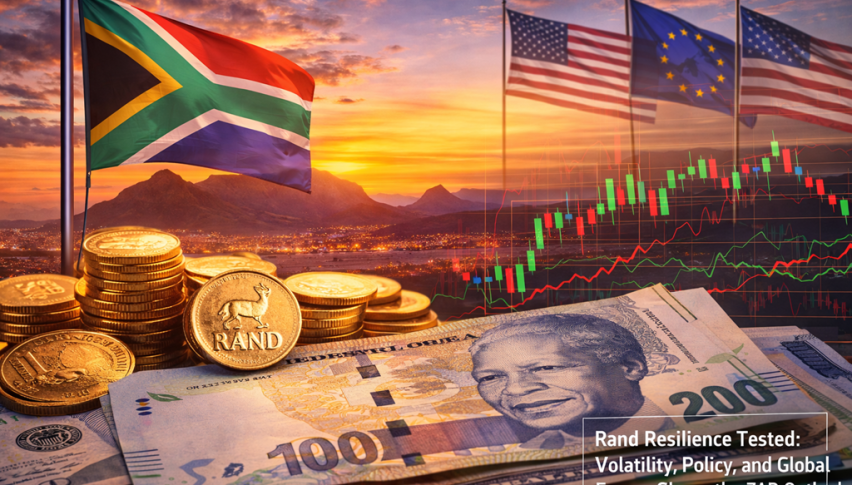
The South African rand has experienced a 1% slump, reflecting heightened anxiety among traders as speculation mounts over the South African Reserve Bank’s (SARB) upcoming interest rate decision amid volatile global markets.
Behind the Headline
As the week progresses, traders are closely monitoring both local and international developments. The recent downturn of the rand comes as markets anticipate critical decisions from both the South African Reserve Bank and the U.S. Federal Reserve. According to TradingView, the rand’s recent rally has been tempered by these impending decisions, injecting uncertainty into the market.
FXLeaders reports that the speculation surrounding a potential rate hike by the SARB has contributed to the rand’s decline. The central bank is grappling with balancing inflation control with the need to support an economy still recovering from the pandemic. Meanwhile, global volatility, influenced by geopolitical tensions and fluctuating commodity prices, adds another layer of complexity.
South Africa Market Angle
The SARB’s decision is pivotal, not only for currency traders but also for the broader South African economy. A rate hike could help stabilize inflation but might also dampen domestic economic growth by increasing borrowing costs. The Johannesburg Stock Exchange (JSE) is also sensitive to these changes, as higher rates could lead to reduced corporate earnings and lower consumer spending.
Invezz highlights that the rand’s previous strength was partly due to favorable commodity prices, which have supported South Africa’s export-driven economy. However, any shift in the SARB’s monetary policy could alter this dynamic, affecting sectors reliant on foreign investment and exports.
Contrary Angle
While a rate hike seems likely, some analysts argue that the SARB might adopt a more cautious approach. Considering the fragile state of the global economy, compounded by ongoing trade tensions and energy price spikes, the central bank may opt to hold rates steady to avoid stifling growth.
Moreover, the recent depreciation might be viewed as an overreaction by the market, as the fundamental drivers of South Africa’s economy remain robust. The country’s rich resource base and strategic economic reforms could support recovery, even without immediate monetary tightening.
Why Traders Should Care
Traders should remain vigilant as the SARB’s decision will likely influence the USD/ZAR currency pair, presenting both risks and opportunities. A rate hike could strengthen the rand in the short term, providing opportunities for shorting the USD/ZAR. Conversely, if the SARB holds rates, there might be a temporary sell-off in the rand, offering potential for long positions.
Additionally, traders should monitor the JSE for potential volatility, as changes in interest rates can impact stock valuations. Keeping an eye on commodity price movements, particularly gold and platinum, will also be crucial, as these are significant drivers of the South African economy.
Conclusion
With the SARB’s interest rate decision looming, the South African rand faces a critical juncture amidst a backdrop of global volatility and economic uncertainty. Traders must navigate this complex environment by staying informed and ready to adapt their strategies as new information becomes available.
- Check out our free forex signals
- Follow the top economic events on FX Leaders economic calendar
- Trade better, discover more Forex Trading Strategies
- Open a FREE Trading Account
- Read our latest reviews on: Avatrade, Exness, HFM and XM

Related Articles

Sidebar rates

Related Posts
 Save
Save