MU Stock Tests $900 Support – Rebound Above $1,000 or Breakdown Lower as Chip Selloff Raises Memory Cycle Concerns
Micron stock has fallen toward a critical technical level as semiconductor weakness and concerns over peak memory profitability challenge investor confidence despite strong AI and automotive demand.

Quick overview
- Micron stock has fallen below the critical $900 support level due to semiconductor sector weakness and concerns over peak memory profitability.
- Despite strong demand for AI and automotive applications, investors are questioning the sustainability of Micron's current earnings amid cyclical industry pressures.
- Micron's long-term growth is supported by partnerships with Ford and General Motors, but recent market volatility highlights investor caution regarding memory pricing and future profitability.
- The company's Q3 fiscal 2026 results exceeded expectations, with revenue of $41.46 billion and strong guidance for Q4, yet investor confidence remains fragile.
Micron stock has fallen toward a critical technical level as semiconductor weakness and concerns over peak memory profitability challenge investor confidence despite strong AI and automotive demand.
Micron Stock Tests $900 Support as Memory Cycle Concerns Pressure Shares
Micron Technology shares have come under renewed selling pressure, slipping below the $900 level as weakness across the semiconductor sector weighed on the Nasdaq and pushed investors to reassess the sustainability of the memory industry’s record profitability.
After briefly losing the $1,000 mark in the previous session, MU stock has now reached a critical technical zone. Investors are watching closely whether Micron can establish support and recover back above $1,000 or whether further downside pressure could trigger a move toward the $800 level.
Investors Question Whether Memory Profits Have Peaked
The recent decline reflects growing concerns that the memory industry may be approaching the peak of its current earnings cycle.
Micron has delivered exceptional profitability as demand for high-performance memory, artificial intelligence infrastructure, and data center technology has strengthened. However, investors are increasingly questioning whether current earnings levels can be sustained over the coming years.
The company trades at a relatively low valuation of around seven times forward earnings, which would normally suggest an attractive opportunity. However, the market has historically treated memory companies differently due to their highly cyclical nature.
Periods of strong pricing power and record margins are often followed by oversupply, falling prices, and earnings pressure. As a result, investors are questioning whether Micron’s current profits represent a sustainable growth phase or the peak of another memory cycle.
Shares have now declined approximately 27% from their post-earnings highs reached last month, reflecting growing caution toward the sector.
Semiconductor Weakness Weighs on Market Sentiment
Micron’s decline has been amplified by broader weakness across semiconductor stocks, which has dragged on the Nasdaq and reduced investor appetite for high-growth technology companies.
The recent pullback has renewed concerns that the semiconductor rally, driven heavily by artificial intelligence demand, may have become overstretched after months of significant gains.
Investors are increasingly focused on whether chip companies can maintain elevated growth rates as valuations remain high across the technology sector. Concerns over future supply expansion have also increased as manufacturers invest heavily to increase production capacity.
Although AI-related demand remains strong, the market is becoming more cautious about whether demand growth will continue to exceed supply.
Automotive Partnerships Provide Long-Term Support
Despite near-term market pressure, Micron continues to strengthen its long-term growth position through expansion into the automotive semiconductor market.
The company recently secured long-term supply agreements with Ford and General Motors, providing advanced memory and storage solutions for next-generation vehicles.
These partnerships are expected to support demand as vehicles become increasingly dependent on advanced driver assistance systems, connectivity features, and onboard computing capabilities.
However, investors have largely ignored these positive developments, instead focusing on broader concerns surrounding memory pricing, industry cycles, and future profitability.
Technical Strength Meets Near-Term Valuation Questions
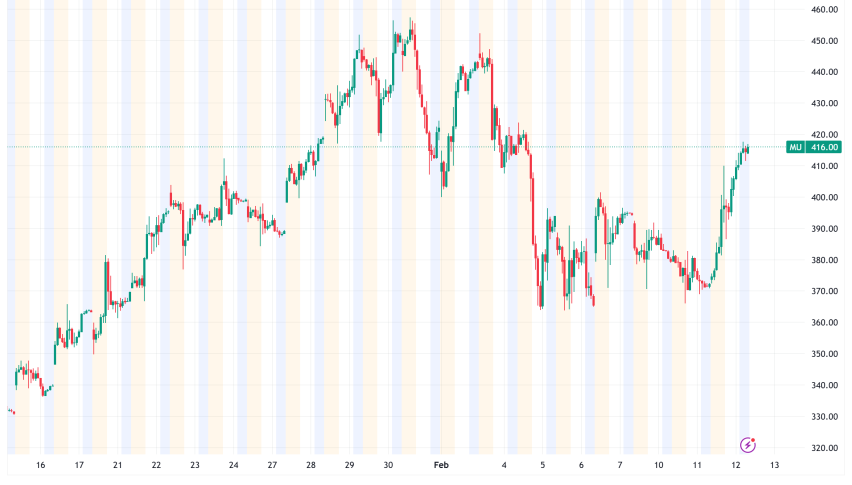
From a technical perspective, Micron’s fall below $311 in March and the quick rebound off the 100 daily SMA (green) was symbolically important. Buyers came back as broader stock market sentiment improved. As a result, we have seen a strong rebound and buyers have pushed MU stock above the $1,000 level in early June, reaching $1,210 which was broken yesterday. We saw a pullback under $1,000 and MU stock slipped to $864, although the 20 SMA held as support again on the daily chart and we saw a rebound from there early last week. But now the 20 daily SMA was broken and now the 50 SMA is under attack at $900.
MU Chart Daily – The 20 SMA Continues Is Under Attack

Legal and Supply Risks Add Additional Pressure
Adding to investor uncertainty, Micron, Samsung Electronics, and SK Hynix are facing a newly filed U.S. class-action lawsuit alleging that the companies limited traditional DRAM production while prioritizing higher-margin AI memory products.
The allegations remain unproven, but the legal challenge has introduced another risk factor as investors already debate the future direction of the memory market.
Meanwhile, expanding production capacity across the industry has increased fears that supply could eventually outpace demand, potentially pressuring prices and margins.
For now, Micron’s long-term outlook remains supported by artificial intelligence, data centers, and automotive technology demand. However, the stock’s recent decline highlights growing concerns about the cyclical nature of the memory industry.
The $900 level has become a crucial technical test for MU stock. A successful rebound could restore confidence and open the path back toward $1,000, but a decisive break below support could expose shares to deeper losses toward $800.
Strong Fundamentals Face Higher Market Expectations
Micron continues to benefit from strong underlying demand. The company recently exceeded revenue expectations, delivered stronger forward guidance, and remains positioned to benefit from increasing demand for DRAM and NAND memory used in AI infrastructure and data centers.
The company’s automotive strategy is also expanding through partnerships with Ford and General Motors, while additional corporate initiatives have strengthened its broader market presence.
However, after a substantial rally to record highs, investor expectations have risen significantly. The market is now demanding continued execution, leaving less room for weaker guidance, margin pressure, or industry disruptions.
Micron’s long-term AI opportunity remains intact, but recent volatility demonstrates that strong fundamentals alone may not be enough to support further upside without renewed confidence in valuations and semiconductor cycle stability. For now, MU stock remains vulnerable to additional swings as investors balance growth opportunities against increasing industry risks.
Micron Q3 2026 Earnings Report
Micron posted Q3 revenue of $41.46B against a $35.69B estimate and guided Q4 to $50B, blowing past a $43.24B consensus on surging AI memory demand.
Summary:
- Micron reported Q3 fiscal 2026 revenue of $41.46 billion against a consensus estimate of $35.69 billion, per company results
- Adjusted EPS came in at $25.11 versus an estimate of $20.49, according to the results
- Q3 adjusted gross margin reached 84.9%, ahead of the 81.9% estimate, per company figures
- Micron guided Q4 revenue to a range of $49 billion to $51 billion, well above the $43.24 billion Wall Street had expected, per company guidance
- Q4 adjusted EPS is forecast at $31.00 against an estimate of $25.50, according to guidance
- Q4 gross margin is guided to approximately 86%, above the 83.6% estimate, per company guidance
- The company cited customers’ rapidly growing demand as the driver behind the results and outlook
- Check out our free forex signals
- Follow the top economic events on FX Leaders economic calendar
- Trade better, discover more Forex Trading Strategies
- Open a FREE Trading Account
- Read our latest reviews on: Avatrade, Exness, HFM and XM

Related Articles


Sidebar rates

Related Posts
 Save
SaveAva
