Netflix Stock Tumbles 10% as Guidance Disappoints, But Wall Street’s Bulls Aren’t Backing Down
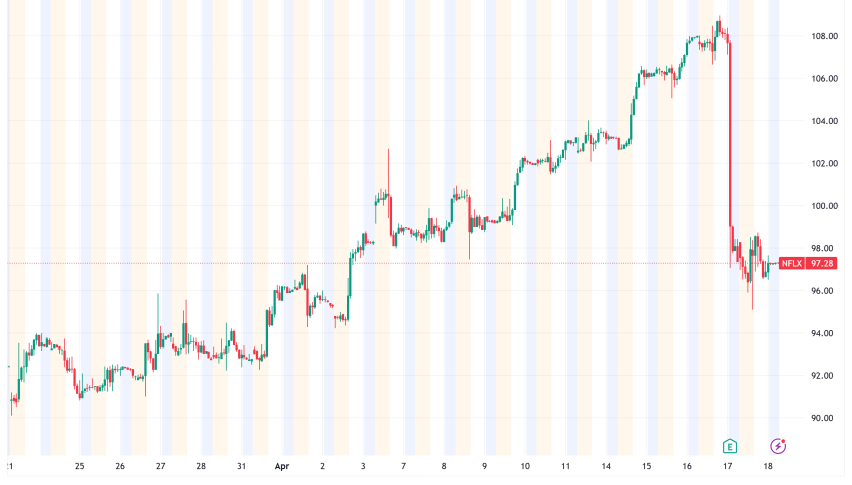
Shares of Netflix (NASDAQ: NFLX) tumbled about 10% on Friday, wiping away months of gains. This was because the company's second-quarter
Quick overview
- Netflix shares dropped 10% after the company's second-quarter guidance fell short of Wall Street expectations, despite strong first-quarter results.
- The stock ended the day at $97.31, erasing months of gains and experiencing trading volume more than double its average.
- Morgan Stanley maintained an Overweight rating on Netflix, suggesting the stock's decline is more about timing than fundamental issues.
- Analysts remain optimistic about Netflix's improving margins and potential growth in advertising revenue, despite the recent stock drop.
Shares of Netflix (NASDAQ: NFLX) tumbled about 10% on Friday, wiping away months of gains. This was because the company’s second-quarter estimate didn’t meet Wall Street’s expectations, even though its first-quarter statistics showed that the firm was doing well.
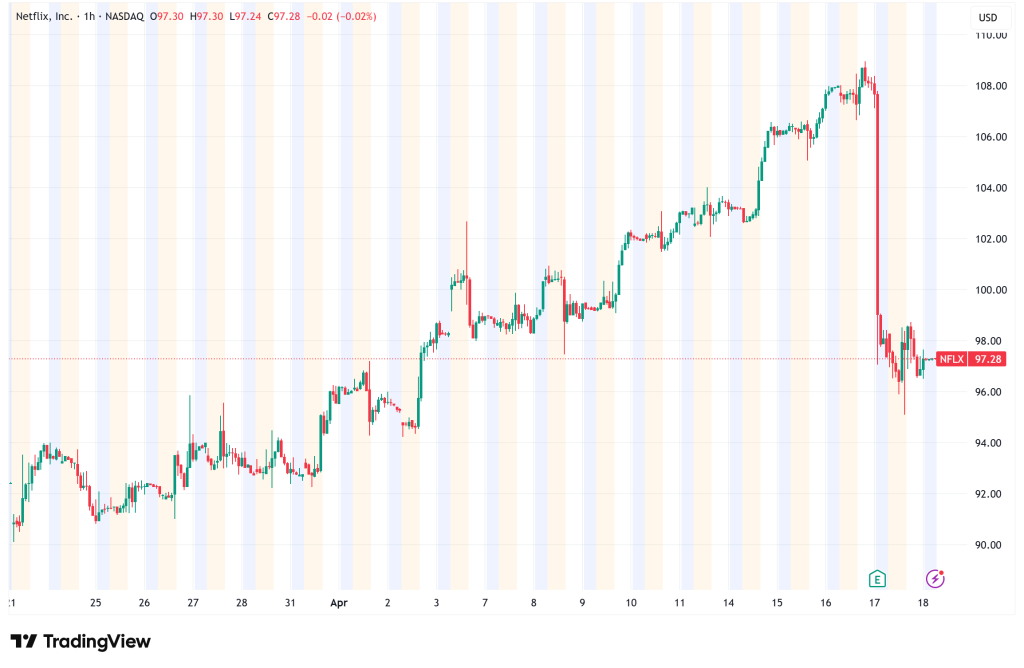
The stock, which had risen almost 18% since the beginning of the year, ended the day at $97.31, down $10.48 for the session. Trading volume was 126 million shares, more than double its average.
Netflix’s Strong Quarter Overshadowed by Weak Guidance
Most of the time, Netflix’s numbers for the first quarter of 2026 were very good. The company made $12.25 billion in sales, which is 16% more than last year and more than the $12.17 billion average projection. Operating income rose 18% to $4.08 billion, and free cash flow soared to $5.1 billion, almost twice as much as the $2.7 billion recorded a year earlier.
The problem was what happened afterward. Netflix’s full-year revenue midpoint of $51.2 billion was lower than analysts’ forecasts of $51.38 billion, and its 31.5% operating margin target was lower than the 32% forecast. The business also said that co-founder Reed Hastings will not run for re-election as chairman, which added to the market’s already shaky attitude.
Morgan Stanley Holds Firm on Netflix (NFLX) Stock Outlook
Not everyone is leaving. Morgan Stanley kept its Overweight rating and $115 price target on Netflix after the stock fell. They said that the drop after earnings was more about timing than any problems with the company’s basic story.
The bank’s analysts say that Netflix’s pricing hikes in the U.S. in March are a sign that the real effect may not be seen until Q3, not Q2. This is because it usually takes two to three months for the price changes to have a big effect on revenue. Netflix repeated its prediction that sales will climb by 12% to 14% over the course of the year and raised its estimate for free cash flow from $11 billion to $12.5 billion.
The average price goal on Wall Street is $114.46, which means that prices might go up by around 17% from where they are now. Targets range from $80 (bearish) to $151.40 (bullish).
Netflix’s Margin Story Remains Compelling
One reason experts are still positive is that Netflix’s margins are becoming bigger. Operating margins fell to 17.8% in 2022, but they have been steadily rising since then, reaching 26.7% in 2024, 29.5% in 2025, and 32.3% in the first quarter of 2026. Management has been clear: spending on content will expand more slowly than income, which will help profits in the long run.
The company’s advertising business is another way for it to grow. Ad income is predicted to reach $3 billion in 2026, which is about twice as much as it was in 2025. The ad-supported tier already makes up more than 60% of new sign-ups in the areas where it is accessible.
What’s Next for Netflix Stock: A Billionaire Bet and a Market Divided
Coatue Management’s Philippe Laffont increased his Netflix stake by more than 75% in the fourth quarter of 2025, amassing a position worth around $1 billion only weeks before the stock fell. That makes for a big difference: smart money buying with conviction vs scared market selling.
The technical picture has changed now that the stock is trading below the important $100–$105 support zone. Netflix’s fundamental business hasn’t altered much, though. It still has a 32.3% operating margin, free cash flow that is growing quickly, and a lengthy runway in advertising. The question investors need to answer now is simple: is this a slip, or the beginnings of something worse?
- Check out our free forex signals
- Follow the top economic events on FX Leaders economic calendar
- Trade better, discover more Forex Trading Strategies
- Open a FREE Trading Account
- Read our latest reviews on: Avatrade, Exness, HFM and XM

Related Articles



Sidebar rates

Related Posts
 Save
Save