SARB Keeps the Pressure on Consumers Holding Interest Rates High Despite Inflation Being Imported
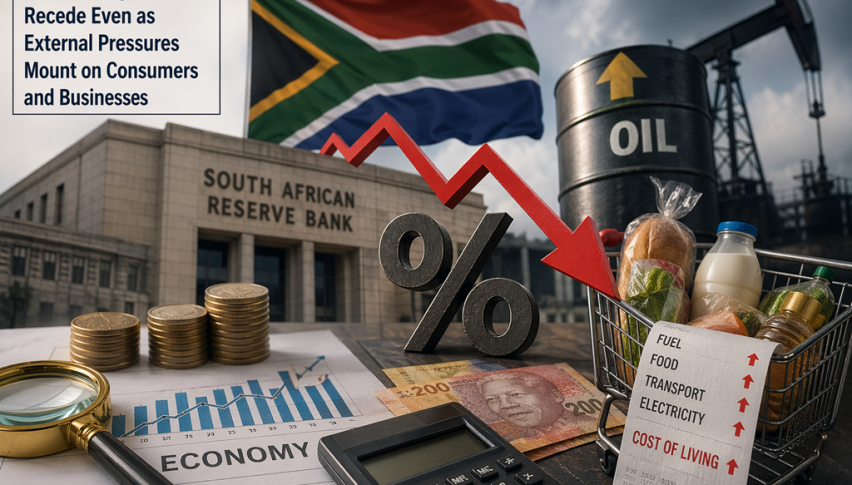
Hopes for interest rate cuts in South Africa are fading despite inflation being imported, with the SARB weighing more on the consumers and..
Quick overview
- Hopes for interest rate cuts in South Africa are diminishing due to rising global oil prices and geopolitical tensions.
- Despite positive domestic economic indicators, the South African Reserve Bank has paused expected rate cuts to address imported inflation pressures.
- South Africa's growth outlook has been revised down, reflecting a broader slowdown in global economic growth.
- The SARB's decision to maintain high rates limits immediate relief for consumers facing increased living costs.
Hopes for interest rate cuts in South Africa are fading despite inflation being imported, with the SARB weighing more on the consumers and economy.
Rate Cut Optimism Stalls
At the start of 2026, expectations were firmly tilted toward monetary easing in South Africa. Many analysts anticipated that the South African Reserve Bank (SARB) would deliver rate cuts of 50 basis points or more during the year, supported by easing inflation and improving economic conditions.
However, that outlook has shifted significantly. Escalating geopolitical tensions, particularly involving Iran and disruptions around the Strait of Hormuz, have driven a surge in global oil prices. Central banks have used this external shock to keep interest rates high, when they should have lowered them to help the consumer and the economy.
External Shock Alters the Policy Path
According to Reza Hendrickse of PPS Investments, the shift in sentiment has not been driven by a collapse in domestic fundamentals. Economic growth has remained positive, and inflation—excluding energy—has shown signs of moderation.
Despite this, the global backdrop has deteriorated. The latest economic projections show global growth slowing from 3.3% to 3.1%, while South Africa’s growth outlook has been revised down more sharply, from 1.4% to 1.0%.
This is the playbook scenario for the SARB to lower rates, but no. Logically, higher rates would make sense only in case of an economic boom which would increase inflation from the inside and higher rates would tackle inflation domestically. When prices have been hiked arbitrarily from outside, adding further pressure to consumers by keeping interest rates high, since they can’t control prices coming form outside.
Inflation Pressures Limit Policy Flexibility
What they say is that the key challenge lies in the nature of the current inflation shock. Rising fuel costs, driven by global supply disruptions, are pushing inflation higher. Unlike domestically driven inflation, this type of pressure is largely beyond the control of local policymakers.
As a result, central banks—including the SARB—have paused expected rate cuts, citing the risk of imported inflation. This limits immediate relief for households facing higher living costs.
Strong Domestic Foundations Offer Some Support
Despite these challenges, South Africa’s internal economic picture has shown encouraging signs. Inflation slowed to around 3.0% earlier in the year, aligning with the central bank’s target range. Economic growth has also been steady, with GDP expanding for five consecutive quarters.
Fiscal indicators have improved as well. The budget projects a narrowing deficit, stabilizing debt levels near 78.9% of GDP, and a strengthening primary surplus. These factors suggest that the country’s structural position is more stable than in recent years.
Outlook: Progress Tempered by Uncertainty
While South Africa’s domestic fundamentals remain relatively solid, the external environment continues to dominate the near-term outlook. Elevated fuel prices and major corporations hiking prices arbitrarily have pushed inflation higher. The SARB should have slashed rates to help consumers and businesses, instead they have reduced the likelihood of rate cuts in the coming months.
- Check out our free forex signals
- Follow the top economic events on FX Leaders economic calendar
- Trade better, discover more Forex Trading Strategies
- Open a FREE Trading Account
- Read our latest reviews on: Avatrade, Exness, HFM and XM

Related Articles
Sidebar rates

Related Posts
 Save
Save
