INTC Stock Heads to $150 – Intel Manufacturing Revival Accelerates After Apple Foundry Partnership
Strong results, rising chip demand, and news of significant alliances with Apple, Tesla, and Alphabet bolstered confidence in the company's long-term turnaround strategy, causing Intel shares to soar to a new high above $132.
Quick overview
- Intel shares reached a record high above $132, driven by strong earnings and improving chip demand.
- A potential partnership with Apple for chip manufacturing could signify a major shift in the semiconductor industry.
- Investor confidence is growing as Intel's restructuring strategy shows signs of success, with increasing demand for CPUs and AI infrastructure.
- Despite challenges, Intel is now viewed as a credible player in advanced semiconductor manufacturing, supported by positive financial performance.
Live INTC Chart
[[INTC-graph]]
Strong results, rising chip demand, and news of significant alliances with Apple, Tesla, and Alphabet bolstered confidence in the company’s long-term turnaround strategy, causing Intel shares to soar to a new high above $132.
Intel Rally Accelerates Above $130
Shares of Intel Corporation extended their powerful rally this week, climbing above $130 and reaching a new record high near $132.75 as investors increasingly embraced Intel’s recovery story.
The stock’s sharp rebound reflects growing optimism that Intel’s multi-year restructuring and foundry expansion strategy may finally be gaining traction after years of skepticism.
Improving financial performance, recovering semiconductor demand, and several high-profile partnership reports have dramatically shifted sentiment around the company. Investors now view Intel not only as a recovering CPU manufacturer, but also as a potential long-term leader in advanced chip manufacturing and AI infrastructure.
The latest move places the stock within reach of the psychologically important $150 level, reinforcing the scale of the recent momentum shift.
Apple Partnership Could Mark a Structural Shift
The biggest catalyst behind the latest surge was a report from Apple Inc. discussions involving a preliminary agreement for Intel to manufacture chips for future Apple devices.
The potential significance of such a partnership extends far beyond short-term market excitement.
Apple currently relies heavily on Taiwan Semiconductor Manufacturing Company for production of its custom-designed silicon. If Apple were to diversify part of its manufacturing pipeline toward Intel, it would represent one of the strongest possible endorsements of Intel’s foundry capabilities.
Apple’s supply chain standards are among the strictest in the world. The company ships hundreds of millions of devices annually and depends heavily on manufacturing precision, efficiency, and yield consistency.
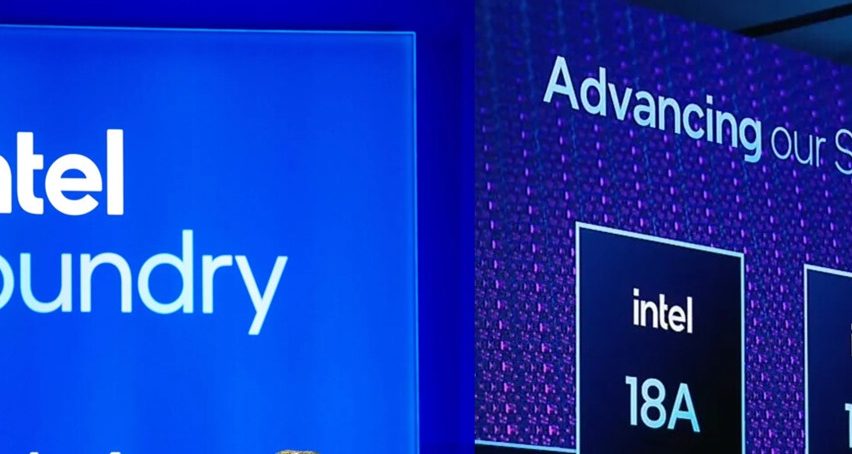
For years, much of the semiconductor industry believed Intel remained several years behind leading-edge foundry competitors. Reports that Apple may now be willing to trust Intel manufacturing suggest the company’s advanced 18A process technology may have progressed faster than many expected.
Importantly, investors increasingly view this not as a temporary trading catalyst, but as a potentially structural shift in the semiconductor industry.
Unlike government support programs or short-term investment announcements, a foundry relationship with Apple would require long-term operational trust, validated production yields, and confidence in Intel’s future manufacturing roadmap.
Foundry Strategy Gains Credibility
Intel’s long-term strategy has centered around rebuilding its manufacturing leadership and expanding its foundry business to serve external customers.
For years, the company struggled with production delays and manufacturing setbacks while rivals advanced more aggressively. However, recent developments suggest Intel may now be closing part of that gap.
Reports also indicate that Alphabet Inc. could adopt Intel’s advanced EMIB packaging technology for future AI processors. Such a move would strengthen Intel’s role in high-performance computing and advanced semiconductor integration.
At the same time, investor sentiment improved further after reports that Tesla, Inc. adopted Intel’s 14A manufacturing process for future chip development.
Taken together, these developments suggest some of the world’s largest technology companies are increasingly willing to engage with Intel’s next-generation manufacturing ecosystem.
That represents a dramatic change in perception compared with recent years, when Intel was often viewed as lagging behind industry leaders.
INTC Chart Weekly – Breaching $130

The speed of the upside move and the clear break above $100 indicates that investors are increasingly willing to accumulate shares at perceived value levels. While sustained upside momentum will require further confirmation, the structure has improved meaningfully.
With broader semiconductor sentiment improving, Intel’s long-term trend still points toward a potential move toward the $150 region if execution remains consistent.
Chip Demand Support Recovery
Beyond partnership speculation, Intel is also benefiting from improving fundamentals across the semiconductor sector.
Demand for CPUs and AI-related infrastructure has strengthened as enterprise spending recovers and cloud providers continue expanding computing capacity.
After years of losing market share to Advanced Micro Devices, Inc., Intel is beginning to show signs of operational stabilization and improved execution.
Government support has also played an important role. U.S. semiconductor initiatives and domestic manufacturing incentives have strengthened confidence in Intel’s strategic importance within the broader push to expand American chip production capacity.
Investor Confidence Continues to Build
The recent rally reflects more than short-term enthusiasm. Investors increasingly believe Intel’s turnaround story may be evolving into a broader industrial recovery narrative tied to AI infrastructure, advanced manufacturing, and supply chain diversification.
However, challenges remain. Intel still faces intense competition from established semiconductor leaders, while large-scale foundry expansion requires enormous capital investment and flawless execution.
The company must also prove that early partnership discussions eventually translate into sustained commercial production and long-term profitability growth.
Still, the latest developments suggest market confidence in Intel’s recovery has strengthened considerably, with the company now viewed as a much more credible participant in the next generation of global semiconductor manufacturing
Intel Q1 Earnings Report
- Intel reported Q1 revenue of $13.6 billion, up 7% year-over-year, broadly in line with expectations.
- The key upside surprise came from earnings, with EPS at $0.29 versus just $0.01 expected by the Street, marking a significant bottom-line beat.
- Strong Q2 guidance was the main catalyst, with revenue projected as high as $14.8 billion and EPS at $0.20, both well above analyst forecasts.
- Management’s outlook suggests its multi-year foundry turnaround and AI PC strategy are gaining traction.
- Progress on Intel’s 18A process node emerged as a major bullish signal, transitioning from development into a commercial growth driver.
- CEO Lip-Bu Tan emphasized that the shift toward “agentic AI” is increasing demand for advanced CPUs and wafer packaging technologies.
- Data Center and AI revenue jumped 22% year-over-year to $5.05 billion, beating expectations of $4.41 billion.
The strong performance in chip-related segments highlights accelerating demand tied to next-generation computing workloads.
- Check out our free forex signals
- Follow the top economic events on FX Leaders economic calendar
- Trade better, discover more Forex Trading Strategies
- Open a FREE Trading Account
- Read our latest reviews on: Avatrade, Exness, HFM and XM

Related Articles
Sidebar rates

Related Posts
 Save
SaveAva