Wall Street Slumps on U.S.–China Stalemate and Global Bond Selloff
The broader market tone was heavily influenced by a sharp rise in global bond yields, which triggered a broad risk-off move across assets.
Quick overview
- U.S. stocks closed lower on April 15 due to weaker sentiment following President Trump's visit to China and concerns over inflation linked to Middle East tensions.
- The Dow Jones Industrial Average fell 1.07%, the S&P 500 lost 1.25%, and the Nasdaq Composite dropped 1.54% amid a global bond selloff.
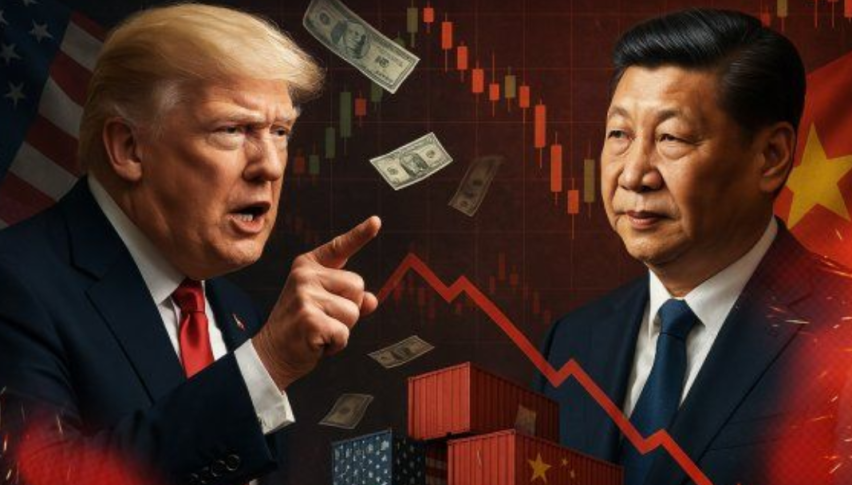
- Trump's visit to China yielded little clarity on economic agreements, with discussions reportedly touching on trade and Taiwan but lacking formal contracts.
- Rising oil prices and increased bond yields contributed to inflation concerns, reinforcing expectations of persistent inflationary pressures.
U.S. stocks closed lower on Friday, April 15, as a combination of weaker sentiment following President Donald Trump’s visit to China, a global bond selloff, and renewed inflation concerns linked to Middle East tensions weighed on markets.
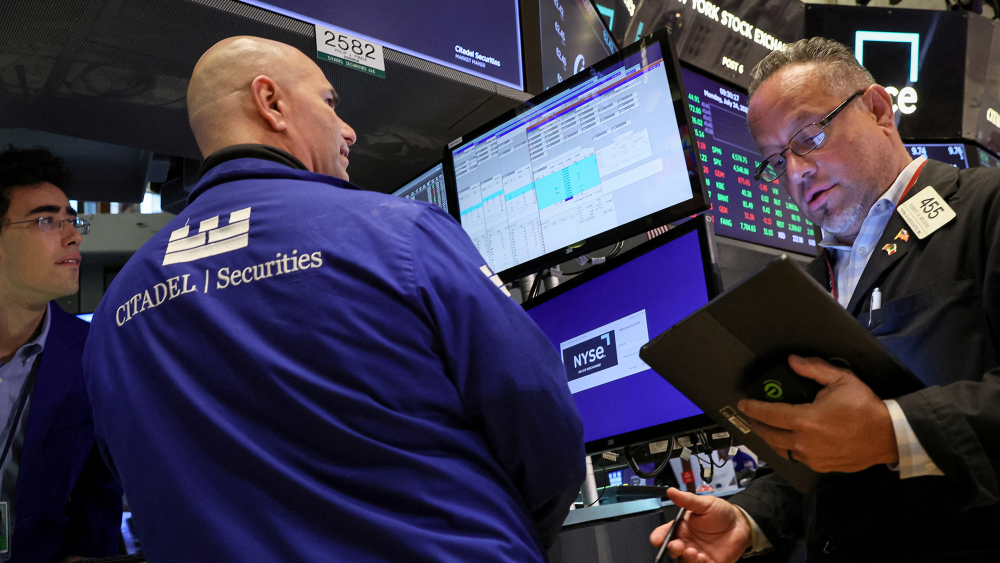
The downturn came after a recent rally that had pushed the S&P 500 and Nasdaq Composite to record highs, with investors taking profits as bond market volatility intensified.
In this context, the Dow Jones Industrial Average fell 1.07% to 49,526.11 points, the S&P 500 lost 1.25% to 7,407.52 points, and the Nasdaq Composite dropped 1.54% to 26,225.15 points.
“No breakthroughs” from Trump–Xi talks
Trump’s visit to China concluded on Friday, with little clarity on concrete economic agreements. Video footage from the White House showed the president boarding Air Force One after what marked the first visit by a sitting U.S. president to China since 2017.
Xi Jinping and Trump held a second round of talks, along with a private meeting, according to Chinese state media. However, details on any trade deals remain limited, although discussions reportedly touched on Taiwan as a key issue.
In a Fox News interview, Trump claimed China agreed to purchase U.S. oil and expand imports of Boeing aircraft, agricultural goods, and visa access. However, no formal contracts have been confirmed.
Markets were briefly supported by optimism after reports of meetings between Trump and major corporate executives, while a Reuters report suggesting U.S. approval for Nvidia to sell advanced AI chips to Chinese firms helped lift sentiment earlier in the session.
Bond selloff triggers global market stress
The broader market tone was heavily influenced by a sharp rise in global bond yields, which triggered a broad risk-off move across asset classes.
The yield on the U.S. 10-year Treasury rose 13 basis points to 4.582%, its highest level in nearly a year. The 30-year yield climbed above 5%, reaching 5.114%, the highest since 2007. The 2-year yield also advanced to 4.079%.
The selloff was not limited to the U.S.: UK 30-year gilt yields reached their highest level since 1998, while Japanese 30-year government bond yields hit record highs. In Japan, stronger-than-expected producer inflation reinforced expectations of tighter monetary policy from the Bank of Japan.
Energy prices add inflation pressure
Oil prices also resumed their upward trend, adding to inflation concerns. Brent crude futures rose 3.6% to $109.55 per barrel, reflecting ongoing geopolitical risks tied to the Middle East conflict.
Recent U.S. inflation data for April, including both CPI and PPI, highlighted the impact of rising energy costs, feeding into the Federal Reserve’s preferred inflation gauge, the core PCE index, and reinforcing expectations that inflationary pressures may remain sticky in the months ahead.
- Check out our free forex signals
- Follow the top economic events on FX Leaders economic calendar
- Trade better, discover more Forex Trading Strategies
- Open a FREE Trading Account
- Read our latest reviews on: Avatrade, Exness, HFM and XM

Related Articles
Sidebar rates

