Is the Uptrend Over for SanDisk as SNDK Stock Crashes Below $2,000 on Semiconductor Selloff Intensifying
SanDisk’s sharp drop below $2,000 highlights how quickly momentum-driven semiconductor rallies can unravel when valuation concerns, global market stress, and AI uncertainty collide.
Quick overview
- SanDisk's shares dropped over 13% after reaching a record high, falling below the $2,000 mark due to valuation concerns and global market stress.
- The selloff was triggered by a collapse in South Korean semiconductor stocks, leading to widespread risk aversion and profit-taking among investors.
- Growing anxiety ahead of Micron Technology's earnings report has further pressured SanDisk, as investors seek evidence of sustained growth in the memory sector.
- The recent decline highlights the fragility of investor sentiment in the semiconductor industry, raising questions about the sustainability of high valuations.
SanDisk’s sharp drop below $2,000 highlights how quickly momentum-driven semiconductor rallies can unravel when valuation concerns, global market stress, and AI uncertainty collide.
SanDisk Suffers Sharp Reversal After Record-Breaking Rally
Shares of SanDisk came under intense selling pressure on June 23, plunging more than 13% after reaching a record high of $2,354 just one day earlier. The dramatic reversal erased a significant portion of the stock’s recent gains and pushed shares back below the psychologically important $2,000 level.
The decline marks one of the largest pullbacks since the company’s extraordinary rally began and raises concerns that investor enthusiasm surrounding memory and storage stocks may have become overstretched. After delivering one of the strongest performances in the technology sector over the past year, SanDisk now finds itself vulnerable to a broader reassessment of valuations across the semiconductor industry.
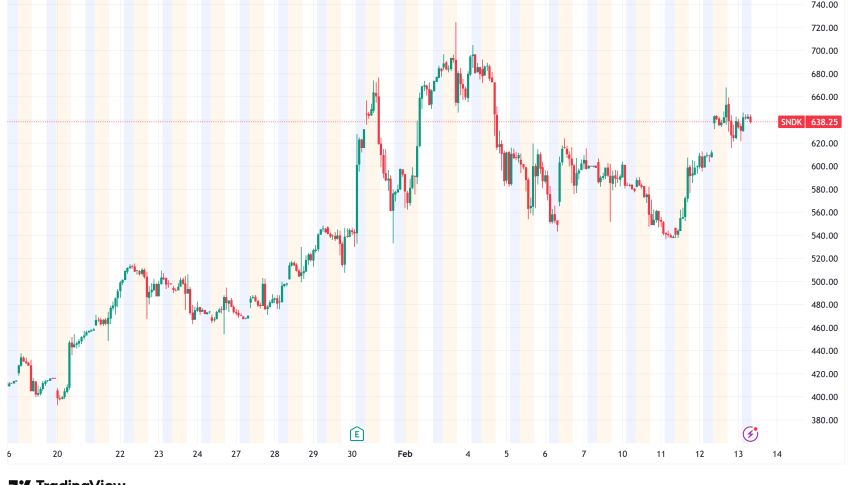
SNDK Chart Daily – Will the 20 SMA Hold As Support

With selling pressure accelerating, traders are increasingly focused on the $1,850 region, which corresponds with the rising 20-day moving average and the previous record high established earlier in June. A move toward that level would represent a substantial retracement from recent peaks and could test investor conviction in the stock’s longer-term growth story.
Asian Semiconductor Shock Sends Global Markets Lower
The immediate catalyst for the selloff emerged overseas, where a sharp collapse in South Korean semiconductor stocks triggered a wave of risk aversion across global markets.
South Korea’s equity market suffered significant losses as major memory-chip manufacturers faced aggressive selling pressure. Concerns surrounding artificial intelligence competitiveness, combined with heightened regulatory scrutiny of leveraged semiconductor-related investment products, contributed to a rapid unwinding of speculative positions.
The resulting market shock quickly spread beyond Asia, hitting semiconductor and memory-related stocks worldwide. Investors rushed to reduce exposure to highly valued technology names, and SanDisk became one of the most heavily impacted companies due to its exceptional gains over the past year.
Micron Earnings Anxiety Fuels Profit-Taking
Adding to the pressure was growing nervousness ahead of the upcoming earnings report from Micron Technology, widely viewed as one of the most important indicators of artificial intelligence-driven memory demand.
Because Micron serves as a bellwether for the broader memory-chip industry, investors appear unwilling to maintain aggressive positions ahead of what could be a market-moving event. The risk of disappointing guidance or signs of slowing demand has prompted traders to lock in profits rather than hold through the uncertainty.
This cautious behavior reflects a broader shift across the semiconductor sector. Investors who previously rewarded virtually any company associated with AI infrastructure are now demanding stronger evidence that current growth rates can be sustained.
Valuation Concerns Become Impossible to Ignore
Another major factor behind the selloff is the growing debate surrounding SanDisk’s valuation.
Following its spinoff from Western Digital, the stock experienced an extraordinary rise, climbing thousands of percent in a relatively short period. Such gains created a situation where expectations became increasingly difficult to satisfy.
Recent analyst commentary has highlighted concerns that the stock’s valuation may have become disconnected from realistic long-term growth assumptions. When a company trades at extreme multiples after a prolonged rally, even minor shifts in sentiment can trigger significant corrections.
The latest decline suggests investors are becoming increasingly sensitive to these risks.
Rising Interest-Rate Expectations Add Further Pressure
Broader macroeconomic developments have also contributed to the selloff.
Rising inflation expectations and growing speculation that the Federal Reserve could maintain a tighter monetary policy stance have weighed heavily on high-growth technology stocks. As investors adjust to the possibility of higher interest rates for longer, richly valued momentum names have become prime targets for profit-taking.
At the same time, questions are emerging about whether the massive wave of debt-funded artificial intelligence infrastructure spending can continue indefinitely. Growing skepticism surrounding future returns on AI investment has prompted some investors to rotate away from speculative technology leaders and into more defensive sectors.
Correction or Beginning of a Larger Reset?
While SanDisk’s fundamental outlook remains supported by strong data-center demand and favorable industry trends, the stock’s recent price action underscores how fragile sentiment can become after an extended rally.
The combination of global semiconductor weakness, earnings uncertainty, valuation concerns, and macroeconomic headwinds has exposed the risks associated with crowded momentum trades. What appeared to be an unstoppable advance only days ago has quickly turned into a sharp correction.
Whether the stock stabilizes near current levels or continues falling toward the $1,850 support area will likely depend on broader semiconductor sentiment and upcoming industry earnings. For now, the dramatic reversal serves as a reminder that even the strongest rallies can unravel rapidly when confidence begins to crack.
- Check out our free forex signals
- Follow the top economic events on FX Leaders economic calendar
- Trade better, discover more Forex Trading Strategies
- Open a FREE Trading Account
- Read our latest reviews on: Avatrade, Exness, HFM and XM

Related Articles
Sidebar rates

Related Posts
 Save
Save