Massive South African Fuel Price Cuts: Petrol and Diesel Slashed as Falling Crude Prices Outweigh Levy Reinstatement
South African motorists are expected to benefit from substantial fuel price cuts in July as falling global oil prices more than offset the full return of the temporary fuel levy.
Quick overview
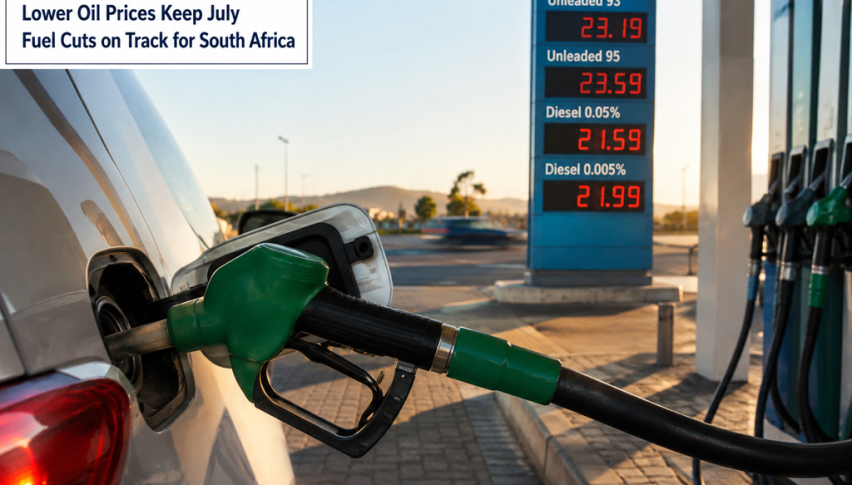
- South African motorists are set to benefit from significant fuel price cuts in July due to falling global oil prices, despite the reinstatement of a temporary fuel levy.
- Current projections indicate petrol prices could decrease by approximately R1.50 to R1.60 per litre, while diesel prices may drop by R2.70 to R3.15 per litre.
- The decline in global crude oil prices, driven by easing geopolitical tensions, is the primary factor behind the expected reductions in fuel prices.
- While inflation risks remain a concern, lower fuel prices are anticipated to provide relief for households and businesses in July.
South African motorists are expected to benefit from substantial fuel price cuts in July as falling global oil prices more than offset the full return of the temporary fuel levy.
Significant Fuel Price Cuts Still Expected
South African motorists are on track to receive substantial relief at the fuel pumps in July, despite the government’s decision to fully reinstate the temporary fuel levy relief introduced earlier this year. Month-end data from the Central Energy Fund (CEF) indicates that lower international oil prices have created enough positive pricing pressure to more than offset the higher taxes returning next month.
According to the latest CEF figures, petrol prices are showing an over-recovery of just over R3.00 per litre, while diesel recoveries are even stronger, ranging from R4.68 to R5.12 per litre. These recoveries have improved considerably since the middle of June, paving the way for meaningful reductions in fuel prices.
If current market conditions hold until the official adjustment, motorists could see petrol prices fall by approximately R1.50 to R1.60 per litre after accounting for the reinstated fuel levy. Diesel prices could decline by between R2.70 and R3.15 per litre, offering even greater savings for transport operators and businesses.
Fuel Levy Return Reduces, But Does Not Eliminate, Relief
The National Treasury’s temporary fuel levy relief officially comes to an end in July after being phased out over the past two months. As a result, R1.50 per litre will be added back to petrol prices, while diesel will see R1.97 per litre reintroduced through the fuel levy.
Ordinarily, such a tax increase would place significant upward pressure on pump prices. However, the dramatic improvement in international fuel recoveries means consumers are still expected to enjoy notable price reductions despite the higher taxes.
Final adjustments may still vary slightly depending on additional factors such as the slate levy and other regulatory changes, but current projections strongly suggest that fuel prices will decline across all major fuel grades.
Falling Oil Prices Drive the Improvement
The biggest contributor to the expected fuel price cuts has been the sharp decline in global crude oil prices.
Oil markets have retreated significantly after geopolitical tensions in the Middle East eased following progress toward ending hostilities between the United States and Iran. Brent crude has fallen to around $73.50 per barrel, while West Texas Intermediate (WTI) has slipped below $70, reversing much of the spike seen during the height of the conflict.
The reopening of shipping routes through the Strait of Hormuz has further improved market confidence, allowing more oil to reach global markets and easing concerns about supply disruptions.
Although an attack on a cargo vessel recently reminded traders that geopolitical risks have not disappeared entirely, the broader trend has remained supportive for lower energy prices.
Rand Stability Provides Additional Support
The South African rand has also contributed modestly to the improving outlook.
While currency movements have played a much smaller role than oil prices, the rand has remained relatively stable around R16.50 against the US dollar, helping improve fuel price recoveries by roughly 11 to 14 cents per litre.
Analysts note that global market sentiment continues to be the primary driver of the exchange rate, with local structural challenges limiting the currency’s ability to strengthen significantly. Nevertheless, the rand’s resilience has provided an additional cushion for fuel pricing calculations.
Inflation Outlook Still Being Closely Watched
Despite the positive fuel outlook, inflation risks have not disappeared.
South Africa’s producer inflation accelerated to 7.8% year-on-year in May, well above market expectations, highlighting ongoing cost pressures within the economy. Investors and policymakers remain focused on inflation trends in both South Africa and the United States, particularly as expectations for future interest rate decisions continue to evolve.
Even so, lower fuel prices should provide welcome relief for households and businesses during July. Reduced transport and logistics costs could also ease broader inflationary pressures if the decline in oil prices proves sustainable over the coming weeks.
- Check out our free forex signals
- Follow the top economic events on FX Leaders economic calendar
- Trade better, discover more Forex Trading Strategies
- Open a FREE Trading Account
- Read our latest reviews on: Avatrade, Exness, HFM and XM

Related Articles


Sidebar rates

Related Posts
 Save
SaveAva

