Bitcoin BTC Price Reversal Tests Resistance as ETF Inflows and Regulatory Optimism Improve the Sentiment
Bitcoin entered the second half of 2026 on firmer footing as renewed ETF inflows, softer US employment data, and optimism surrounding US crypto legislation helped offset concerns over tighter Federal Reserve policy.

Quick overview
- Bitcoin has shown resilience in July 2026, recovering from a sharp selloff and stabilizing above the critical $58,000 support level.
- Weaker US employment data has improved sentiment for risk-sensitive assets, contributing to Bitcoin's recovery and reducing concerns over tighter Federal Reserve policy.
- Progress on the CLARITY Act is boosting regulatory confidence, potentially encouraging greater institutional participation in the cryptocurrency market.
- Institutional demand remains strong, with Bitcoin exchange-traded funds controlling nearly 6% of its maximum supply, highlighting the growing influence of traditional financial institutions.
Bitcoin entered the second half of 2026 on firmer footing as renewed ETF inflows, softer US employment data, and optimism surrounding US crypto legislation helped offset concerns over tighter Federal Reserve policy.
Bitcoin Finds Support After Sharp June Selloff
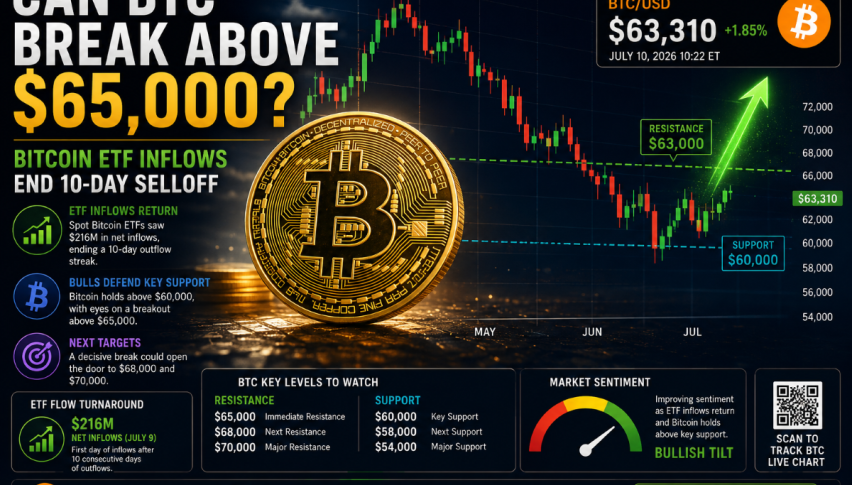
Bitcoin began July with a notable recovery after a period of heavy volatility pushed prices briefly below the critical $58,000 level during early trading sessions.
The selloff attracted strong buying interest around that support zone, allowing the cryptocurrency to rebound sharply toward the $64,000 region by the end of the week. The move helped stabilize sentiment after several weeks of aggressive liquidation across digital asset markets.
From a technical perspective, the successful defense of support suggests sellers may be losing momentum while buyers gradually regain control of the market.
Although Bitcoin remains below its recent highs, the inability of bears to sustain prices below $58,000 has improved confidence that a medium-term floor may be developing.
Bitcoin Diverges From Weakness in Equity Markets
One of the more notable developments during the latest rebound has been Bitcoin’s resilience despite growing pressure on global equity markets.
The release of the latest Federal Reserve minutes reinforced a hawkish policy outlook under Fed Chair Kevin Warsh, sending Treasury yields higher and weighing on major stock indices.
Historically, tighter monetary policy expectations have often pressured both equities and cryptocurrencies simultaneously due to reduced liquidity conditions.
This time, however, Bitcoin showed signs of decoupling from traditional risk assets as prices moved higher even while equity markets struggled to maintain momentum.
The divergence has encouraged investors looking for evidence that institutional demand may be changing Bitcoin’s trading characteristics.
Softer Labor Data Supports Risk Appetite
Another important catalyst behind Bitcoin’s recovery was weaker-than-expected US employment data.
The softer labor market figures reduced concerns that the Federal Reserve may need to tighten policy further, improving sentiment across risk-sensitive assets and increasing expectations that monetary conditions could eventually become less restrictive.
A moderation in labor market strength could provide policymakers with greater flexibility if inflation continues to ease during the second half of the year.
For cryptocurrency markets, expectations of easier financial conditions typically translate into stronger investor appetite for speculative assets.
CLARITY Act Progress Boosts Regulatory Confidence
Regulatory developments have become another major source of optimism for digital asset investors.
Efforts led by Senator Cynthia Lummis continue to advance the CLARITY Act, legislation aimed at establishing a clearer regulatory framework for cryptocurrencies in the United States.
The bill has already cleared the House of Representatives and progressed through the Senate Banking Committee, although a full Senate vote is still required.
With Congress facing a limited legislative calendar before the August recess, timing has become increasingly important.
The cryptocurrency industry views the legislation as a potentially transformative development that could encourage greater institutional participation and reduce regulatory uncertainty.
ETF Inflows Continue to Tighten Supply
Institutional demand remains one of Bitcoin’s strongest structural support factors.
Spot Bitcoin exchange-traded funds have continued attracting fresh capital, with renewed inflows emerging as investors position for potential regulatory progress and improving macroeconomic conditions.
These ETFs now control nearly 6% of Bitcoin’s maximum supply, illustrating the growing influence of traditional financial institutions within the cryptocurrency ecosystem.
Corporate ownership has also continued expanding, with publicly listed companies estimated to hold approximately 5.7% of circulating Bitcoin.
Among the largest holders, Strategy remains the dominant corporate owner after recently adding another 1,550 Bitcoin to its balance sheet, lifting total holdings to roughly 845,000 BTC.
Major corporate holders also include Tesla and SpaceX, while government entities are estimated to control roughly 2.5% of total supply.
Technical Structure Defines the Next Inflection Point
From a technical perspective, Bitcoin’s price behavior early in 2026 shows that it tried to resume the uptrend following a period retreat in late 2025, which sent Bitcoin decisively below the 100-week moving average for the first time since 2023 and signaling that the market had entered a corrective phase. The decline stabilized for a while and we saw a rebound off the $60,000 level in June, reinforcing the importance of that level as long-term structural support.
BTC/USD Chart Weekly – The 200 SMA Held as Support

In the following weeks the price rebounded, however the 20 weekly SMA rejected the price in May and BTC reversed lower again. The price dipped below the 60K level, bur 200-week moving average just below $60,000 held as suport and we saw a rebound last week. A sustained break below it would open the door to deeper downside toward the psychologically important $50,000 region. Conversely, the ability to push above the $80,000 zone increases the probability of a gradual recovery toward $100,000 and, over time, the $100,000–$126,000 region. But BTC has to push above the 50 daily SMA for the upside to pick momentum.
BTC/USD Chart Daily – Buyers Are Testing the 50 SMA

Outlook Improving but Resistance Remains
Despite the improving backdrop, Bitcoin still faces important technical hurdles.
Maintaining support above $58,000 remains essential for preserving the current recovery, while a sustained move above recent resistance levels would be needed to confirm a broader bullish reversal.
Investors will continue monitoring inflation data, Federal Reserve communication and regulatory developments for clues about liquidity conditions and institutional participation.
For now, stronger ETF demand, improving legislative prospects and resilient technical support are providing Bitcoin with a more constructive outlook heading into the second half of 2026.
- Check out our free forex signals
- Follow the top economic events on FX Leaders economic calendar
- Trade better, discover more Forex Trading Strategies
- Open a FREE Trading Account
- Read our latest reviews on: Avatrade, Exness, HFM and XM

Related Articles

Sidebar rates

Related Posts
 Save
SaveAva
