South African Rand: USD/ZAR Breaks R16 Convincingly Ahead of SARB and FED Rate Decisions
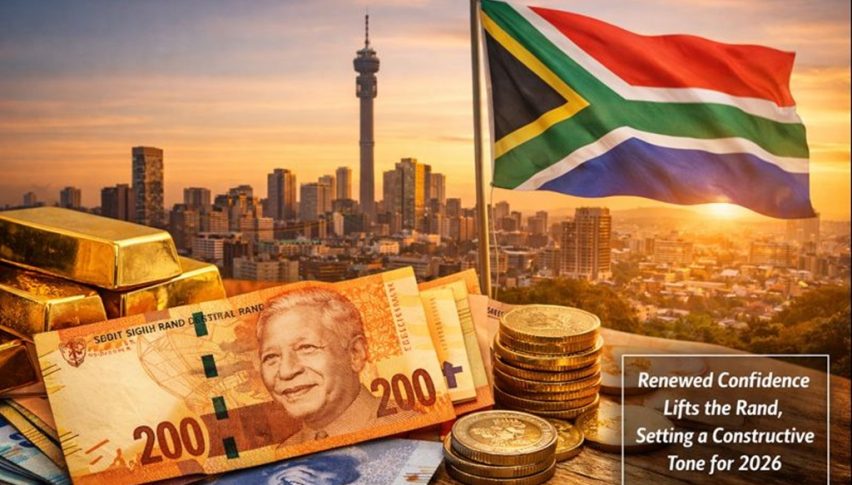
The South African rand has had a better start to 2026 because to a declining U.S. dollar, higher commodity prices, and a surge in safe-haven
Quick overview
- The South African rand has started 2026 strong, buoyed by a weaker U.S. dollar and rising commodity prices.
- Inflation in South Africa edged up slightly, complicating expectations for interest rate changes in 2026.
- Upcoming policy decisions from the South African Reserve Bank and the U.S. Federal Reserve will be crucial for the rand's stability.
- Despite recent gains, the rand remains vulnerable to shifts in global risk sentiment and domestic economic challenges.
The South African rand has had a better start to 2026 because to a declining U.S. dollar, higher commodity prices, and a surge in safe-haven flows. However, the move’s longevity may be tested by future central bank moves and unstable internal fundamentals.
Rand Starts 2026 With Momentum on Its Side
The South African rand has opened the year with renewed strength, extending gains built through the second half of 2025. USD/ZAR has continued its downward trajectory, opening the week near R16.02, reinforcing expectations that the pair could soon break decisively below R16 and potentially move toward the R15 handle over time.
This move reflects a combination of supportive external forces rather than a sudden shift in domestic fundamentals. A broadly weaker U.S. dollar, firm commodity prices, and rising global demand for safe-haven assets have all worked in the rand’s favour. However, while the price action is constructive, the underlying foundation remains uneven, leaving the currency sensitive to changes in risk sentiment and policy expectations.
Inflation Firms Slightly, Complicating Rate Expectations
South Africa closed 2025 with inflation edging marginally higher, offering a mixed signal for markets. Headline consumer inflation rose to 3.6% in December from 3.5% in November, with month-on-month price growth of just 0.2%. For the full year, average inflation stood at a contained 3.2%, comfortably within the South African Reserve Bank’s target range.
While the uptick is modest, it slightly tempers expectations for aggressive rate easing in 2026. The data suggest inflation is under control but not falling rapidly enough to justify urgency from policymakers. As a result, the rand remains sensitive to shifts in rate expectations, particularly ahead of the SARB’s upcoming policy decision.
SARB and Fed Meetings Take Centre Stage
The South African Reserve Bank is set to announce its policy decision this week, following a surprise 25 basis point rate cut at its November meeting. This time, policymakers are widely expected to leave rates unchanged as they assess inflation trends and external risks.
At the same time, the U.S. Federal Reserve will also deliver its policy update. Like the SARB, the Fed is expected to hold rates steady. For both meetings, the focus will be less on the decision itself and more on guidance and tone during the press conferences.
Any shift in rhetoric—particularly around the timing of future easing—could quickly influence capital flows, the U.S. dollar, and emerging market currencies such as the rand.
Safe-Haven Demand Boosts Gold and the Rand
Global risk dynamics have recently shifted in favour of safe-haven assets. Rising tensions between the United States and Europe, linked to disputes over Greenland and potential trade measures, have driven gold prices sharply higher, keeping the metal comfortably above $5,000 per ounce.
As a major precious metals producer, South Africa has benefited indirectly from this trend. Elevated gold prices improve export revenues and support the country’s terms of trade, lending near-term support to the rand. Increased demand for defensive assets has also encouraged flows into commodity-linked currencies.
However, this relationship cuts both ways. The rand’s recent gains are partly reliant on continued strength in gold prices, which introduces vulnerability should risk sentiment improve or precious metals correct.
Bond Market Signals Improving Confidence
South African government bonds have also reflected improving sentiment. The benchmark 2035 government bond firmed recently, with the yield falling by 9 basis points to around 8.165%.
Lower yields indicate rising demand for local debt, suggesting investors are becoming more comfortable with South Africa’s inflation outlook and policy credibility. This has helped support the rand by attracting foreign inflows into the bond market, particularly as global yields stabilise.
Still, bond market confidence remains conditional and closely tied to global liquidity conditions rather than domestic growth prospects.
Domestic Data Shows Pockets of Improvement
Several recent domestic developments have helped improve South Africa’s investment narrative. The country posted a robust trade surplus of R37.7 billion in November—the largest since March 2022—driven largely by higher precious metal exports.
In addition, South Africa received its first sovereign credit rating upgrade in two decades, with S&P raising the rating to BB– in November. This marked an important symbolic shift, signalling progress on fiscal discipline and governance.
Further boosting sentiment, the European Union removed South Africa from its high-risk jurisdiction list, following its earlier removal from the Financial Action Task Force grey list in October 2025. Together, these steps have reduced some of the structural risk premium embedded in rand assets.
Growth Outlook and Structural Risks Still Weigh
Despite these improvements, South Africa’s longer-term growth outlook remains weak. Structural constraints, including energy supply challenges, logistics bottlenecks, and high unemployment, continue to limit economic momentum.
Uncertainty surrounding South Africa’s continued inclusion in the African Growth and Opportunity Act (AGOA) also presents a potential headwind. Any loss of preferential trade access to the U.S. could negatively impact exports and investor confidence.
Combined with the rand’s inherent volatility, these factors suggest that recent currency gains may be vulnerable if external support fades.
Global Liquidity Has Been a Key Tailwind
A softer U.S. dollar has played a central role in the rand’s rally. As expectations for U.S. monetary easing build and global liquidity improves, investors have rotated toward higher-yielding and commodity-linked currencies.
This has allowed USD/ZAR to retreat sharply from highs near R20 seen earlier in 2025. However, history shows that rand strength driven by global liquidity is often fragile. Any resurgence in U.S. inflation, renewed dollar strength, or a sudden shift toward risk aversion could quickly reverse the trend.
Technical Picture Turns More Constructive
From a technical perspective, USD/ZAR has made meaningful progress. The pair has broken below several key moving averages, which are now acting as resistance rather than support. Opening near R16.02 places the rand roughly 18% stronger than its April 2025 highs.
USD/ZAR Chart Daily – MAs Pushing the Trend Lower
Importantly, the break below the long-term 100-month moving average near R16.20 has opened the door to further downside toward R15. Momentum indicators support the trend, though conditions are becoming increasingly stretched.
USD/ZAR Chart – The 100 SMA Is Breaking?
That said, risks are building. A deeply oversold U.S. dollar and potentially overbought gold prices suggest the pace of rand gains could slow or pause, even if the broader trend remains intact.
Conclusion: Momentum Is Strong, but the Foundation Is Uneven
The South African rand has entered 2026 with genuine momentum, supported by dollar weakness, strong precious metal prices, and improving investor sentiment. Technical signals now point toward further gains, with a move below R16 and a longer-term path toward R15 increasingly plausible.
However, the rally remains heavily dependent on external conditions. Weak domestic growth, policy uncertainty, and reliance on commodity prices leave the rand exposed to shifts in global risk appetite. As the SARB and Fed meetings approach, the rand’s resilience will be tested—determining whether this move marks a durable trend or another cyclical upswing vulnerable to reversal.
- Check out our free forex signals
- Follow the top economic events on FX Leaders economic calendar
- Trade better, discover more Forex Trading Strategies
- Open a FREE Trading Account
- Read our latest reviews on: Avatrade, Exness, HFM and XM

Related Articles

Sidebar rates

Related Posts
 Save
Save