South African Rand: USD/ZAR Falls on Iran Deal Progress Ahead of the US PCE, SARB Meeting
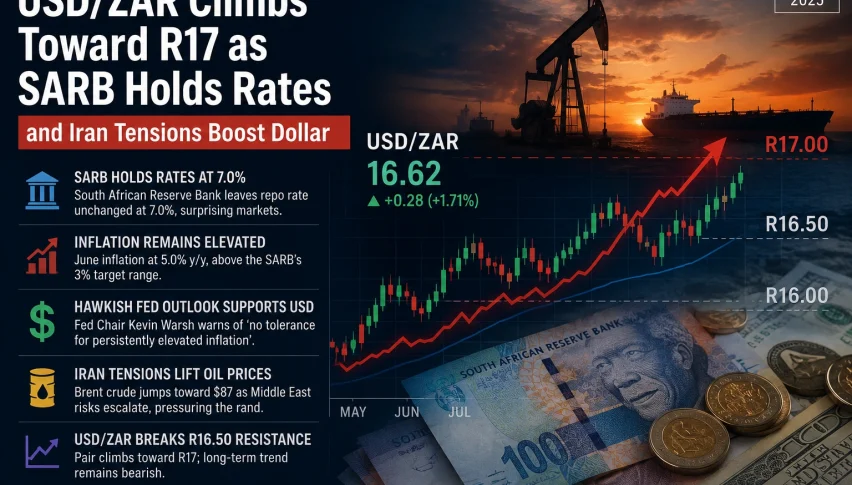
The USD/ZAR pair fell as a result of emerging-market currency volatility brought on by the South African Reserve Bank's (SARB) policy decision, upcoming US PCE inflation data, and fading geopolitical fears regarding a potential US-Iran accord.

Quick overview
- The USD/ZAR pair weakened after failing to sustain a break above the R17 resistance level, indicating market reluctance for sustained upside momentum.
- Easing geopolitical tensions surrounding US-Iran negotiations have improved risk sentiment, supporting emerging-market currencies like the rand.
- Attention is shifting to the upcoming US PCE inflation data, which will significantly influence Federal Reserve policy expectations and global currency flows.
- The South African Reserve Bank's upcoming policy decision is a key focus, with expectations of a potential rate hike amid rising inflation concerns.
The USD/ZAR pair fell as a result of emerging-market currency volatility brought on by the South African Reserve Bank’s (SARB) policy decision, upcoming US PCE inflation data, and fading geopolitical fears regarding a potential US-Iran accord.
USD/ZAR Reverses After R17 Resistance Failure
The USD/ZAR pair pulled back after once again failing to sustain a break above the key R17 resistance level. The dollar briefly pushed above this threshold in recent sessions but quickly reversed, signaling that market participants remain reluctant to commit to sustained upside momentum.
The rand’s recovery came despite a relatively hawkish tone from the Federal Reserve, with improved risk sentiment and softer dollar demand helping emerging-market currencies regain traction. Early-week trading saw renewed interest in higher-yielding assets, supporting the rand against major peers.
Earlier in 2026, the rand had strengthened significantly, at one point trading closer to the mid-R15 range, before geopolitical tensions and rising energy prices triggered renewed dollar strength and volatility across emerging markets. However, repeated rejection at R17 continues to reinforce this level as a key technical ceiling unless global risk conditions deteriorate further.
US-Iran Deal Progress Supports Risk Appetite
Over the weekend, markets were encouraged by reports that US-Iran negotiations are now approximately 95% complete, reducing immediate demand for safe-haven assets.
According to senior US officials, Iran has agreed in principle to reopen the Strait of Hormuz and reduce highly enriched uranium stockpiles in exchange for easing US naval restrictions. While broad terms appear largely agreed, disagreements over sanctions relief and final legal wording continue to delay a formal signing.
The prospect of reduced geopolitical tension has supported equities and risk-sensitive currencies, while weighing on traditional defensive assets. Investors view the potential agreement as a stabilizing factor for global energy flows, particularly through key shipping routes.
Focus Shifts to US PCE Inflation Data
Despite easing geopolitical concerns, markets remain heavily focused on US inflation dynamics. Attention now turns to the upcoming Personal Consumption Expenditures (PCE) inflation report, scheduled for release on May 28 by the US Bureau of Economic Analysis.
The PCE index is the Federal Reserve’s preferred inflation measure, particularly the core reading, which excludes volatile food and energy components. The March reading showed the strongest monthly increase in nearly three years, reinforcing concerns that inflation remains sticky across the US economy.
Investors will closely assess whether inflation pressures are moderating or persisting, as this will heavily influence expectations around future Federal Reserve policy and global currency flows.
Technical Analysis
Technically, we saw a bullish attempt in USD/ZAR which briefly broke above R17 in late March, moving above its 20-day simple moving average (gray), which had been defining the pair’s downtrend in recent months. However, the 50-day moving average (yellow) acted as firm resistance. The rejection at this level triggered a reversal, pushing USD/ZAR back below to the 20-day average.
USD/ZAR Chart Daily – MAs Keeping the Pressure to the Downside

On the monthly chart, USD/ZAR seems to have bottomed at the 100 SMA (green) where it found support in the last two months. Last month we saw a rebound as the Rand weakened while the Dollar gained, but buyers are facing the 50 SMA (yellow) and in April the forex pair has reversed lower again. For the larger uptrend to resume, USD/ZAR would need to push above this moving average.
USD/ZAR Chart Monthly – Rebounding Off the 100 SMA

SARB Decision Becomes Key Domestic Driver
Locally, market focus is firmly on the South African Reserve Bank’s Monetary Policy Committee meeting scheduled for Thursday. Economists are widely expecting a 25-basis-point rate hike, although a split vote remains possible.
Some analysts argue that the SARB may need to act to prevent second-round inflation effects, especially after recent data showed inflation accelerating to 4.0% in April from 3.1% in March, marking its highest level since August 2024.
However, others suggest monetary conditions may already be sufficiently restrictive, raising the possibility that policymakers could pause and assess whether the inflation spike proves temporary.
Looking ahead, investors will also monitor a series of domestic indicators next week, including the leading business cycle index, producer inflation, credit growth, trade balance, and fiscal data, all of which will help shape expectations for the rand’s near-term direction.
- Check out our free forex signals
- Follow the top economic events on FX Leaders economic calendar
- Trade better, discover more Forex Trading Strategies
- Open a FREE Trading Account
- Read our latest reviews on: Avatrade, Exness, HFM and XM

Related Articles


Sidebar rates

Related Posts
 Save
Save