South African Rand: USD/ZAR Heads to R16 on Cooling US PCE, Improving Global Sentiment
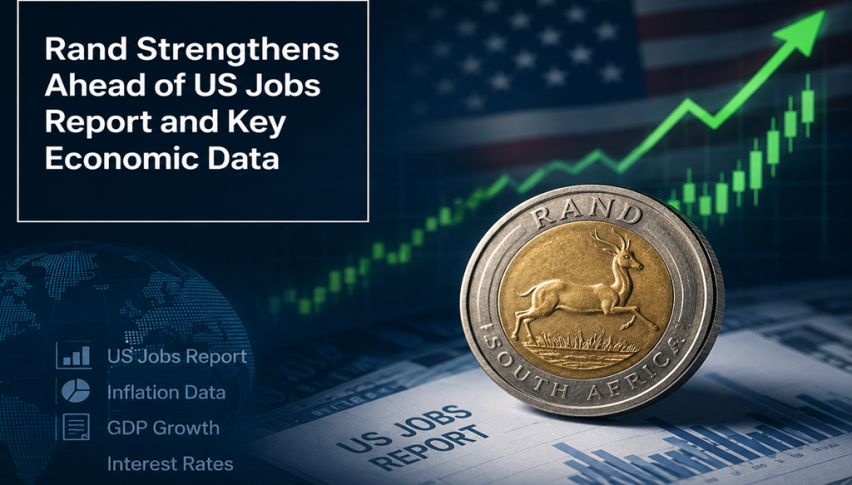
The USD/ZAR pair retreated from the crucial R17 resistance level ahead of this week's important US employment report as the South African rand was supported by better geopolitical sentiment surrounding US-Iran negotiations, lower US inflation data, and renewed demand for emerging-market currencies.
Quick overview
- The USD/ZAR pair retreated from the R17 resistance level due to softer US inflation data and improved geopolitical sentiment regarding US-Iran negotiations.
- The South African rand has shown resilience, supported by a trade surplus and positive domestic economic indicators despite ongoing challenges.
- Improving global risk sentiment has encouraged flows into emerging-market currencies, benefiting the rand amid reduced demand for safe-haven assets.
- Attention is now on the upcoming US jobs report, which could significantly impact the USD/ZAR exchange rate and the broader market outlook.
The USD/ZAR pair retreated from the crucial R17 resistance level ahead of this week’s important US employment report as the South African rand was supported by better geopolitical sentiment surrounding US-Iran negotiations, lower US inflation data, and renewed demand for emerging-market currencies.
USD/ZAR Reverses Lower After Failing at R17
The USD/ZAR exchange rate pulled back after another unsuccessful attempt to establish a sustained break above the important R17 resistance level. Although the US dollar briefly moved beyond the threshold during recent trading sessions, buyers struggled to maintain momentum, resulting in a reversal that favored the rand.
The move highlights the importance of the R17 region as a major technical barrier. Market participants remain reluctant to aggressively position for further dollar gains unless global risk sentiment deteriorates significantly or economic data substantially strengthens the case for tighter US monetary policy.
The rand’s recovery has been particularly notable given the generally hawkish tone adopted by the Federal Reserve in recent months. Instead, improving investor confidence and reduced demand for safe-haven assets have encouraged renewed flows into emerging-market currencies and higher-yielding assets.
South African Economic Data Provides Support
Domestic economic indicators have also offered some support to the local currency. South Africa recorded a trade surplus of 15.16 billion rand in April, highlighting resilience in external accounts despite global uncertainty. At the same time, National Treasury data showed a budget deficit of 63.57 billion rand during the month.
Additional data from the South African Reserve Bank showed M3 money supply growth accelerating to 9.82% year-over-year in April, while private sector credit extension increased by 9.20%. These figures point to continued economic activity despite ongoing challenges facing consumers and businesses.
Earlier in 2026, the rand strengthened significantly and traded closer to the mid-R15 range before geopolitical tensions, rising energy prices, and renewed dollar demand triggered a period of volatility across emerging markets.
US-Iran Talks Improve Global Risk Sentiment
A major factor behind the rand’s recent recovery has been improving sentiment surrounding negotiations between the United States and Iran. Reports indicating that both sides are continuing discussions regarding a broader framework agreement have reduced immediate fears of a prolonged Middle East conflict.
Investors welcomed indications that talks may eventually lead to a ceasefire extension, renewed nuclear negotiations, and the reopening of the Strait of Hormuz. While substantial differences remain regarding sanctions relief, frozen Iranian assets, and nuclear commitments, markets have interpreted the continued dialogue as a positive step.
The prospect of reduced geopolitical risk has helped boost global equities and supported emerging-market currencies, including the rand.
USD/ZAR Chart Daily – MAs Keeping the Pressure to the Downside

On the monthly chart, USD/ZAR seems to have bottomed at the 100 SMA (green) where it found support in the last two months. Last month we saw a rebound as the Rand weakened while the Dollar gained, but buyers are facing the 50 SMA (yellow) and in April the forex pair has reversed lower again. For the larger uptrend to resume, USD/ZAR would need to push above this moving average.
USD/ZAR Chart Monthly – Rebounding Off the 100 SMA

Oil Prices and Inflation Remain Critical
The Strait of Hormuz remains central to market expectations because of its importance to global energy supplies. Any agreement that improves shipping security through the waterway could help lower oil prices and reduce inflationary pressures worldwide.
Lower energy prices would likely ease concerns that central banks, including the Federal Reserve, need to maintain restrictive monetary policy for longer than expected. Recent US inflation data reinforced that possibility after core PCE inflation came in slightly softer than forecast.
As a result, investors have become increasingly optimistic that inflation may gradually moderate, reducing support for the US dollar while benefiting risk-sensitive currencies.
Attention Turns to the US Jobs Report
The primary focus for global currency markets this week will be Friday’s nonfarm payrolls report. Economists expect approximately 95,000 jobs to have been created in May, down from 115,000 in the previous month, while the unemployment rate is expected to remain at 4.3%.
A weaker-than-expected employment report could increase expectations for future Federal Reserve policy easing, potentially placing additional pressure on the dollar and supporting the rand. Conversely, stronger labor market data would likely strengthen Treasury yields and provide fresh support for the US currency.
SARB and Domestic Data Also in Focus
Locally, investors continue to assess the implications of the South African Reserve Bank’s recent policy decision and the broader inflation outlook. Rising inflation remains a concern after consumer price growth accelerated to 4.0% in April from 3.1% previously.
Looking ahead, traders will monitor several key domestic releases, including producer inflation, private credit growth, trade data, fiscal figures, and leading business indicators. These reports will provide further insight into the health of the South African economy and help shape expectations for the rand’s direction.
Conclusion
The USD/ZAR pair has retreated after failing to sustain a move above R17, as softer US inflation data, improving prospects for a US-Iran agreement, and renewed appetite for emerging-market assets supported the rand. However, significant uncertainty remains, with Friday’s US nonfarm payrolls report and upcoming South African economic data likely to determine whether the rand can extend its gains or whether the dollar regains momentum in the weeks ahead.
Technical Analysis
Technically, we saw a bullish attempt in USD/ZAR which briefly broke above R17 in late March, moving above its 20-day simple moving average (gray), which had been defining the pair’s downtrend in recent months. However, the 50-day moving average (yellow) acted as firm resistance. The rejection at this level triggered a reversal, pushing USD/ZAR back below to the 20-day average.
- Check out our free forex signals
- Follow the top economic events on FX Leaders economic calendar
- Trade better, discover more Forex Trading Strategies
- Open a FREE Trading Account
- Read our latest reviews on: Avatrade, Exness, HFM and XM

Related Articles


Sidebar rates

Related Posts
 Save
Save