Intel Stock Soars 11% as the Google Chip Win Sparks Optimism but INTC Faces Resistance Above
Intel shares increased more than 11% on Monday as a result of rumors that Google intends to collaborate with Intel to create future AI chips, which restored market confidence in the company's long-term foundry strategy and rescue efforts.
Quick overview
- Intel shares rose over 13% following reports that Google plans to manufacture AI chips with Intel, boosting investor confidence in the company's foundry strategy.
- The reported order from Google for over three million Tensor Processing Units (TPUs) in 2028 is seen as a significant endorsement of Intel's contract manufacturing business.
- Despite ongoing competition and geopolitical risks, analysts are becoming more optimistic about Intel's long-term recovery and have raised their price targets for the stock.
- Intel's Q1 earnings report showed a revenue increase of 7% year-over-year, with strong guidance for Q2, indicating progress in its foundry turnaround and AI strategy.
Intel shares increased more than 11% on Monday as a result of rumors that Google intends to collaborate with Intel to create future AI chips, which restored market confidence in the company’s long-term foundry strategy and rescue efforts.
Intel Rallies on Google Foundry Report as Investors Reassess Turnaround Prospects
Intel shares staged an impressive rebound on Monday, climbing more than 13% to trade back above $110 after reports suggested the chipmaker is making meaningful progress in attracting major foundry customers. The rally follows a difficult week in which Intel shares fell below $100 after Nvidia unveiled its new PC superchip, intensifying competitive concerns and weighing on investor sentiment.
While Nvidia’s latest product announcement highlighted the increasingly fierce competition across the semiconductor industry, fresh reports involving Google and Nvidia have shifted attention back toward Intel’s manufacturing ambitions and the potential for a broader long-term recovery.
Google Order Boosts Confidence in Intel Foundry Business
The biggest catalyst behind Monday’s rally was a report that Google has placed an order with Intel to manufacture more than three million Tensor Processing Units (TPUs) in 2028.
Although production remains several years away, investors viewed the reported agreement as an important endorsement of Intel’s contract manufacturing business. Landing a major hyperscale customer such as Google would represent a significant milestone for Intel Foundry, which has spent years attempting to establish itself as a credible alternative to Taiwan Semiconductor Manufacturing Company (TSMC).
Reports also indicated that Nvidia is evaluating Intel’s manufacturing technology for a future processor that would combine four graphics processors into a single package. However, unlike Google’s reported order, Nvidia has not committed to production, making that opportunity considerably more speculative.
Even so, the market interpreted the involvement of both companies as evidence that Intel’s foundry strategy may finally be gaining momentum after years of manufacturing delays, execution challenges, and market share losses.
COMPUTEX Meetings Reinforce Long-Term Strategy
Investor optimism had already begun improving ahead of COMPUTEX 2026, where Intel Chief Executive Officer Lip-Bu Tan is expected to outline the company’s next phase of product and manufacturing plans.
Tan’s visit to Taiwan has fueled expectations of discussions with key semiconductor partners, including Taiwan Semiconductor Manufacturing Company, as Intel continues to reshape its manufacturing strategy.
Although no formal agreements have been announced, investors are hoping Intel will provide greater clarity on future product launches, foundry expansion, and production priorities during its keynote presentation.
The industry event has reinforced the perception that Intel remains committed to rebuilding its competitive position through both internal manufacturing improvements and broader industry partnerships.
INTC Chart Daily – Will the 20 SMA Turn into Resistance?

The speed of the upside move and the clear break above $100 indicates that investors are increasingly willing to accumulate shares at perceived value levels. While sustained upside momentum will require further confirmation, the structure has improved meaningfully, despite the recent pullback. The $100 zone held as support two weeks ago, helped by the 20 daily SMA but was eventually broken and INTC stock slipped below the $100 level, and the 20 SMA turned into resistance last week. However today we’re seeing a decent jump, but let’s see if buyers will break above the 20 SMA or if that moving average will reject the price.
18A Process Remains the Foundation of Intel’s Recovery
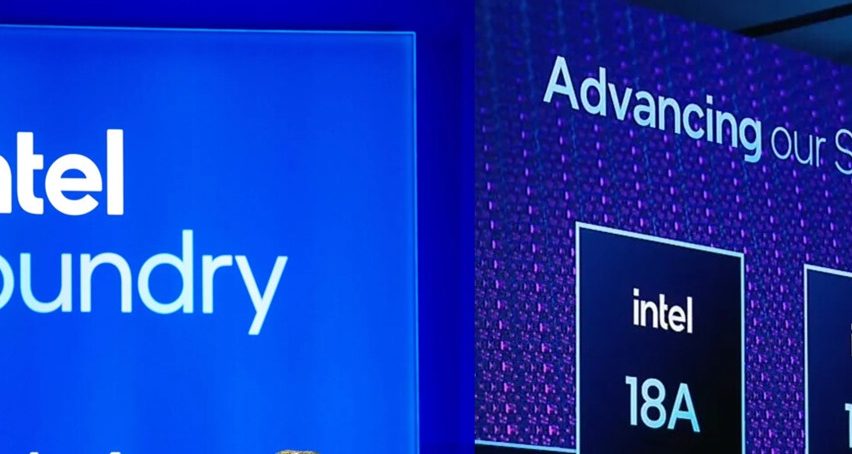
At the center of Intel’s turnaround strategy is its advanced 18A manufacturing process.
The company has spent several years working to overcome production setbacks that allowed competitors to establish leadership in advanced chip manufacturing. Successful execution of the 18A process is widely viewed as one of the most important milestones in determining whether Intel can restore its position among the industry’s technology leaders.
Intel has reportedly encouraged computer manufacturers to adopt products based on the new manufacturing technology as it seeks to increase production volumes and improve profitability.
The upcoming Panther Lake processor family is expected to become the first major commercial platform built using the 18A process. A successful launch would strengthen Intel’s position not only in the personal computer market but also across data center and AI infrastructure segments.
Analysts Grow More Constructive on Intel
Wall Street has become increasingly optimistic about Intel’s long-term recovery despite ongoing volatility in the share price.
Several analysts argue that Intel offers one of the few large-cap semiconductor turnaround stories driven primarily by operational execution rather than investor enthusiasm surrounding artificial intelligence.
Benchmark recently raised its price target on Intel to $140 from $105, while Citigroup increased its target to $130 from $95. Both firms cited improving demand for server processors and growing confidence in Intel’s manufacturing roadmap.
Analysts also believe investors may still be underestimating Intel’s long-term earnings potential if management successfully expands its foundry business while restoring manufacturing competitiveness.
Competition and Geopolitical Risks Remain Significant
Despite the renewed optimism, Intel continues to face considerable challenges.
Competition remains intense across both the consumer and enterprise processor markets. AMD continues to expand its presence in server processors, while Arm-based architectures are gaining popularity among hyperscale cloud providers looking for greater efficiency and flexibility.
Intel has also continued to lose market share in the server CPU segment, underscoring the scale of the turnaround still required.
Beyond competitive pressures, geopolitical tensions between the United States and China remain an important source of uncertainty for the semiconductor industry. Export restrictions, evolving trade policies, and supply-chain disruptions could continue to affect demand for advanced chips, particularly as China remains one of the world’s largest markets for AI infrastructure and high-performance computing.
While Monday’s rally reflects renewed confidence in Intel’s foundry ambitions, investors are likely to remain focused on whether the company can convert early customer interest into long-term production contracts and consistently execute its manufacturing roadmap.
Intel Q1 Earnings Report
- Intel reported Q1 revenue of $13.6 billion, up 7% year-over-year, broadly in line with expectations.
- The key upside surprise came from earnings, with EPS at $0.29 versus just $0.01 expected by the Street, marking a significant bottom-line beat.
- Strong Q2 guidance was the main catalyst, with revenue projected as high as $14.8 billion and EPS at $0.20, both well above analyst forecasts.
- Management’s outlook suggests its multi-year foundry turnaround and AI PC strategy are gaining traction.
- Progress on Intel’s 18A process node emerged as a major bullish signal, transitioning from development into a commercial growth driver.
- CEO Lip-Bu Tan emphasized that the shift toward “agentic AI” is increasing demand for advanced CPUs and wafer packaging technologies.
- Data Center and AI revenue jumped 22% year-over-year to $5.05 billion, beating expectations of $4.41 billion.
- Check out our free forex signals
- Follow the top economic events on FX Leaders economic calendar
- Trade better, discover more Forex Trading Strategies
- Open a FREE Trading Account
- Read our latest reviews on: Avatrade, Exness, HFM and XM

Related Articles
Sidebar rates

Related Posts
 Save
SaveAva