Inflation Fears Resurface on Wall Street Amid War Tensions
Markets worry that a sustained increase in crude prices could drive global inflation higher and prompt a more hawkish stance from CBs.
Quick overview
- U.S. stocks experienced a sharp decline on Tuesday, with all major benchmarks closing in negative territory due to rising tensions between the U.S., Israel, and Iran.
- The Dow Jones fell 0.83%, the S&P 500 dropped 0.94%, and the Nasdaq Composite declined by 1% amid concerns over inflation and economic growth.
- Investor confidence weakened following Iranian drone attacks targeting U.S. interests, prompting the State Department to order the departure of non-essential personnel from several Middle Eastern countries.
- Federal Reserve officials noted that while the impact of the conflict on U.S. inflation and growth is uncertain, the economy has shown resilience to energy price shocks.
U.S. stocks fell sharply Tuesday, with all three major benchmarks closing in negative territory, as escalating tensions between the United States, Israel and Iran fueled concerns about slowing economic growth and the inflationary impact of higher oil prices.
In this context, the Dow Jones Industrial Average dropped 0.83% to 48,501.27 points; the S&P 500 lost 0.94% to 6,817.13; and the Nasdaq Composite declined 1% to 22,516.69.
Inflation concerns weigh on confidence
On Monday, both the S&P 500 and Nasdaq had closed higher, rebounding from steep early losses triggered by weekend attacks on Iran by the United States and Israel. The Dow slipped just 0.2%, recovering most of its initial decline. However, investor confidence deteriorated despite the relatively solid close, amid fears of a broader Middle East conflict after Iranian drones reportedly targeted a U.S. embassy in Riyadh and data centers operated by Amazon in the United Arab Emirates and Bahrain.
The U.S. State Department announced Tuesday that it had ordered the departure of non-essential government personnel and their families from Bahrain, Iraq and Jordan.
In his first public remarks since the attacks began, Donald Trump said, “We are already well ahead of our projections,” adding that the United States would continue “whatever it takes.” He later stated on social media that the U.S. has an “almost unlimited” supply of certain types of weapons.
According to analysts at ANZ Bank, “The inflationary impact of the conflict is a major concern for investors, particularly given the sharp rise in oil prices, alongside fears of potential supply disruptions.”
Markets worry that a sustained increase in crude prices could drive global inflation higher and prompt a more hawkish stance from major central banks. Rising oil prices represent a negative supply shock, lifting inflation while increasing downside risks to growth. “The ultimate impact on economies will depend on how long the conflict lasts,” analysts added.
The Federal Reserve’s view
“It is too early to determine how the war with Iran will affect U.S. inflation and growth, but the U.S. economy is less dependent on imported oil than in the past and has shown resilience to energy price shocks,” said John Williams, president of the Federal Reserve Bank of New York, on Tuesday.
Speaking after an event hosted by America’s Credit Unions in Washington, Williams said the economic transmission of the conflict would likely occur mainly through asset prices and financial market reactions, which so far have been relatively moderate.
“No one can be certain how long this will last or what the broader implications will be,” Williams said. “Past experience shows that oil price moves of the magnitude we’ve seen so far do not fundamentally alter the economy, but we will wait and see.”
A surprise move from Trump
Trump also said Tuesday that the United States would cut all trade with Spain after the country reportedly refused to allow U.S. military forces to use its bases for missions related to the strikes on Iran, according to Reuters.
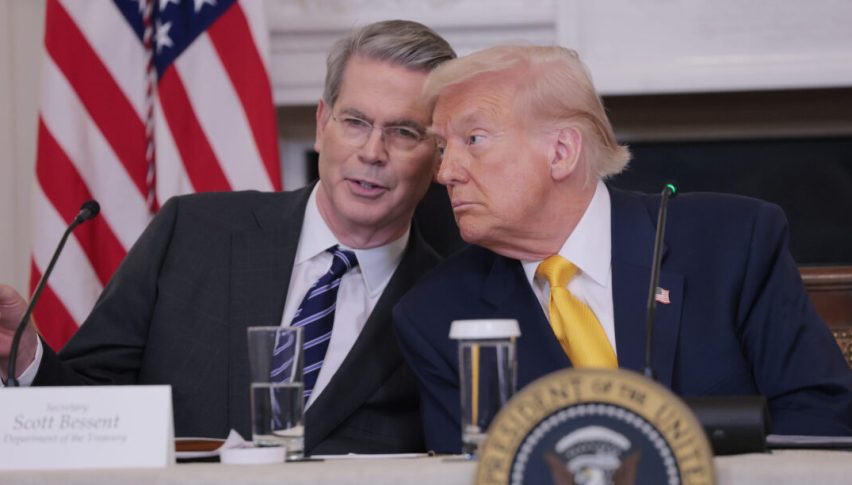
“Spain has behaved terribly,” Trump told reporters during a meeting with German Chancellor Friedrich Merz, adding that he had instructed Treasury Secretary Scott Bessent to “break off all relations” with Spain.
- Check out our free forex signals
- Follow the top economic events on FX Leaders economic calendar
- Trade better, discover more Forex Trading Strategies
- Open a FREE Trading Account
- Read our latest reviews on: Avatrade, Exness, HFM and XM

Related Articles
Sidebar rates

