South Africa Economy Surges 3% as IMF Warns of Downside Risks
South Africa's economy posts a 3% growth, the fastest in three years, amid IMF warnings of potential downside risks.
Quick overview
- South Africa's economy has achieved a 3% GDP growth in February 2026, marking its fastest expansion in three years.
- Despite positive growth figures, COSATU raises concerns about ongoing unemployment and inequality affecting the majority of South Africans.
- The IMF warns of potential risks to sustained growth due to global uncertainties and local energy supply challenges.
- Traders should remain cautious as the positive GDP data may lead to short-term gains for the rand, but market volatility could arise from external and policy-related factors.
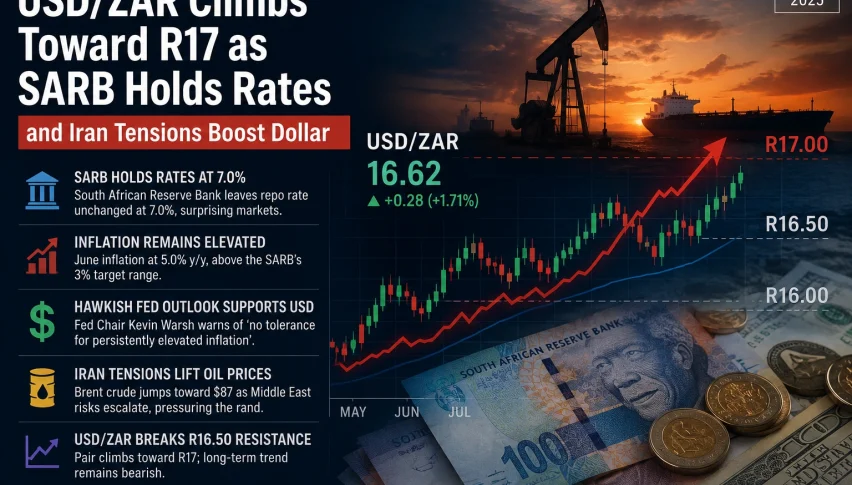
Live USD/ZAR Chart

South Africa’s economy is experiencing its fastest growth in three years, but concerns loom as the IMF highlights potential risks on the horizon.
Behind the Headline
According to Statistics South Africa, the nation has achieved a notable 3% GDP growth for February 2026. This marks the fastest economic expansion in three years, driven by increases in consumer spending and a rebound in the mining and manufacturing sectors. Moneyweb reports that this growth aligns with improved global demand and stabilizing local supply chains.
However, the Congress of South African Trade Unions (COSATU) has expressed skepticism, arguing that the GDP figures do not adequately reflect the socio-economic challenges faced by the majority of South Africans. They highlight ongoing issues such as unemployment and inequality, which remain pressing concerns despite the promising GDP numbers.
South Africa Market Angle
The South African Reserve Bank (SARB) is likely to take a cautious approach in response to the recent GDP growth. With inflation pressures still present, the SARB may maintain its high-interest rate stance to manage inflation expectations, which could impact the rand’s stability. The Johannesburg Stock Exchange (JSE) has responded positively to the growth figures, with sectors such as mining and financial services showing gains.
Contrary Angle
While the current economic data paints a rosy picture, the International Monetary Fund (IMF) has cautioned about potential downside risks. The IMF’s assessment, as reported by Engineering News, points to external factors such as global economic uncertainties and local challenges like energy supply issues that could undermine sustained growth. Traders should be wary of these risks, as they could lead to market volatility.
Why Traders Should Care
For traders, South Africa’s economic growth presents both opportunities and challenges. The positive GDP figures could strengthen the rand in the short term, offering potential gains against major currencies like the US dollar. However, traders should remain vigilant for signs of market volatility stemming from the IMF’s warnings and potential policy shifts by the SARB. Active monitoring of economic indicators and central bank announcements will be crucial for informed trading decisions.
Conclusion
In conclusion, while South Africa’s economy is currently on an upward trajectory, the future remains uncertain due to internal and external risks. Traders must navigate these complexities by staying informed and prepared for potential market shifts. As the nation continues to balance growth with economic stability, the coming months will be critical for investors and policymakers alike.
- Check out our free forex signals
- Follow the top economic events on FX Leaders economic calendar
- Trade better, discover more Forex Trading Strategies
- Open a FREE Trading Account
- Read our latest reviews on: Avatrade, Exness, HFM and XM

Related Articles
Sidebar rates

Related Posts
 Save
Save