JSE Faces 10% Correction as SA Stocks Tumble Amid Economic Challenges
JSE set for a 10% correction as SA stocks face economic challenges; traders must navigate cautious waters.

Quick overview
- The Johannesburg Stock Exchange (JSE) is facing a potential 10% correction due to significant volatility and global economic uncertainties.
- Despite challenges, some economic indicators suggest resilience in South Africa's economy, prompting cautious optimism among investors.
- The South African Reserve Bank's monetary policies are crucial in navigating the current market dynamics, particularly affecting the rand's performance.
- Analysts believe that the market correction could offer buying opportunities for savvy investors willing to navigate the volatility.
Live USD/ZAR Chart


South Africa’s financial markets are on high alert as the Johannesburg Stock Exchange (JSE) braces for a potential 10% correction amid deepening losses.
Behind the Headline
The JSE is experiencing significant volatility, with Moneyweb reporting that a 10% correction looms over South African stocks. This potential downturn comes as investors grapple with persistent global economic uncertainties, including geopolitical tensions and fluctuating commodity prices.
Adding to the complexity, Business Tech highlights signs of life in South Africa’s economy despite the challenges. Economic indicators show some resilience, but the overall picture remains mixed, necessitating cautious optimism among investors.
South Africa Market Angle
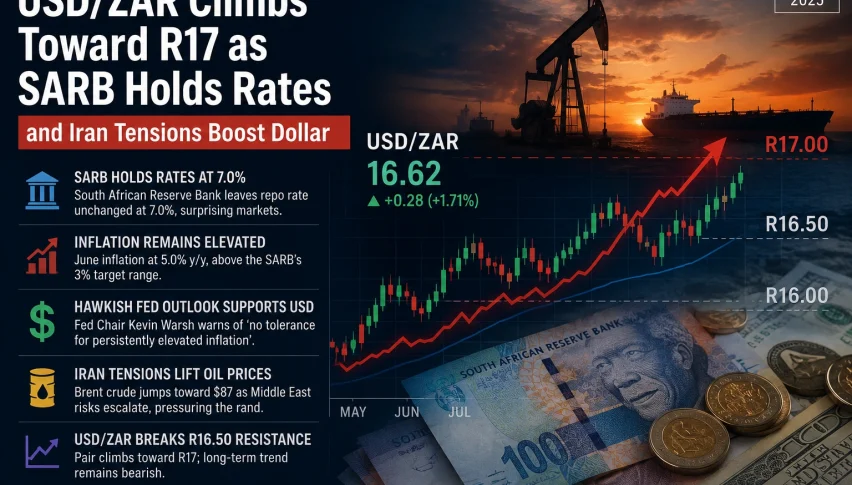
The South African Reserve Bank (SARB) plays a crucial role in navigating these turbulent economic waters. The rand’s performance is closely tied to SARB’s monetary policies, and traders are eagerly anticipating any signals regarding interest rate adjustments.
As the rand experiences volatility, the JSE’s performance is further impacted by external factors such as the global economic environment and domestic policy decisions. Cell C’s recent debut on the Johannesburg Stock Exchange, as reported by Dabafinance, adds a new dynamic to the market, potentially influencing investor sentiment and market movements.
Contrary Angle
Despite the pessimistic outlook, some analysts argue that the market correction could present buying opportunities for savvy investors. With South Africa’s economy showing signs of resilience, there may be undervalued stocks that could yield significant returns once the market stabilizes.
Additionally, the Moonstone Information Refinery highlights the volatile nature of the first quarter, suggesting that while risks are apparent, so too are opportunities for those willing to navigate the market adeptly.
Why Traders Should Care
Traders must remain vigilant in this unpredictable environment. Monitoring the SARB’s actions and global economic indicators will be essential for making informed trading decisions. The potential correction on the JSE requires traders to adopt strategies that hedge against downside risks while capitalizing on any emerging opportunities.
For forex traders, the USD/ZAR pair will be a focal point, as fluctuations in the rand can impact trading positions. Staying updated on economic developments and market reactions will be critical for maintaining a competitive edge.
Conclusion
As the JSE faces a potential 10% correction, South Africa’s financial landscape presents both challenges and opportunities. Traders must navigate this complex environment with caution, leveraging insights from economic indicators and market trends to inform their strategies. While risks are prevalent, astute market participants can find value amidst the volatility.
- Check out our free forex signals
- Follow the top economic events on FX Leaders economic calendar
- Trade better, discover more Forex Trading Strategies
- Open a FREE Trading Account
- Read our latest reviews on: Avatrade, Exness, HFM and XM

Related Articles


Sidebar rates

Related Posts
 Save
Save