JSE Faces 10% Correction Amid Economic Volatility in South Africa
South Africa's JSE anticipates a 10% correction as economic uncertainty rises.

Quick overview
- The Johannesburg Stock Exchange (JSE) is expected to face a 10% correction due to rising inflation, interest rate hikes, and geopolitical tensions.
- The South African Reserve Bank's monetary policy decisions are crucial in managing inflation and influencing the JSE's performance.
- Despite the bearish outlook, there are signs of resilience in the market, particularly from technology and infrastructure initiatives.
- Traders should focus on economic indicators and consider a diversified investment strategy to navigate the anticipated market volatility.
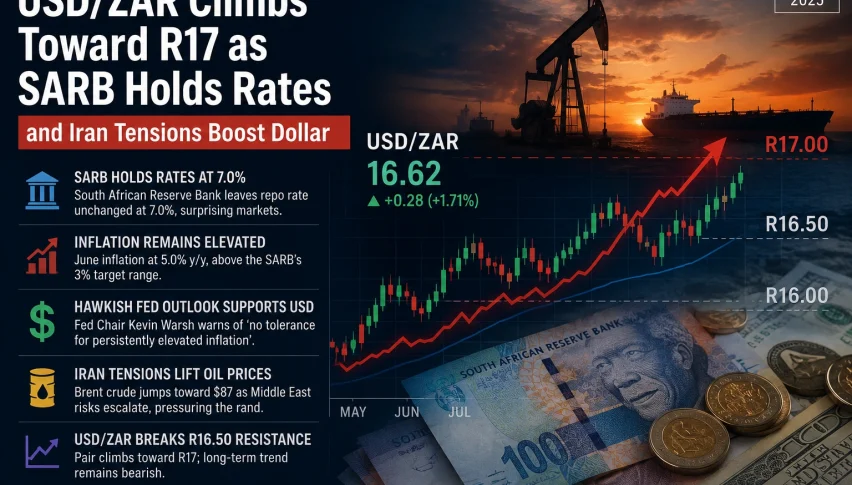
Live USD/ZAR Chart


South Africa’s Johannesburg Stock Exchange (JSE) is bracing for a 10% correction, reflecting deepening investor concerns amid a volatile economic landscape.
Behind the Headline
The JSE, one of Africa’s leading stock exchanges, is on the brink of a significant correction, as highlighted by a recent Moneyweb report. The anticipated 10% downturn comes amid growing concerns over global economic pressures and local economic challenges. Factors such as rising inflation, interest rate hikes, and geopolitical tensions have contributed to a jittery market environment, prompting both local and international investors to reassess their portfolios.
In conjunction with these factors, South African companies are grappling with operational disruptions and fluctuating commodity prices. The recent market volatility underscores a broader trend of economic uncertainty, which has led to increased market risk aversion.
South Africa Market Angle
The South African Reserve Bank (SARB) plays a pivotal role in navigating these turbulent times. With persistent inflationary pressures, the SARB’s monetary policy decisions are under close scrutiny. The central bank’s commitment to controlling inflation through interest rate adjustments has direct implications for the rand’s stability and the JSE’s performance.
Furthermore, the rand’s fluctuations against major currencies like the US dollar have added layers of complexity to market dynamics. As the local currency faces depreciation pressures, export-driven sectors may see some relief, while import costs could exacerbate inflationary conditions.
Contrary Angle
Despite the prevailing bearish sentiment, there are glimmers of potential resilience in the South African market. Business Tech reports signs of life within the economy, driven by strategic initiatives in technology and infrastructure projects. These developments could spur economic activity, offering a buffer against broader market downturns.
Moreover, the recent debut of Cell C on the JSE, following a $156 million share sale as reported by Dabafinance, injects fresh interest and capital into the market. Such corporate actions may attract investor attention and provide unexpected support to the JSE amidst broader market corrections.
Why Traders Should Care
For traders, navigating this complex landscape requires a keen focus on economic indicators and central bank policies. Monitoring the SARB’s interest rate decisions and inflation reports will be crucial in predicting market movements. Additionally, traders should keep an eye on commodity price trends, as these have a direct impact on South Africa’s resource-driven economy.
Adopting a diversified investment strategy could mitigate risks associated with the anticipated JSE correction. Leveraging opportunities in sectors poised for growth, such as technology and infrastructure, may offer favorable returns amidst the broader market volatility.
Conclusion
In conclusion, the JSE’s anticipated 10% correction reflects the current economic uncertainties facing South Africa. While challenges persist, potential opportunities exist within the market’s shifting dynamics. Traders should remain vigilant, informed, and adaptable to the evolving economic landscape to navigate these turbulent times effectively.
- Check out our free forex signals
- Follow the top economic events on FX Leaders economic calendar
- Trade better, discover more Forex Trading Strategies
- Open a FREE Trading Account
- Read our latest reviews on: Avatrade, Exness, HFM and XM

Related Articles


Sidebar rates

Related Posts
 Save
Save