Intel Shatters 26-Year Glass Ceiling: Is INTC Dip a Reality Check or a Refuel
The recent volatility in Intel ($INTC$) highlights a classic "tug-of-war" between company-specific wins and broader macroeconomic pressures.

Quick overview
- Intel's recent volatility reflects a struggle between company successes and macroeconomic challenges, particularly rising US inflation.
- The company recently broke a 26-year record by surpassing its dot-com peak, reaching an all-time high of $133.
- Strategic partnerships, including a chip-making agreement with Apple and a deal with Elon Musk for the 'Terafab' complex, contributed to a 14% surge in shares.
- Despite strong Q1 2026 revenue performance, higher interest rates and profit-taking by investors have stalled Intel's momentum.
The recent volatility in Intel ($INTC$) highlights a classic “tug-of-war” between company-specific wins and broader macroeconomic pressures. The resurgence of US inflation has created a heavy ceiling for tech stocks, while Intel hit historic milestones in late April and early May 2026.
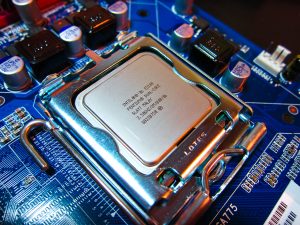
Breaking the “26-Year Curse” Just before this recent dip, Intel experienced a massive rally, fueled by a series of high-profile strategic wins: INTC finally surpassed its August 2000 dot-com peak, hitting a fresh all-time high of $133 .
The Apple Partnership: Shares jumped 14% following reports of a preliminary chip-making agreement with Apple. The “Terafab” Deal: Elon Musk announced plans to use Intel’s 14A node for its $119 billion “Terafab” complex in Austin to manufacture chips for Tesla, SpaceX, and xAI.
Intel’s Q1 2026 revenue of $13.6 billion significantly outpaced guidance, marking its sixth consecutive quarter of beating financial targets. The “Refresh” Lower: Why the Momentum Stalled.
For capital-intensive companies like Intel—which is currently funding massive foundry expansions—higher rates increase the cost of debt and make future earnings less attractive when discounted to the present. 2. Natural Profit Taking After a gain of roughly 100% in April alone, many institutional investors are locking in profits. Analysts have noted that while Intel’s “comeback story” is fundamentally strong, the foundry business is still losing money and won’t reach a break-even point until roughly 2027.
- Check out our free forex signals
- Follow the top economic events on FX Leaders economic calendar
- Trade better, discover more Forex Trading Strategies
- Open a FREE Trading Account
- Read our latest reviews on: Avatrade, Exness, HFM and XM

Related Articles

Sidebar rates

Related Posts
 Save
Save