Bitcoin Struggles Below $88K as Exchange Inflows Collapse and Moving Averages Turn Bearish
Bitcoin is trading close to $87,000 right now, which is down more than 1% in the last 24 hours. This is because the top cryptocurrency faces
Quick overview
- Bitcoin is currently trading around $87,000, down over 1% in the last 24 hours due to technical issues and slowing on-chain momentum.
- The cryptocurrency has failed to maintain levels above $90,000, breaking below key moving averages, which now act as resistance.
- Exchange inflows have significantly decreased, indicating tighter liquidity and a shift towards short-term trading strategies.
- Bitcoin is expected to remain range-bound between $85,000 and $95,000, with potential downside risks if it falls below $85,000.
Bitcoin BTC/USD is trading close to $87,000 right now, which is down more than 1% in the last 24 hours. This is because the top cryptocurrency is facing more technical problems and its on-chain momentum is slowing down. Market participants are reevaluating Bitcoin’s short-term outlook after it failed to stay above $90,000 and broke below important moving averages. This is happening because the flow of exchanges has changed and the trend structure has gotten worse.
BTC/USD Technical Analysis: Critical Support Zone Under Pressure
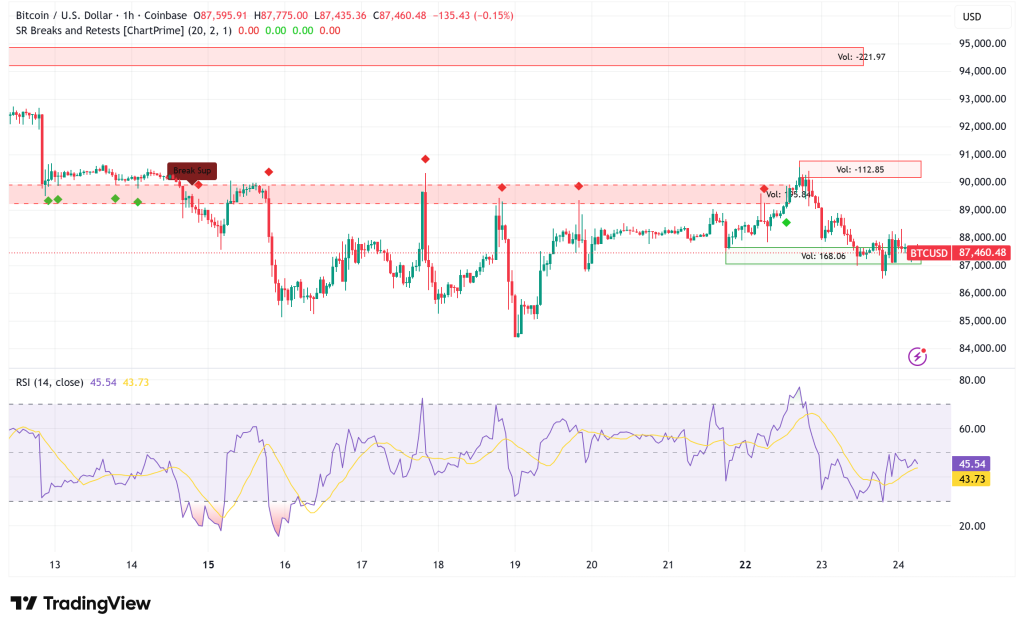
From a technical point of view, Bitcoin’s daily chart shows that the trend strength is clearly getting weaker. Price movement has clearly dropped below both the 111-day and 200-day simple moving averages, which have started to roll over and are now acting as dynamic resistance instead of support. The failed breakout over $120,000 earlier in the quarter represented a clear lower high. This was followed by an impulsive sell-off that took BTC down to the mid-$80,000 level.
The recent consolidation around $87,000–$88,000 is a very important support zone in the short run. This level has helped things stabilize for a short while, but the fact that moving averages are still falling signals that attempts to go higher are still weak. Volume analysis suggests caution: selling pressure grew after the first breakdown, and subsequent bounces have been on low volume, which means that purchasers don’t have a lot of faith.
The 50-day moving average has gone down, which means that short-term momentum has turned negative. Bitcoin would need to get back above the $95,000-$100,000 range and stay there above its major daily averages for sentiment to get better. If prices stay above where they are now, they might create a range. But if prices don’t hold $85,000–$88,000, the chance of a further drop into the 200-day moving average in the low $80,000s goes up.
Exchange Flow Data Signals Liquidity Tightening
Recent on-chain research from CryptoQuant shows that exchange inflows have dropped dramatically, especially on Coinbase. From late November to late December, the total amount of Bitcoin and Ethereum that came into Coinbase during seven days fell from almost $21 billion to about $7.8 billion. This is a drop of more than 60%. At the same time, Binance’s inflows fell from $15.3 billion to $10.3 billion, which was a smaller drop.
This difference shows that even though the overall liquidity in the market has been tighter, trading has become more focused on places where people are making short-term bets. Bitcoin is functioning in a quieter, more limited liquidity environment than it was just a month ago, as shown by the fact that there hasn’t been a big price change even while inflows are decreasing.
Volatility Compression May Prevent Extreme Drawdowns
In a recent interview with CNBC, Bitcoin entrepreneur Anthony Pompliano gave a different point of view. He said that the lack of a spectacular year-end surge could actually stop a big drop in the first quarter of 2025. Pompliano said, “Given how volatile things are right now, it would be very surprising if Bitcoin’s volatility has dropped a lot and it could still drop 70% or 80%.”
Pompliano said that Bitcoin’s overall performance was more important than the $250,000 targets that some holders were hoping for. He said that Bitcoin had risen 100% over two years and nearly 300% over three years. He says that the lower volatility may provide “some degree of safety” on the downside, making huge losses less likely even though it restricts huge gains.
Bitcoin Price Prediction: Range-Bound Action With Downside Risk
Bitcoin seems likely to stay in a range between $85,000 and $95,000 in the near future, based on its current technical structure and on-chain data. The base case scenario is for the market to keep consolidating as it gets used to lower liquidity flows and weak short-term holder conviction.
But there are still a lot of hazards on the downside. If the price drops below $85,000, it will probably retest the 200-day moving average in the low $80,000s. Some analysts, like Peter Brandt, think it could drop to $60,000 by the third quarter of 2026. On the other hand, the bulls would need to climb back to $95,000–$100,000 with steady volume in order to change the trend and try for a retest of $110,000.
- Check out our free forex signals
- Follow the top economic events on FX Leaders economic calendar
- Trade better, discover more Forex Trading Strategies
- Open a FREE Trading Account
- Read our latest reviews on: Avatrade, Exness, HFM and XM

Related Articles



Sidebar rates

Related Posts
 Save
Save