Rand Slumps 1% as SARB Rate Hike Looms Amid Volatile Markets
South African rand drops 1% as SARB rate hike looms and global markets remain volatile.

Quick overview
- The South African rand has fallen by 1% due to speculation of an impending interest rate hike by the South African Reserve Bank (SARB).
- Market volatility is heightened as traders anticipate the SARB's decision, which aims to address inflation while navigating a fragile economy.
- Concerns over the U.S. Federal Reserve's rate decisions are also impacting the rand, as the dollar strengthens against emerging market currencies.
- Despite a bearish outlook, some analysts believe the rand could stabilize if the SARB takes a measured approach to rate hikes.
Live USD/ZAR Chart

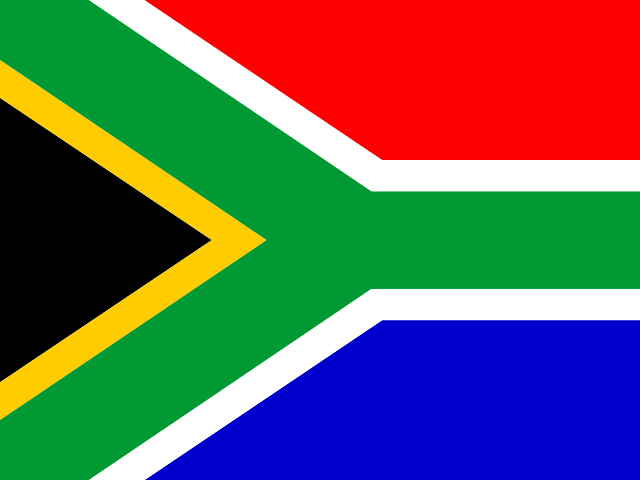
The South African rand has tumbled by 1% amid growing speculation of an impending interest rate hike by the South African Reserve Bank (SARB), contributing to heightened market volatility.
Behind the Headline
As financial markets brace for key monetary policy announcements, the South African rand has come under pressure. According to FXLeaders, the anticipation of a potential interest rate increase by the SARB is adding to the jitters already felt by traders. The central bank’s decision is expected to address inflationary pressures, but it could also add strain to a fragile economy struggling with subdued growth prospects.
Concurrently, the global economic landscape is fraught with uncertainty. Concerns over the U.S. Federal Reserve’s rate decisions have amplified market volatility, with the dollar strengthening against emerging market currencies, including the rand.
South Africa Market Angle
South Africa’s economic landscape remains challenging, with inflationary pressures and sluggish growth shaping the SARB’s monetary policy. The rand’s recent dip reflects broader concerns about the country’s economic health and the potential impact of higher interest rates on consumption and investment. Furthermore, the Johannesburg Stock Exchange (JSE) is not immune to these pressures, as investors weigh the implications of a strengthened dollar and the SARB’s policy direction on local equities.
Traders and investors are closely monitoring these developments, as the SARB’s decisions will likely influence the rand’s trajectory and the broader market sentiment in South Africa.
Contrary Angle
While the prevailing sentiment suggests a bearish outlook for the rand, some analysts argue that the currency might find support if the SARB adopts a more measured approach to rate hikes, coupled with potential fiscal measures to spur growth. As reported by Invezz, some experts believe that the rand could stabilize as the market absorbs potential SARB actions, particularly if global conditions become more favorable.
Additionally, if the U.S. Federal Reserve signals a dovish stance, this could alleviate some pressure on emerging market currencies, including the rand.
Why Traders Should Care
For traders, the current economic landscape presents both challenges and opportunities. The rand’s volatility offers potential for short-term trades, particularly for those adept at navigating currency fluctuations. Moreover, the SARB’s rate decisions will be pivotal in shaping market dynamics, influencing both the currency and equity markets.
Traders should closely monitor the SARB’s announcements and global economic indicators, as these factors will dictate the rand’s movements and potentially impact other key assets on the JSE.
Conclusion
In conclusion, the South African rand’s recent decline underscores the complexities of the current market environment, driven by both local and global factors. As traders and investors await the SARB’s next move, the focus remains on how these developments will influence market sentiment and economic prospects in South Africa.
- Check out our free forex signals
- Follow the top economic events on FX Leaders economic calendar
- Trade better, discover more Forex Trading Strategies
- Open a FREE Trading Account
- Read our latest reviews on: Avatrade, Exness, HFM and XM

Related Articles


Sidebar rates

Related Posts
 Save
Save