Japan Steps In to Defend the Yen, Shaking the Global Carry Trade
The yen, long used as a funding currency for global carry trades, has entered a more volatile phase.

Quick overview
- Japanese authorities are prepared to defend the ¥160 per dollar level, causing volatility in currency markets.
- The Bank of Japan has reportedly intervened in the market, contributing to a recent rebound of the yen.
- Speculative positioning against the yen reached a two-year high before the intervention, with investors betting on continued weakness.
- Rising energy prices and geopolitical tensions are adding inflationary pressures, complicating Japan's economic outlook.
Japanese authorities have signaled they are prepared to defend the ¥160 per dollar level, a move that has already shaken currency markets and put global carry trade strategies on edge.
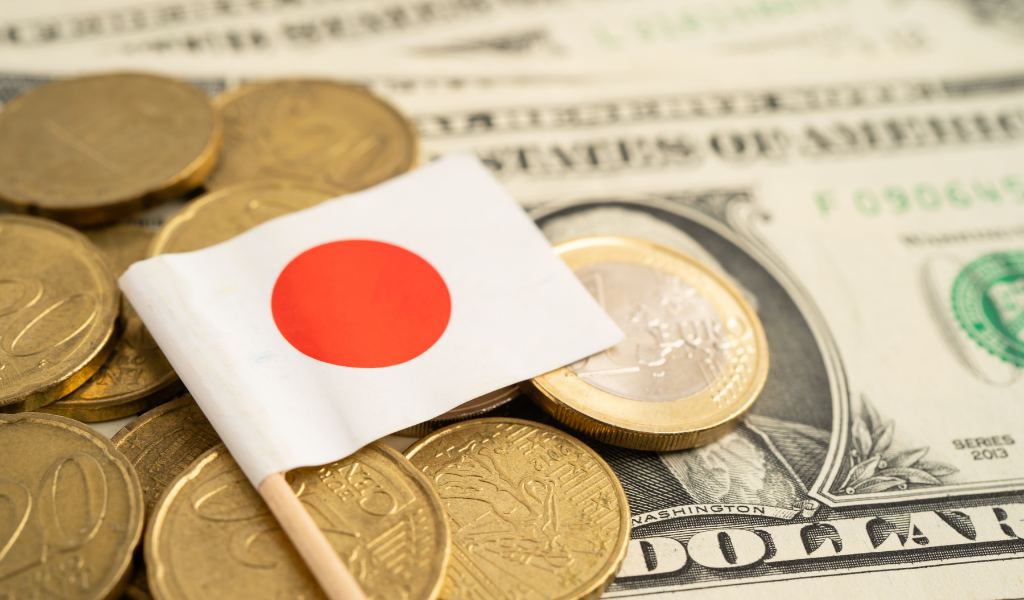
Intervention Signals Strengthen the Yen
The Bank of Japan appears to have stepped into the market, according to traders, helping explain the yen’s recent rebound. Investors are now pricing in further intervention—and even the possibility of coordinated action with the U.S.
The yen, long used as a funding currency for global carry trades, has entered a more volatile phase as policymakers push back against its prolonged weakness.
In recent sessions, the currency strengthened sharply following renewed warnings from Japanese officials. The dollar had previously climbed above ¥160, pressured by higher oil prices and the Bank of Japan’s slow pace in raising interest rates.
A Line in the Sand at ¥160
Market participants say Japan began its 2026 intervention campaign when the dollar/yen pair broke above the ¥160 threshold—widely seen as a red line for policymakers.
Analysts at ING note similarities with 2024, when intervention in late April briefly pushed the exchange rate down toward ¥152, though the effect proved temporary.
While such operations are typically not confirmed officially, multiple traders told Reuters that Japan intervened—marking its first direct action in the FX market in nearly two years.
The impact was immediate: the yen strengthened by as much as 3%, with the dollar falling to around ¥155.5 at its lowest—its weakest level since early March—before stabilizing near ¥156.3. That move represents the largest daily drop in the dollar/yen pair since December 2022.
Just days earlier, the dollar had surged to ¥160.72, its highest level since July 2024, intensifying pressure on Japanese authorities to act.
Carry Trade Positions Under Pressure
Prior to the intervention, speculative positioning against the yen had reached its highest level in nearly two years. Investors were heavily short the currency against the euro, Swiss franc, British pound, and Australian dollar, betting that neither rate hikes nor intervention threats would be sufficient to stabilize it.
Japan’s Finance Minister, Satsuki Katayama, had already warned that “decisive measures” were approaching—one of the clearest signals yet of imminent action.
Energy Prices and Geopolitics Add Pressure
Rising energy costs and renewed tensions in the Middle East have further complicated the outlook for Japan, increasing inflationary pressures and raising costs for both households and businesses.
According to ING, without coordinated intervention with the U.S., any impact may prove short-lived, potentially allowing dollar demand to re-emerge around the ¥155 level.
- Check out our free forex signals
- Follow the top economic events on FX Leaders economic calendar
- Trade better, discover more Forex Trading Strategies
- Open a FREE Trading Account
- Read our latest reviews on: Avatrade, Exness, HFM and XM

Related Articles

Sidebar rates

Related Posts
 Save
SaveAva

