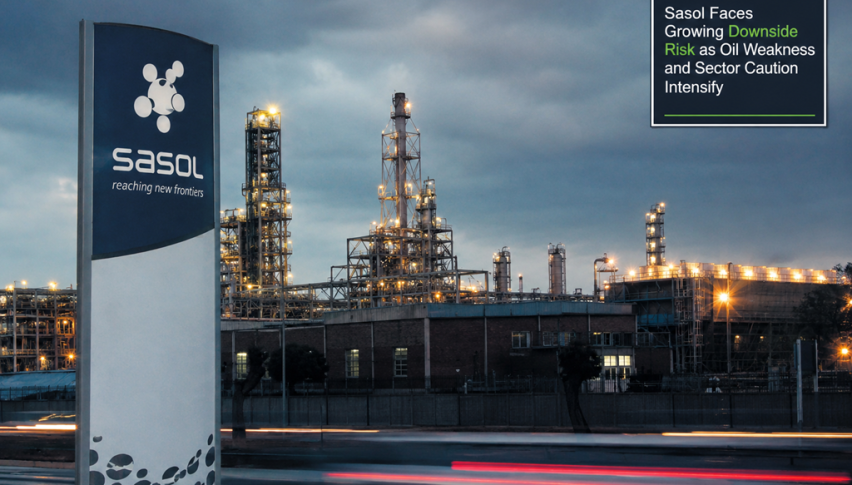
Sasol Faces Downgrade Amid 26% Stock Surge: What It Means for JSE Traders
Sasol's stock is downgraded by Goldman Sachs despite a 26% surge. What this means for South Africa traders.

Quick overview
- Sasol Limited has been downgraded by Goldman Sachs from 'Buy' to 'Neutral' due to concerns over weak product price outlook.
- Despite a 26% stock price surge this year and nearly doubling over the past 12 months, Sasol's performance lags behind industry standards.
- The company's operational efficiencies and investments in renewable energy may provide resilience against market volatility.
- Traders should monitor global oil prices and rand fluctuations, as these factors could impact Sasol's profitability and investment potential.
Live USD/ZAR Chart


Sasol Limited has found itself at a crossroads as the South Africa-based energy and chemical giant faces a downgrade from Goldman Sachs, even after a notable 26% surge in its stock price this year.
Behind the Headline
Goldman Sachs has revised its rating of Sasol from ‘Buy’ to ‘Neutral’, citing a weak outlook for product prices as a primary concern. As reported by Investing.com, the downgrade comes at a time when Sasol’s shares have nearly doubled over the past 12 months, prompting questions about whether the stock remains a viable investment. Despite the recent rally, Sasol’s performance is trailing behind industry standards, according to Simply Wall St, raising caution among traders and investors.
South Africa Market Angle
The performance of Sasol is crucial not only as a major component of the Johannesburg Stock Exchange (JSE) but also as a reflection of broader economic sentiments in South Africa. The South African Reserve Bank’s (SARB) monetary policies and fluctuations in the rand can heavily influence Sasol’s market dynamics. The weakening of the rand could potentially offset some of the concerns regarding lower product prices, as Sasol’s revenues are largely foreign currency-denominated.
Contrary Angle
While the downgrade may cause concern, it is essential to note that Sasol has made significant strides in its operational efficiencies and strategic initiatives, particularly in sustainable energy. According to Financial Mail, Sasol’s investment in renewable energy projects and technological advancements might offer a buffer against volatile market conditions. This could position Sasol not just as a traditional petrochemical player but as a forward-thinking entity in the evolving energy landscape.
Why Traders Should Care
For traders, Sasol’s current scenario presents both challenges and opportunities. The downgrade might instigate a short-term market correction, providing entry points for value investors. Moreover, any fluctuations in the rand could enhance Sasol’s profit margins due to its export-heavy business model. Traders should closely monitor global oil prices, SARB’s interest rate decisions, and any shifts in regulatory frameworks that could impact Sasol’s operational costs and revenue streams.
Conclusion
Sasol’s recent stock movements and the subsequent downgrade highlight the complex interplay of market forces affecting South Africa’s leading companies. While the downgrade poses immediate challenges, Sasol’s strategic initiatives and market positioning could offer long-term growth potential. Traders and investors must weigh these factors carefully when considering positions in Sasol on the JSE.
- Check out our free forex signals
- Follow the top economic events on FX Leaders economic calendar
- Trade better, discover more Forex Trading Strategies
- Open a FREE Trading Account
- Read our latest reviews on: Avatrade, Exness, HFM and XM

Related Articles
Sidebar rates

Related Posts
 Save
Save